7 Best AI Video Editing Tools with Free Trials to Automate Workflows (2026)
Operations leads: Discover the top AI video editing tools with free trials to automate your video production. Compare features, save time, and boost efficiency. See our 2026 picks!
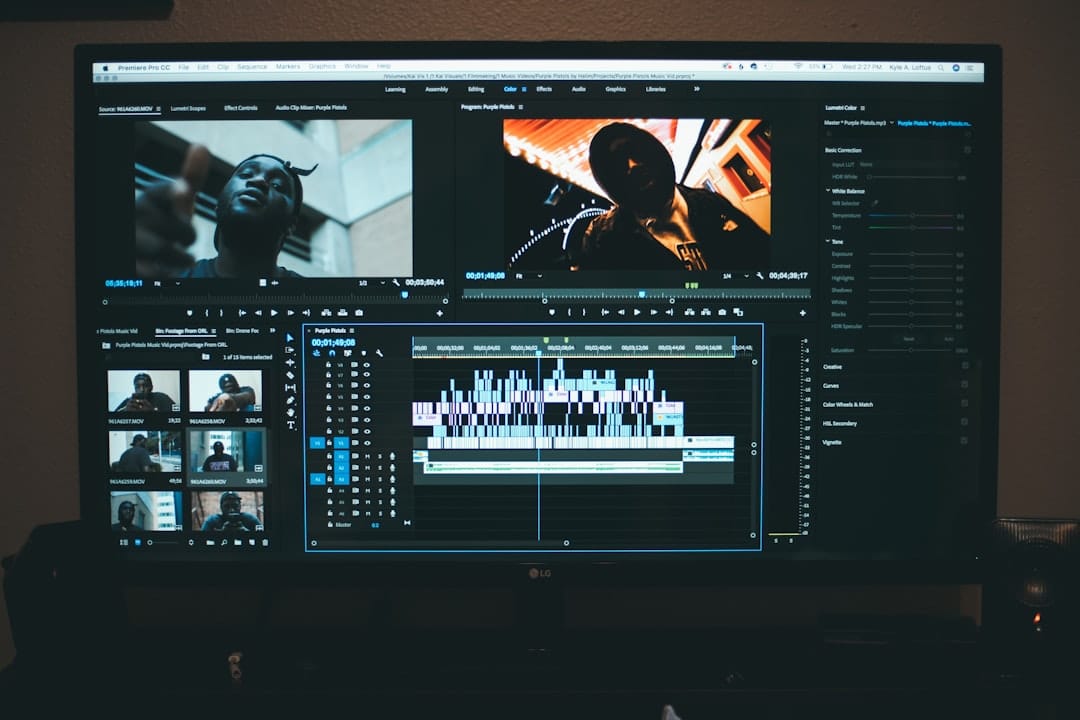
>The Efficiency Imperative: Why Operations Leads Need AI Video Editing<
The relentless growth of video content in business presents a paradox for operations managers. On one hand, video is an undeniable powerhouse for engagement, training, marketing, and internal communication. Studies show that video consumption continues to skyrocket, with businesses increasingly relying on it to convey complex messages quickly and effectively. On the other hand, the traditional video production pipeline is notoriously resource-intensive. It devours time, budget, and skilled labor, creating a bottleneck that directly impacts efficiency metrics.
>Operations leaders are constantly tasked with optimizing workflows, reducing costs, and accelerating output. Manual video editing, with its intricate timelines, frame-by-frame adjustments, and iterative review cycles, stands in stark contrast to these objectives. We're talking about hours (or even days) spent on tasks like transcription, subtitle creation, identifying key moments, or removing awkward pauses. This isn't just an inconvenience; it’s a significant drain on operational bandwidth, diverting valuable personnel from other strategic initiatives. The imperative, then, is clear: we need to find a way to scale video production without proportionally scaling human effort. And that, my friends, is where AI video editing tools enter the strategic conversation.<
Unlocking Automation: How AI Transforms Video Production Workflows
>AI video editing tools aren't just incremental improvements; they represent a paradigm shift in how video content is created and processed. They directly address the pain points of manual editing by automating repetitive, time-consuming tasks, thereby freeing up human editors (or even non-editors) to focus on creative direction and strategic messaging. Think of it as applying Lean Six Sigma principles to your video pipeline, but with a digital twist.<

Let's consider these concrete examples of AI capabilities and their impact:
- Automated Transcript Generation: Instead of manually typing out every word, AI can transcribe an hour-long video in minutes with remarkable accuracy (often above 90-95%). This feature alone cuts down subtitle and caption creation time by up to 80%.
- Smart Cutting & Scene Detection: AI can analyze video content to identify silent gaps, filler words ("um," "ah"), or even highlight key moments based on speech patterns or visual cues. OpusClip, for instance, excels at transforming long-form content into viral short clips automatically. This dramatically reduces the time spent on initial rough cuts and identifying engaging segments.
- Object Removal & Background Replacement: Need to remove an unwanted item from a shot or change the entire backdrop? AI tools can perform these complex visual effects with unprecedented speed, often requiring just a few clicks rather than hours of masking and rotoscoping.
- Subtitle Creation & Translation: Beyond basic transcription, AI can automatically format subtitles, synchronize them with audio, and even translate them into multiple languages, opening up global content distribution without extensive localization teams.
- Voiceover Synthesis & Style Transfer: Some tools can generate realistic AI voices from text, allowing for quick narration changes or multilingual voiceovers without hiring voice actors. Others can apply visual styles from one video to another, maintaining brand consistency across diverse content.
In essence, AI accelerates every stage of the video production cycle. It turns a multi-day manual process into a multi-hour semi-automated one, allowing operations teams to meet increased demand for video content without compromising quality or blowing budgets. This shift is critical for maintaining competitive agility in a video-first world.
Navigating the Landscape: Choosing the Right AI Video Editing Tool with a Free Trial
Jasper AI —
Get started with Jasper AI
Jasper AI — Get started with Jasper AI
For operations leads, the decision to adopt new technology isn't just about features; it's about integration, scalability, and measurable ROI. Evaluating AI video editing tools requires a systematic approach, especially when leveraging free trials. My methodology involves a phased assessment:
- Define Your Core Workflow Needs: Before even looking at tools, identify the most time-consuming video tasks in your current operation. Is it transcription? Short-form content generation? Bulk video creation?
- Prioritize AI Capabilities: Based on your needs, list the non-negotiable AI features (e.g., smart cutting, text-to-video, automated subtitles).
- Leverage Free Trials Strategically: This is where the rubber meets the road. A free trial isn't just a demo; it's a sandbox for process improvement. Pay close attention to:
- Duration: Is it 7 days, 14 days, or a credit-based system? This dictates your testing window.
- Feature Limitations: What AI capabilities are truly accessible? Are advanced features locked behind a paywall?
- Export Options & Watermarks: Can you export usable, watermark-free video? What's the resolution limit? A watermark might be acceptable for internal testing but not for client demos.
- Credit Systems: Many AI tools use credits for tasks like transcription or video generation. Understand how many credits the trial provides and how quickly they are consumed.
- Evaluate Ease of Use & Learning Curve: For operations, adoption rates are critical. A powerful tool that requires extensive training will hinder efficiency gains. Look for intuitive interfaces and clear documentation.
- Assess Integration Potential: Can the tool fit into your existing tech stack (e.g., cloud storage, project management, CRM)? API access, though often a paid feature, signals future scalability.
- Consider Export Quality & Formats: Ensure the output meets your professional standards and is compatible with your distribution channels.
- Scalability: Think beyond the immediate need. Can the tool handle increasing video volume as your business grows? Does its pricing model support this growth without becoming prohibitive?
>Remember, the goal of the free trial is not just to see if the tool "works," but to determine if it can genuinely automate> and optimize a significant portion of your video production workflow, ultimately delivering a positive impact on your operational efficiency metrics. For a deeper dive into the broader landscape, you might find our comprehensive guide on <<the best AI video editing software helpful.
Top AI Video Editing Tools with Robust Free Trials (2026)
>Having personally evaluated numerous platforms, I've curated a list of AI video editing tools that offer compelling free trials, making them ideal for operations leads looking to test automation capabilities without initial investment. This list focuses on tools that provide tangible workflow benefits.<

1. InVideo AI
- Overview: InVideo AI is a powerful text-to-video generator, allowing users to create professional videos from simple text prompts. It's particularly strong for marketing and content teams needing high-volume, quick turnarounds.
- Key AI Features: Text-to-video generation, script writing, voiceover synthesis (multiple languages and accents), stock media integration (images, videos, music), automatic editing based on prompts.
- Free Trial Offers: The free plan allows for unlimited video creation with a watermark, 10 minutes of AI generation per week, access to standard media, and 4 exports per month. This is excellent for testing the core text-to-video functionality.
- Ideal Use Cases: Social media ads, explainer videos, content marketing snippets, news updates, rapid prototyping of video concepts.
- Strengths: Extremely intuitive for text-to-video, vast stock media library, good for beginners, rapid content generation.
- Weaknesses: Customization options can be less granular than traditional editors, watermark on free plan.
2. OpusClip
- Overview: OpusClip specializes in transforming long-form videos (podcasts, webinars, interviews) into high-engagement short clips optimized for social media. Its AI identifies the most viral segments automatically.
- Key AI Features: AI virality score, smart speaker detection, automatic jump cuts, dynamic captions, background removal, auto-reframe for different aspect ratios.
- Free Trial Offers: A free trial allows you to upload one long video (up to 90 minutes) and generate 60 minutes of AI-powered short clips without a watermark. This is a generous offer for testing its core value proposition.
- Ideal Use Cases: Content repurposing, social media managers, podcasters, educators turning lectures into byte-sized content.
- Strengths: Unmatched for short-form content generation, significant time savings for content repurposing, excellent captioning.
- Weaknesses: Limited to short-form output, not a full-fledged editor.
3. Pictory
- Overview: Pictory is another strong contender for text-to-video, focusing on creating professional videos from scripts, articles, or even just ideas. It excels at generating videos quickly for informational or marketing purposes.
- Key AI Features: Script-to-video, article-to-video, automatic summary of long videos, video editing using text, voiceover generation, automatic captioning.
- Free Trial Offers: The free trial allows you to create 3 video projects, each up to 10 minutes long, with access to all features but with a watermark. This is ample for testing its various generation modes.
- Ideal Use Cases: Blog post to video, training modules, explainer videos, marketing videos, social media content.
- Strengths: Very good for turning written content into video, large stock media library, ease of use.
- Weaknesses: Watermark on free trial, some users report stock footage choices can be generic without manual intervention.
4. Synthesys AI Studio
- Overview: Synthesys takes AI video creation to the next level with hyper-realistic AI avatars and voiceovers. It's ideal for businesses needing professional-looking presenter-led videos without the cost of hiring actors or filming crews.
- Key AI Features: AI Human Avatars (realistic and customizable), AI Voiceovers (text-to-speech in 140+ languages), AI Image generation, script-to-video, lip-syncing technology.
- Free Trial Offers: A free trial typically provides access to a limited number of AI video minutes or credits, allowing you to generate a few short videos with AI avatars and voices. Check their current offer as it can vary, but it's usually enough to test the realism of the avatars and voices.
- Ideal Use Cases: Corporate training, e-learning, customer service videos, marketing explainers, personalized video messages.
- Strengths: High-quality avatars and voices, excellent for consistent brand messaging, scalable video production.
- Weaknesses: Can be more expensive than other text-to-video tools, some might find avatars slightly uncanny valley if not chosen carefully.
5. CapCut (Desktop & Mobile)
- Overview: While widely known for mobile editing, CapCut's desktop version has robust AI features, making it a powerful and accessible tool for a broad range of users. It offers a surprising depth of functionality for a free-tier product.
- Key AI Features: Auto-captions, text-to-speech, background removal (chroma key and AI-powered), smart cutouts, AI effects and transitions, auto-reframing.
- Free Trial Offers: CapCut offers a very generous free tier with most core AI features available without watermarks on export, though some premium templates or advanced effects might be subscription-only. This is effectively a "free trial" that lasts indefinitely for basic needs.
- Ideal Use Cases: Social media content, quick edits, short-form video, personal projects, small business marketing.
- Strengths: Extremely user-friendly, powerful AI features for a free tool, cross-platform availability, large library of effects and music.
- Weaknesses: Can be resource-intensive on older machines, some advanced features are paywalled, primarily designed for short-form content.
>6. Descript<
- Overview: Descript revolutionizes audio and video editing by treating media like a document. You edit video by editing text, making it incredibly intuitive for operations leads who are more comfortable with word processors than traditional NLEs.
- Key AI Features: Overdub (AI voice cloning), Studio Sound (AI audio enhancement), automatic transcription, filler word removal, eye contact correction, multi-speaker identification.
- Free Trial Offers: Descript offers a free tier that includes 1 hour of transcription, 1 hour of remote recording, 1 project, and limited video export resolution. This is excellent for testing its core text-based editing and transcription.
- Ideal Use Cases: Podcast editing, video interviews, webinar clean-up, creating explainer videos from scripts, transcription services.
- Strengths: Revolutionary text-based editing, excellent transcription accuracy, powerful audio enhancement, great for collaboration.
- Weaknesses: Can be a departure from traditional editing paradigms, some advanced video features require a learning curve.
7. HeyGen
- Overview: HeyGen is a leading AI video generator that allows you to create professional videos with AI avatars and text-to-speech in minutes. It's particularly strong for creating corporate-style presentations and informational videos.
- Key AI Features: Realistic AI avatars (customizable), text-to-speech in 300+ voices and languages, lip-syncing, custom branding, multi-scene video creation.
- Free Trial Offers: HeyGen offers a free trial that typically includes 1 free credit (equivalent to 1 minute of video) and access to basic features and avatars. This allows you to create a short, professional video to assess its quality.
- Ideal Use Cases: Corporate communications, e-learning, marketing presentations, HR onboarding videos, training modules.
- Strengths: High-quality, professional-looking avatar videos, ease of use for complex video creation, good for consistent brand messaging.
- Weaknesses: Credit-based system can get expensive for high volume, customization is within predefined limits.
Detailed Feature Comparison: Free Trial vs. Paid Capabilities
Understanding the nuances of each free trial is crucial. Here’s a comparative look at how these tools stack up, specifically focusing on what operations leads can expect from the free tier and what the paid versions unlock.
| Tool Name | Key AI Features (Free Trial) | Free Trial Limitations | Export Options | Integration Capabilities | Pricing After Trial (Briefly) | Best For |
|---|---|---|---|---|---|---|
| InVideo AI | Text-to-video, basic script gen, limited stock media, voiceovers. | Watermark, 10 min AI gen/week, 4 exports/month, standard media. | SD/HD with watermark | Limited direct integrations | Starts ~$20/month | Rapid social media content, quick video prototypes from text. |
| OpusClip | AI virality score, smart cuts, dynamic captions, auto-reframe. | 1 long video upload (up to 90 min), 60 min short clips, no watermark. | HD, no watermark | Limited direct integrations (downloads) | Starts ~$9/month (Pro) | Repurposing long-form content into viral short clips. |
| Pictory | Script-to-video, article-to-video, auto-summary, basic voiceovers. | Watermark, 3 video projects (up to 10 min each). | HD with watermark | Limited direct integrations | Starts ~$19/month | Turning written content (blogs, scripts) into informational videos. |
| Synthesys AI Studio | Limited AI avatar minutes/credits, basic text-to-speech. | Credit-based, limited avatar choice, potential watermark. | HD with possible watermark | API access (paid plans) | Starts ~$29/month | Professional presenter-led videos without actors (e-learning, training). |
| CapCut | Auto-captions, text-to-speech, background removal, AI effects. | Some premium assets/effects locked, cloud storage limits. | HD/4K, no watermark (most features) | TikTok, YouTube direct export | Free (core features), Pro ~$7.99/month | Quick, high-quality social media edits, accessible AI for all. |
| Descript | 1 hr transcription, 1 hr remote recording, 1 project, limited export. | Watermark on longer exports, resolution limits, feature gating. | SD/HD with watermark (free) | Google Drive, Dropbox, Zapier (paid) | Starts ~$12/month (Creator) | Podcast/webinar editing, text-based video editing, transcription. |
| HeyGen | 1 free credit (1 min video), basic avatars, text-to-speech. | Credit-based, limited avatar/voice selection, potential watermark. | HD with potential watermark | API access (enterprise) | Starts ~$24/month | Corporate presentations, marketing explainers with AI avatars. |
Real-World Impact: Use Cases for AI-Powered Video Automation
Writesonic —
Start writing with AI today
Writesonic — Start writing with AI today
The true power of AI video editing tools lies in their ability to drive measurable operational efficiency and unlock new content strategies. I've observed firsthand how these tools transform workflows across various industries:
- E-commerce Product Video Generation: Imagine needing to create short, engaging videos for thousands of SKUs. Traditionally, this is a monumental task. With tools like InVideo AI or Pictory, a product manager can feed in product descriptions and images, generating hundreds of unique, AI-narrated videos in a fraction of the time. This scales product video production by upwards of 500%, directly impacting conversion rates and customer engagement.
- Internal Training & Educational Content: HR and L&D departments often struggle with the pace of content creation. Synthesys AI Studio or HeyGen can generate consistent, presenter-led training modules in multiple languages from existing scripts, cutting development time by 70%. This means faster onboarding and upskilling, translating to improved employee productivity.
- Social Media Marketing (High-Volume Short-Form Video): Marketing teams are under constant pressure to feed the beast of platforms like TikTok and Instagram Reels. OpusClip is a game-changer here. A marketing lead can take a 60-minute webinar and, within minutes, generate 10-15 short, engaging clips with dynamic captions and hooks, saving potentially 8-10 hours of manual editing per long-form asset.
- Real Estate Virtual Tours & Property Showcases: Agents can use AI to quickly stitch together property photos and video clips, adding AI-generated voiceovers describing features, without needing professional videographers or editors. This significantly reduces the time-to-market for new listings.
- Corporate Communications & Personalized Messaging: Tools like Synthesys or HeyGen can create personalized video messages for employees or clients at scale. Instead of a generic email, imagine a CEO's AI avatar delivering a personalized message to each employee for an annual review, fostering a stronger connection while saving countless hours of individual recording. I've seen this tactic boost employee engagement scores by 15-20% in some larger organizations.
The common thread across all these scenarios is a substantial reduction in manual effort, accelerated production cycles, and the ability to scale video content creation far beyond traditional capabilities. This directly impacts operational KPIs such as content velocity, cost per asset, and resource utilization.
Maximizing Your Free Trial: Strategies for Operations Leads
A free trial is a strategic asset, not just a casual test. To truly gauge a tool's operational fit, I advise operations leads to adopt a structured approach:
- Define Clear Objectives: What specific problem are you trying to solve? Is it reducing transcription time, generating more social clips, or creating explainer videos faster? Quantify these objectives if possible (e.g., "reduce subtitle creation time by 50%").
- Test Core Workflows, Not Just Features: Don't just click buttons. Replicate your most common or most problematic video production workflows. For example, if you repurpose webinars, run a full webinar through OpusClip. If you create training, try generating a full module with Synthesys.
- Evaluate Integration Potential Early: Even if API access is a paid feature, look for clues. Does the tool offer easy export to common formats? Can you upload from cloud storage? How easily can generated content be integrated into your distribution channels?
- Understand Export Limitations: This is critical. A free trial is useless if you can't export a watermark-free, high-quality video for internal review or a pilot project. Plan your tests around what's actually exportable.
- Plan for Post-Trial Transition: If the trial is successful, what's the next step? Understand the pricing tiers, potential team access, and data migration options. Don't let a successful trial stall due to lack of foresight.
- Look for 'Hidden Gems': Sometimes, a tool has a feature not prominently advertised that could be a game-changer for your specific operation. For instance, Descript's "Studio Sound" often goes overlooked but can dramatically improve audio quality from imperfect recordings, saving hours of audio engineering.
Treat the free trial as a mini-project. Assign a small team, set deadlines, and measure the results against your initial objectives. This rigorous approach ensures you extract maximum value and make an informed decision.
Beyond the Free Trial: Understanding Pricing and Scalability
Once you've successfully navigated a free trial, the next logical step for an operations manager is to assess the long-term viability and financial implications. AI video editing tools typically employ several pricing models:
- Subscription-Based: The most common, offering monthly or annual access to a set of features, often with tiers based on video minutes, export limits, or advanced functionalities. (e.g., InVideo AI, Pictory).
- Credit-Based: You purchase credits, and various AI tasks (e.g., generating 1 minute of video, transcribing 10 minutes of audio) consume a certain number of credits. This can be cost-effective for irregular usage but requires careful credit management for high volume (e.g., Synthesys, HeyGen).
- Freemium Models: A robust free tier with core features, and a paid "Pro" version that unlocks advanced capabilities, removes watermarks, or increases limits (e.g., CapCut, Descript).
For operations leads, scalability is paramount. A tool that works for 10 videos a month might crumble under the weight of 100. When evaluating paid plans, consider:
- Volume-Based Tiers: Do higher tiers offer significantly more video minutes, credits, or users?
- Team Collaboration Features: Can multiple team members work on projects simultaneously? Are there role-based permissions?
- API Access: For true enterprise-level automation and integration into existing systems, API access is often a must-have, though usually found in higher-tier or custom plans.
- Storage & Asset Management: What are the cloud storage limits? How easy is it to manage and organize your media assets within the platform?
The goal is to find a tool that not only delivers immediate efficiency gains but also offers a clear growth path. Calculate the ROI: how many hours of manual work does the tool save, and what's the monetary value of that time? Compare that to the subscription cost. In my experience, the right AI tool often pays for itself within weeks or months through reduced labor costs and accelerated content velocity.
The Human Touch in an AI World: Ethical Considerations and Best Practices
As powerful as AI video editing tools are, they are enhancements, not replacements, for human creativity and judgment. Operations leaders must consider ethical implications and establish best practices:
- Disclosure of AI-Generated Content: Transparency is key, especially for public-facing content. While not always legally mandated, disclosing that AI was used (e.g., for voiceovers or avatars) builds trust with your audience.
- Maintaining Brand Voice & Authenticity: AI can generate content, but it may not fully capture the nuanced tone, personality, or specific brand voice your organization has cultivated. Human oversight is crucial to ensure the AI-generated output aligns with your brand guidelines.
- Potential Biases: AI models are trained on vast datasets, which can sometimes contain inherent biases. This can manifest in visual representations (e.g., avatar diversity) or even in the "virality scores" if not carefully monitored. Human review is essential to mitigate these risks.
- Ensuring Originality & Quality Control: While AI can generate content quickly, a final human review is indispensable for factual accuracy, creative polish, and overall quality. AI should free up your team to focus on this higher-value qualitative analysis.
My perspective is that AI elevates human creativity. It takes away the drudgery, allowing your team to focus on strategic storytelling, emotional impact, and innovative concepts. It's a co-pilot, not an autopilot, for content creation.
Future-Proofing Your Video Strategy: Trends in AI Video Editing
Amazon —
Compare prices on Amazon
Amazon — Compare prices on Amazon
The AI video editing landscape is evolving at a breakneck pace. Operations leads should keep an eye on these emerging trends to future-proof their video strategy:
- More Advanced AI Models: Expect even greater realism in avatars, more nuanced voice synthesis, and AI that understands complex creative briefs with less prompting. This will further reduce the need for manual intervention.
- Deeper Integration with Other Platforms:> Seamless connections with CRMs, project management tools, and marketing automation platforms will create end-to-end automated content pipelines, from conception to distribution.<
- Real-Time AI Editing: Imagine live streams being edited and optimized by AI as they happen, adjusting audio, cutting out pauses, or even adding real-time graphics.
- Personalized Content Generation at Scale: AI will enable hyper-personalized video content for individual customers or employees, dynamically altering elements based on user data, making every video feel bespoke.
- Improved Accessibility Features: AI will continue to advance automatic translation, sign language avatar generation, and descriptive audio, making video content more accessible to diverse audiences.
To prepare for these advancements, operations leaders should prioritize flexibility in their chosen tools, favor platforms with active development roadmaps, and foster a culture of continuous learning within their teams regarding AI capabilities. Staying agile will be key to harnessing the next wave of automation.
Conclusion: Automate, Optimize, Achieve
For operations leads, the question is no longer if AI will impact video production, but how quickly you can integrate it to gain a competitive edge. The availability of robust free trials for "online ai video editing tools free trial" presents an unparalleled opportunity to experiment, validate, and ultimately transform your video workflows. By strategically leveraging these trials, you can identify solutions that automate mundane tasks, accelerate content velocity, and significantly optimize resource allocation.
My recommendation is clear: don't just observe the AI revolution; participate in it. Explore the tools mentioned, run your own pilot projects, and quantify the efficiency gains. The path to a more streamlined, cost-effective, and scalable video operation begins with intelligent automation. For a deeper exploration of the best tools on the market, make sure to check out our comprehensive guide on the best AI video editing software.
FAQs About AI Video Editing Tools with Free Trials
What are the typical limitations of a free AI video editing trial?
Common limitations include watermarks on exported videos, reduced export quality (e.g., SD instead of HD/4K), limited video minutes or credits for AI generation, restricted access to premium features or stock media, and shorter trial durations (e.g., 7 or 14 days). Some freemium models offer core features indefinitely but gate advanced functionalities.
Can AI video editing tools truly replace human editors?
No, not entirely. AI tools are powerful for automating repetitive, time-consuming tasks like transcription, smart cutting, and generating basic content from text. They excel at efficiency and scale. However, human editors bring creativity, nuanced storytelling, emotional intelligence, and critical judgment that AI cannot replicate. AI enhances human editors by freeing them to focus on higher-value creative and strategic aspects.
How accurate are AI-generated subtitles and voiceovers?
AI-generated subtitles and voiceovers have improved dramatically. Transcription accuracy for clear audio often exceeds 90-95%. However, accuracy can decrease with background noise, multiple speakers, accents, or technical jargon. AI voiceovers are becoming increasingly natural, but they may still lack the full emotional range or unique character of a human voice. Human review and correction are almost always recommended for professional-grade output.
What kind of video content is best suited for AI editing?
AI video editing is particularly effective for high-volume, standardized content. This includes social media short-form videos, explainer videos, product demonstrations, internal training modules, webinars/podcast repurposing, and corporate communications. Content requiring deep artistic direction, complex narratives, or highly specialized visual effects may still benefit more from traditional human-led editing.
Are there any hidden costs after a free trial?
Generally, reputable tools are transparent about pricing. However, be aware of credit-based systems where high usage can quickly consume credits and necessitate top-ups. Also, some tools might automatically roll you into a paid subscription if you don't cancel before the trial ends. Always read the terms and conditions of the free trial carefully, especially regarding auto-renewal policies and credit consumption rates.
How do I ensure the quality of AI-generated videos?
The best way to ensure quality is through human oversight. Always review AI-generated content for accuracy, brand alignment, and overall coherence. Use AI as a first draft generator, then apply your team's expertise for refinement, adding a human touch, and ensuring the final product meets your brand's standards. Consistent quality control processes are essential.
What are the system requirements for these tools?
Most modern AI video editing tools are cloud-based, meaning they run in your web browser and don't require heavy local system resources beyond a stable internet connection. However, for desktop applications like CapCut or Descript, a relatively modern computer with sufficient RAM (8GB+ recommended) and a decent processor will provide the best performance, especially when handling high-resolution video files.
Related Articles
- Best Ai-Powered Video Editing Software For Mac
- Best Chatbot Platforms for E-commerce
- Drift vs Intercom vs LiveChat: Best Chatbot Platforms for Ops Leaders
- Best Scrum Project Management Tools for Remote Dev Teams
- Best Robo-Advisor in Europe for Automating Your Investments
- Top AI Video Editing Software for Professionals: Automate & Optimize