Fitbit Inspire 3 vs Garmin vivosmart 5: No Subscription (2026)
Stop paying monthly! We compare Fitbit Inspire 3 vs Garmin vivosmart 5 for subscription-free fitness tracking. Find your efficient pick →
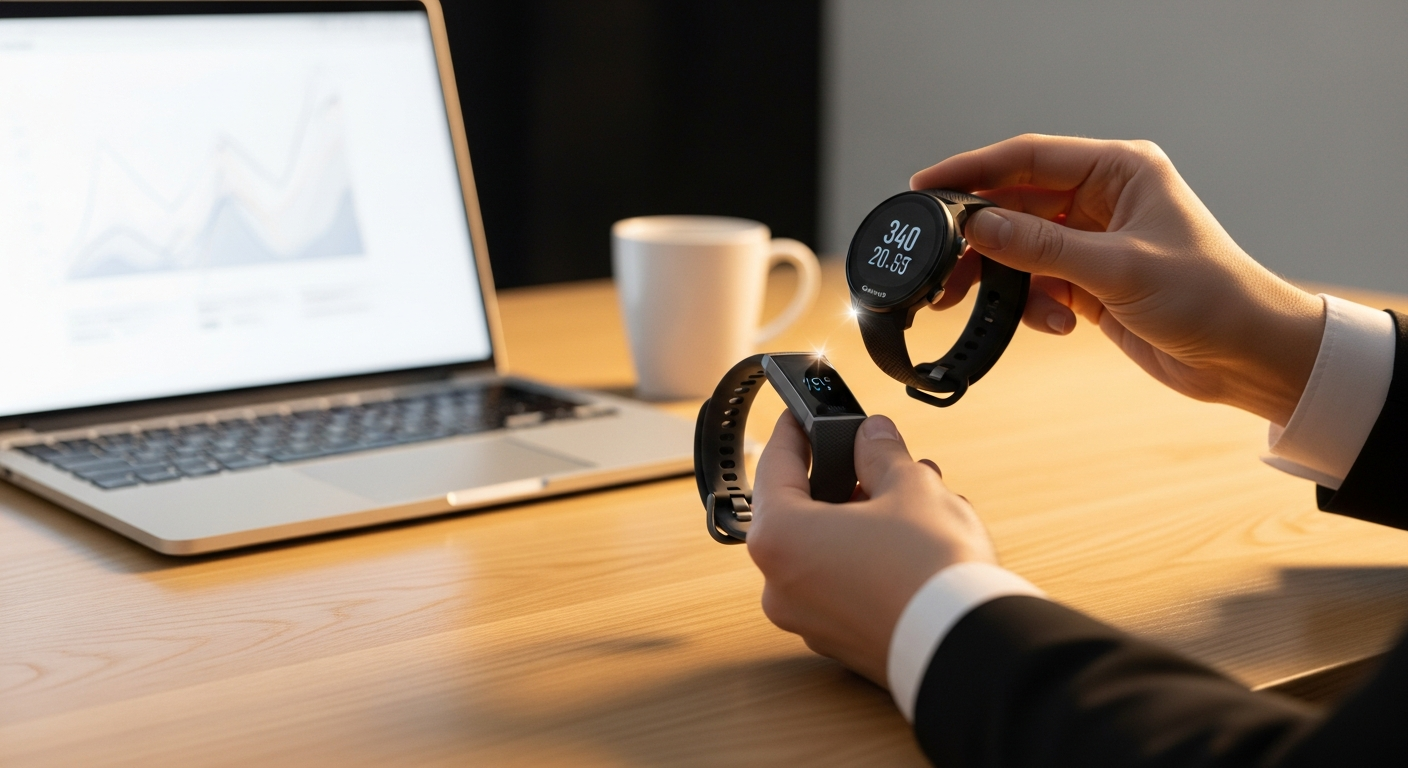
When you're running an operation, making smart tech choices for your team is crucial. Every dollar counts, especially when it comes to ongoing costs. That's why the idea of a fitness tracker that nickel-and-dimes you with a monthly subscription can be a real headache. We get it. This is exactly why a detailed >fitness tracker without subscription comparison< matters so much.
For this article, we're pitting two popular trackers against each other for 2026: the Fitbit Inspire 3 and the Garmin vivosmart 5. Our goal? To figure out which one gives you the most bang for your buck, offers lasting data, and just plain works better, all without those pesky hidden membership fees. Frankly, any savvy decision-maker should be asking these questions.
Quick Verdict: Who Wins for Subscription-Free Tracking?
If you're an operations lead looking at fitness trackers purely on a no-subscription basis, your choice really depends on what you care about most:
- Best for Simple, User-Friendly Tracking & Sleep Analysis (No Cost): Fitbit Inspire 3. This one wins if your team needs something easy to pick up, a bright screen for quick checks, and surprisingly good sleep tracking without paying extra. Even the free Fitbit app makes daily stats clear.
- Best for Detailed, Long-Term Data Retention & Activity Metrics (No Cost): Garmin vivosmart 5. For those who need to track more specific workouts, dig into heaps of historical data for free, and appreciate a really granular look at their performance, the vivosmart 5 and its Garmin Connect system are the clear champions. This is my pick for anyone who's serious about data.
- Best for Data Longevity & Exportability: Garmin vivosmart 5. Garmin's platform is famous for holding onto your data for ages and letting you export it easily. That's perfect for long-term trend analysis or connecting with other systems without paying recurring fees.
Basically, the Inspire 3 feels more like a polished "daily wellness" gadget right out of the box. The vivosmart 5, though, acts more like a "fitness data vault," which makes it a better fit for an analytical, no-subscription mindset.
Feature Comparison Table: Inspire 3 vs. vivosmart 5
Let's break down what each tracker offers, focusing on what you get without any ongoing costs. We'll look at this from an operations standpoint.

| Feature | Fitbit Inspire 3 (No Subscription) | Garmin vivosmart 5 (No Subscription) |
|---|---|---|
| Initial Price (MSRP) | ~$99.95 USD | ~$149.99 USD |
| Battery Life | Up to 10 days | Up to 7 days |
| Core Tracking (Steps, Calories, Distance) | Yes, daily summaries in app | Yes, daily & historical in app |
| HR Monitoring (24/7) | Yes, resting HR, real-time HR on device/app | Yes, resting HR, real-time HR on device/app |
| SpO2 (Blood Oxygen) | Yes, overnight average (no on-demand) | Yes, overnight average (no on-demand) |
| GPS (Connected/Built-in) | Connected GPS (uses phone) | Connected GPS (uses phone) |
| Water Resistance | 50m (swim-proof) | 5 ATM (swim-proof) |
| Display Type | Color AMOLED | Grayscale OLED |
| App Data Retention (Free Tier) | Limited historical data (e.g., 90 days for detailed sleep). Daily trends generally available. | Extensive historical data, virtually unlimited retention for most metrics. |
| Smart Notifications | Call, text, app alerts | Call, text, app alerts |
| Design/Comfort | Slim, lightweight, comfortable silicone band. More vibrant. | Slightly bulkier, textured silicone band. Discreet. |
| Ecosystem (Free Features) | >Basic activity, sleep, HR. No advanced insights or guided programs without Premium.< | Detailed activity tracking, sleep stages, Body Battery, Stress Tracking, Incident Detection, extensive sport profiles, advanced metrics. |
| Sleep Tracking (Free Tier) | Sleep stages (Light, Deep, REM), Sleep Score, graph (limited history) | Sleep stages (Light, Deep, REM), Sleep Score, graph, SpO2, detailed insights (extensive history) |
| Stress Tracking | Yes, daily score (limited detail without Premium) | Yes, 24/7 with relaxation reminders, Body Battery integration |
| Workout Tracking | SmartTrack auto-recognition, basic exercise modes | Manual exercise modes, auto-recognition (Move IQ), extensive sport profiles (run, walk, swim, strength, yoga, etc.) |
>Deep Dive: Fitbit Inspire 3 – Strengths, Weaknesses, and Who It's For<
The Fitbit Inspire 3, which came out in late 2022, shows Fitbit's dedication to making health tracking easy to get into. For an operations manager, its appeal often comes from its simple functions and user experience. This is especially true if you're thinking about a bunch of devices for a wellness program that doesn't have an ongoing budget for subscriptions.
Strengths (No Subscription):
- Bright AMOLED Display: This is a big step up from older Inspire models and the vivosmart 5. The full-color screen makes stats super easy to read quickly and looks pretty modern. It makes for a better user experience, which can mean more people actually use it in a company wellness setting.
- Excellent Sleep Tracking: Even without Fitbit Premium, the Inspire 3 gives you detailed sleep stages (Light, Deep, REM) and a daily Sleep Score. This is a powerful feature for understanding recovery, which is a key part of employee well-being and productivity. The free app even offers a decent look at recent nights' sleep.
- User-Friendly Interface: Fitbit's app is famous for being easy to use. Data appears clearly and simply, so new users don't need much training. This means less work to get everyone set up and more employees figuring things out on their own.
- Solid Basic Activity Tracking: Steps, calories burned, active zone minutes, and continuous heart rate monitoring are all standard and reliable. For measuring basic activity, it does a really good job.
- Good Battery Life: Up to 10 days of battery life means you charge it less often. That cuts down on downtime and the hassle of keeping devices charged for your users.
Weaknesses (No Subscription):
- Limited Data Analytics: This is the Inspire 3's biggest problem if you're not paying a subscription. You see daily numbers, but advanced trends, deeper insights into sleep over time, and personalized advice are all locked behind Fitbit Premium. For an operations lead who needs actionable, long-term data trends, this can be a real drawback.
- Connected GPS Only: Like its competitor, it needs your phone for GPS. That's not a deal-breaker for everyday use, but it means you have to carry your phone for accurate distance tracking during runs or bike rides.
- Basic Workout Modes: It can automatically recognize some activities, but the manual workout tracking options are pretty simple compared to Garmin's many sport profiles. This might not be enough for employees doing specific, varied fitness routines.
- Ecosystem Reliance: The real power of Fitbit's system, especially for health metrics and personalized coaching, is heavily tied to the Premium subscription. Without it, you get a solid but somewhat bare-bones experience compared to what Garmin offers for free.
Who It's For:
The Fitbit Inspire 3 is perfect for companies or individuals who want a simple, good-looking, and super user-friendly device for daily wellness tracking>. It's great for getting people to be more active, checking sleep quality, and giving a quick peek at important stats without overwhelming anyone with too much information. If your goal is to get a lot of employees involved in general health and activity with minimal IT help, and you don't need deep analytical insights or long-term trend reports from the device itself, the Inspire 3 is a strong, affordable choice.<
Amazon — Compare options on Amazon
Deep Dive: Garmin vivosmart 5 – Strengths, Weaknesses, and Who It's For
>The Garmin vivosmart 5, released in 2022, continues Garmin's history of solid fitness tracking in a subtle design. For an operations manager, the Garmin ecosystem—specifically Garmin Connect—offers a really strong value proposition. That's because it keeps so much data for free and has great analytical tools. It's a stark contrast to Fitbit, which relies more and more on subscriptions.<

Strengths (No Subscription):
- Superior Free Data Retention and Analytics: This is where the vivosmart 5 truly excels in a no-subscription comparison. Garmin Connect, its companion app, keeps virtually unlimited historical data for everything it tracks: steps, heart rate, sleep, stress, Body Battery, and workouts. You can look at trends over weeks, months, or even years without ever paying. Honestly, this is invaluable for long-term health trend analysis and managing performance.
- Comprehensive Metrics: Beyond the basics, the vivosmart 5 includes Garmin's unique Body Battery energy monitoring, all-day stress tracking with reminders to relax, and Incident Detection. This last feature can send your location to emergency contacts if it senses an incident during certain activities. These are significant additions for overall well-being and safety, and they're all available without a subscription.
- Extensive Sport Profiles: Even though it's small, the vivosmart 5 handles a wide range of activities like running, walking, swimming, strength training, yoga, and more. This lets you track specific workouts and log data in more detail. That granularity is excellent for varied fitness programs.
- Physical Button: Having a physical button alongside the touchscreen provides tactile feedback and makes navigation easier, especially during workouts or if your hands are wet. This really improves usability and reduces any friction in its operation.
- Robust Ecosystem (Free): Garmin Connect isn't just a place to store data; it's also a social platform. Users can connect, join challenges, and share activities, all without a subscription. This can really build a sense of community in a company wellness program.
Weaknesses (No Subscription):
- Grayscale OLED Display: Compared to the Inspire 3's vibrant AMOLED, the vivosmart 5's grayscale screen feels a bit old-fashioned. It works fine for showing text and basic stats, but it just doesn't have the visual pop and clarity. This might affect how excited users are about it at first.
- Slightly Bulkier Design: It's still pretty compact, but it's a little thicker and wider than the Inspire 3. Some users might find it less comfortable for wearing all the time, especially when sleeping.
- Lower Battery Life: Up to 7 days is good, but it's not quite as long as the Inspire 3's 10-day claim. More frequent charging means users have to think about it a bit more often.
- Less Intuitive App Interface (Initially): Garmin Connect is powerful, but it can feel a bit overwhelming at first because there's so much data and so many features. It has a steeper learning curve than the super-simple Fitbit app, but it definitely pays off if you stick with it.
Who It's For:
The Garmin vivosmart 5 is the clear winner for operations managers or individuals who prioritize deep, long-term data analysis, a comprehensive set of free health metrics, and a solid ecosystem that doesn't demand recurring payments>. If your goal is to collect detailed historical data on activity, sleep, stress, and energy levels for personal insights or overall wellness reports (without sharing individual data), the vivosmart 5 offers unmatched value in the subscription-free category. It's for the data-focused user who values practical tracking and comprehensive information over a flashy screen.<
Amazon — Check price on Amazon
Pricing Breakdown and True Value Analysis (No Subscription Required)
When comparing the Fitbit Inspire 3 and the Garmin vivosmart 5 for a fitness tracker without subscription comparison>, the initial price is only one piece of the puzzle. The real value comes from what each device delivers without any ongoing financial commitment.<
- Initial Purchase Price:
- Fitbit Inspire 3: Usually around $99.95 USD.
- Garmin vivosmart 5: Usually around $149.99 USD.
The Inspire 3 costs less upfront, so it looks more budget-friendly initially, whether you're buying one or many.
- Value Derived (No Subscription):
- Fitbit Inspire 3: For under $100, you get a bright, easy-to-read color display, reliable basic activity tracking, and surprisingly detailed sleep stage analysis. The app is very user-friendly for daily checks. Its value lies in its simplicity and ease of access. However, it doesn't keep detailed historical data for very long, and you miss out on deeper insights without Premium. This means its "free" value quickly hits a ceiling. It's a good starting point but won't grow with you if you need to analyze much.
- Garmin vivosmart 5:> With a higher initial cost of $150, the vivosmart 5 justifies its price with the sheer depth and longevity of its free features. Garmin Connect offers virtually unlimited historical data, advanced metrics like Body Battery and all-day stress, detailed workout logs, and incident detection—all without a subscription. For an operations lead, this means a one-time investment unlocks a powerful data analysis tool that keeps giving value year after year. It helps with long-term trend identification and wellness program evaluation without hidden fees. Not needing a subscription for these analytical tools saves significant money and improves efficiency over time.<
"Honestly, from an operational efficiency standpoint, the Garmin vivosmart 5, despite costing more upfront, offers a much better return on investment for organizations that need long-term data visibility and comprehensive health metrics without recurring subscription costs. No ongoing costs for crucial data access significantly reduces the risk of the investment."
To sum it up, if your main concern is the initial cost and you only need basic, day-to-day tracking without much data retention, the Inspire 3 gives you more for your money. But if your operational goals include long-term data analysis, detailed performance monitoring, and avoiding any future subscription-related budget talks, the Garmin vivosmart 5 provides a significantly more lasting value for its one-time investment.
Final Recommendation by Use Case: Which Tracker Optimizes Your Workflow?
Choosing between the Inspire 3 and vivosmart 5 without a subscription ultimately means matching the device's strengths to your specific operational needs and what your users care about. Here's how to pick the best one:

- Best for Basic Daily Activity Tracking & Engagement: Fitbit Inspire 3.
If your main goal is to simply encourage general physical activity, track basic things like steps, calories, and heart rate, and offer an easy-to-understand overview of daily wellness, the Inspire 3 is your pick. Its bright screen and intuitive app really get users engaged for basic tracking, and you'll get fewer support questions about complicated features. It's a low-hassle solution for wide adoption.
- Best for Detailed, Long-Term Data Retention Without Cost: Garmin vivosmart 5.
For operations leads who rely on data for insights, want to study employee wellness trends over time, or integrate personal health data into a broader (non-subscription) analytical system, the vivosmart 5 is the clear winner. Garmin Connect's unlimited free historical data retention and advanced metrics like Body Battery give you a powerful platform to understand trends over time without any recurring expenses. This makes the most of your data and keeps ongoing budget demands to a minimum.
- Best for Comfort and Style (Subjective): Fitbit Inspire 3.
Comfort is personal, but the Inspire 3 generally has a sleeker, lighter design with a more vibrant display. If user aesthetics and a less noticeable device are important for people to actually wear it in a professional setting, the Inspire 3 might have an edge.
- Best for Swim Tracking & Diverse Workouts: Garmin vivosmart 5.
Both devices are waterproof. However, the vivosmart 5's more detailed sport profiles and built-in swim tracking features within Garmin Connect offer a more complete experience for those who regularly swim or do a wider variety of structured workouts. This makes it more useful for a diverse team.
- Best for Stress Management & Energy Monitoring (Free): Garmin vivosmart 5.
Garmin's Body Battery and all-day stress tracking, which includes relaxation reminders, are really powerful tools for understanding and managing energy levels and stress. These are critical for employee productivity and well-being. These are strong free features on the vivosmart 5 that are either missing or very limited in the Inspire 3's free version.
To sum up, if your operational goal is to roll out a simple, engaging, and affordable device for general wellness awareness, the Fitbit Inspire 3 works very efficiently. But if your strategy calls for deep, lasting data analytics, comprehensive health metrics, and long-term trend visibility without any recurring subscription costs, the Garmin vivosmart 5 gives you a superior strategic advantage.
FAQ: Your Top Questions About No-Subscription Fitness Trackers
1. Do all fitness trackers require a subscription?
No, absolutely not. While many popular brands, especially Fitbit, really push premium subscriptions for advanced features and deeper insights, most core functions and basic data retention are available without any ongoing cost. Garmin, in particular, is known for offering a very rich, subscription-free experience through its Garmin Connect platform. This fitness tracker without subscription comparison highlights two great examples.
2. What data can I see without a Fitbit Premium/Garmin Connect subscription?
- Fitbit Inspire 3 (No Premium): You'll see daily steps, distance, calories burned, active zone minutes, continuous heart rate (current and resting), and detailed sleep stages (Light, Deep, REM) with a daily Sleep Score. You'll also get some limited historical data, typically for recent days or weeks.
- Garmin vivosmart 5 (No Connect Subscription): You get a much richer data set. This includes daily steps, distance, calories, continuous heart rate (current and resting), detailed sleep stages with SpO2 and Sleep Score, all-day stress tracking, Body Battery energy levels, and comprehensive logs for various activities. Crucially, Garmin Connect offers virtually unlimited historical data retention for all these metrics, letting you analyze trends over a long time.
3. How long do my free fitness data records last?
This really depends on the brand:
- Fitbit (Free Tier): While basic daily summaries might stick around indefinitely, detailed historical data (like specific sleep stage breakdowns or granular heart rate graphs) is often limited to 7-90 days if you don't have a Premium subscription.
- Garmin (Free Tier): Garmin Connect offers virtually unlimited data retention for all your tracked metrics. You can typically look back at years of data, which makes it exceptional for long-term self-monitoring and trend analysis without any recurring fees.
4. Are subscription-free trackers accurate?
Yes, the accuracy of core metrics (like steps, heart rate, and sleep stages) is generally very good for reputable subscription-free trackers like the Fitbit Inspire 3 and Garmin vivosmart 5. Accuracy depends more on the quality of the device's sensors and algorithms, not whether a subscription is attached. Connected GPS (using your phone's GPS) also provides accurate distance tracking for outdoor activities.
5. Can I export my data from these trackers without a subscription?
- Fitbit: Yes, you can usually export some of your Fitbit data (e.g., daily activity, sleep logs) from the Fitbit dashboard on a computer, even without a Premium subscription. The format and detail might be limited compared to premium options.
- Garmin: Yes, Garmin Connect offers robust data export capabilities for free. You can export individual activity files (e.g., GPX, TCX, FIT) or generate reports from your dashboard. This is a big plus for users who want to back up their data or import it into other analytical tools without extra costs.
6. What's the best budget-friendly tracker without a subscription?
For a truly budget-friendly option, the Fitbit Inspire 3 is often available for under $100. It gives you excellent basic tracking and a vibrant display without needing a subscription. If your budget allows a bit more (around $150), the Garmin vivosmart 5 offers significantly more data depth and long-term retention without any recurring costs. In my experience, that makes it a superior value for anyone who cares about their data.
Medical Disclaimer: This article provides general information about fitness trackers and is not intended as medical advice. Always consult with a qualified healthcare professional before making any decisions about your health, fitness, or diet, or if you have any questions or concerns about your medical condition. Fitness trackers are not medical devices and should not be used to diagnose or treat any medical conditions.