How to Prevent SAP Project Failure: What AI Won't Fix (2026 Guide)
Frustrated by SAP project failures? Learn why AI alone isn't a silver bullet for your enterprise architecture. Discover actionable steps to drive successful change. Start improving today!
SAP projects are notoriously complex. Despite decades of evolution in enterprise resource planning (ERP) systems and a burgeoning ecosystem of implementation partners, failure rates remain stubbornly high. Recent reports, like those from the Standish Group, suggest a significant percentage of large-scale IT projects, including SAP implementations, continue to struggle with budget overruns, schedule delays, or simply failing to meet business objectives. As a seasoned enterprise architect who has managed countless SAP transformations, I've observed firsthand that the core issues often lie far beyond the technical intricacies. Here's the critical insight for 2026 and beyond: while Artificial Intelligence (AI) offers transformative capabilities, it won't, by itself, fix the foundational human and process-centric problems that plague these initiatives.
>This guide is crafted specifically for you, the business process owner. You are the linchpin. You understand the operational nuances, the customer pain points, and the strategic imperatives an SAP system is meant to serve. Without your active leadership, even the most technologically advanced SAP S/4HANA deployment, augmented with the latest AI features, risks becoming an expensive, underutilized digital white elephant.<
What You'll Accomplish by the End of This Article
By the time you finish reading this, you'll have a clear, actionable understanding of why many SAP projects falter. Specifically, you'll identify the pitfalls that even sophisticated AI solutions can't remedy. You'll gain insights into where AI truly adds value in an SAP context versus where human intervention, strategic foresight, and disciplined execution remain paramount. My goal is to equip you with a strategic mindset, enabling you to proactively steer your SAP initiatives toward undeniable success. Expect practical frameworks, real-world examples, and a renewed conviction in your critical role.
What You Need Before Starting (Prerequisites)
>To get the most out of this article, you should possess a foundational understanding of what SAP systems (like ECC or S/4HANA) aim to achieve – integrating core business functions from finance to logistics. Familiarity with the primary business processes within your own organization – how sales orders flow, how inventory is managed, how customer service operates – is also essential. Most importantly, bring an open mind. Be prepared to challenge the conventional wisdom that technology alone is the silver bullet. This isn't about deep technical expertise; it's about adopting a 'business-first' perspective to technology adoption.<

Step-by-Step Walkthrough: Mastering SAP Project Success Beyond AI
This is where we get practical. As a business process owner, your influence is profound. These steps are designed to empower you to drive success, moving beyond the technical jargon to focus on what truly matters: business outcomes.
Step 1: Redefine 'Success' – Beyond Go-Live and Budget
Too often, SAP projects are deemed successful simply because they go live on time and within budget. That's a dangerously myopic view. A system that's technically live but fails to deliver tangible business value is, in my book, a failure. Your first action is to lead a stakeholder workshop – involving representatives from sales, finance, operations, HR, and IT – to explicitly define what success looks like in measurable business terms. Don't just list features; articulate outcomes.
Action: Facilitate a workshop to establish clear, quantifiable business outcomes. Use a template like this:
| Business Area | Current Metric (Baseline) | Target Metric (Post-SAP Implementation) | Measurement Method | Responsible Owner |
|---|---|---|---|---|
| Order Processing | Average 72 hours from order to shipment | Reduce to 48 hours (20% improvement) | SAP Sales & Distribution reports | Head of Operations |
| Data Accuracy (Inventory) | 85% physical vs. system count | Improve to 98% | Cycle counting reports | Warehouse Manager |
| Financial Close | 10 business days | Reduce to 5 business days | SAP FICO reporting | CFO |
| Customer Satisfaction | NPS Score: 35 | Increase NPS to 50 | Customer Survey, SAP C/4HANA data | Head of Customer Service |
This template forces a conversation about what truly matters. It shifts the focus from "implement SAP" to "achieve these business improvements through SAP."
Step 2: Map Current State Processes – The Unvarnished Truth
Before you can optimize, you must understand. This step is about getting brutally honest about your current operations. Resist the temptation to jump straight to how SAP should work. Instead, dedicate significant time to mapping your 'as-is' processes. This means involving the people who do the work every day – the end-users. They are the ones who navigate the cumbersome steps, the manual workarounds, and the "shadow IT" systems that keep things running despite inefficiencies.
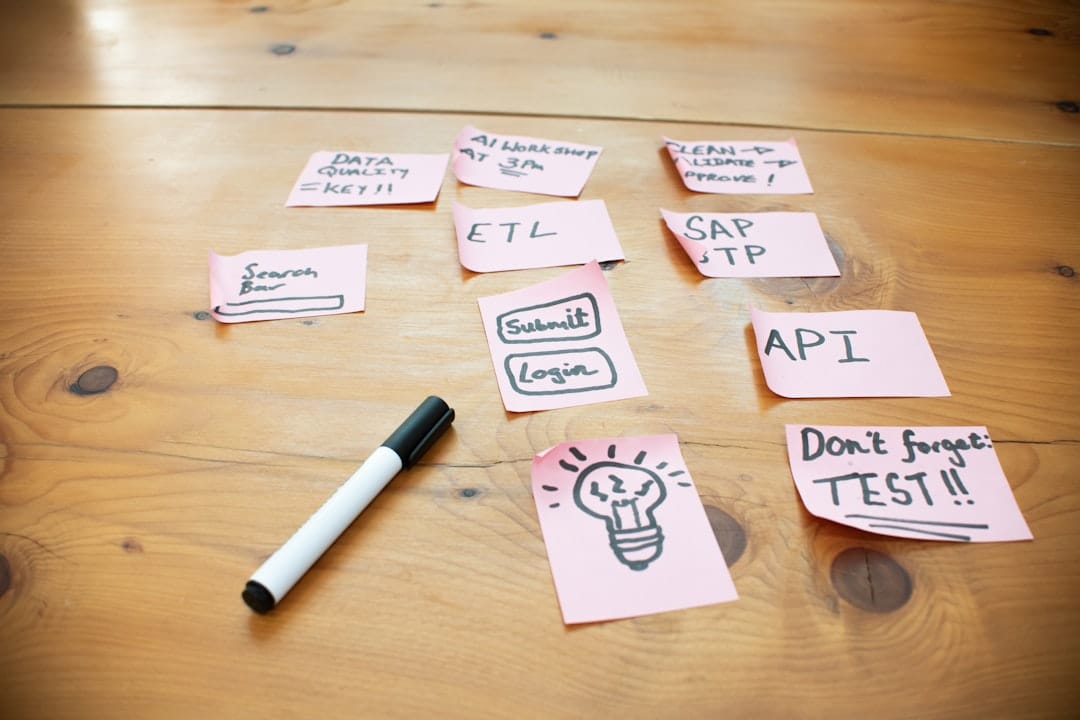
Action: Organize detailed process mapping sessions. Use collaborative tools like Lucidchart, Miro, or even a simple whiteboard and sticky notes. Visually document current workflows, decision points, data handoffs, and, crucially, pain points and existing workarounds. For instance, in a procurement process, you might uncover that 30% of purchase orders require manual approval due to vendor master data inconsistencies. This is the 'human' element – the implicit knowledge and adaptive behaviors – that AI process mining tools might struggle to fully interpret without context.
Example 'Screenshot' of a process map element:
[START - Sales Order Received] -> [Manual Data Entry] -> [Spreadsheet Validation (Pain Point)] -> [SAP ECC Order Creation (Workaround: Re-enter data)] -> [Credit Check (Delay)] -> [Inventory Check (Manual Override)] -> [END]
This step reveals the hidden complexities and the true current state, providing a realistic baseline for improvement.
Step 3: Future State Design – Process-First, Technology Second
With a clear understanding of your current state and defined success metrics, you can now design your 'to-be' processes. This is where you, as the process owner, shine. The mantra here is: optimize the process itself before considering how SAP or AI will support it. Don't simply automate a broken process; re-engineer it. Challenge every step. Ask "why do we do it this way?" repeatedly.
Action:> Lead workshops to design streamlined, optimized 'to-be' processes. Focus on simplification, standardization, and identifying opportunities for true automation. Only after the ideal process is conceptually sound do you layer in the technology. This is where AI <can be incredibly powerful – for intelligent automation, predictive analytics, or enhancing user experience – but only if the underlying process is robust.
Consider this comparison:
| Scenario | Process Description | Outcome |
|---|---|---|
| Bad Process + AI | A convoluted, multi-step invoice approval process with manual checks and numerous exceptions is "automated" using AI-driven RPA. | Faster execution of a bad process. Exceptions still require human intervention, leading to frustration. No fundamental improvement in efficiency or accuracy. High maintenance costs for RPA bots. |
| Good Process + AI | The invoice approval process is redesigned: standardized vendor data, automated three-way matching (PO, GR, Invoice), and AI-powered anomaly detection for exceptions only. | Significantly reduced manual effort, fewer errors, faster payment cycles, and AI provides actionable insights on potential fraud or disputes. Humans focus on true exceptions and strategic vendor management. |
The difference is stark. AI amplifies the quality of the process it's applied to. Garbage in, garbage out still applies, even with intelligence.
Step 4: The Criticality of Data Quality & Governance – Garbage In, Garbage Out
Amazon —
Check related books on Amazon
Amazon — Check related books on Amazon
I can't overstate this: data is the lifeblood of any SAP system, and it's the fuel for any AI initiative. Poor data quality is a silent killer of SAP projects. It leads to incorrect reporting, failed transactions, poor decision-making, and a complete erosion of user trust. AI tools can identify patterns in data and even suggest corrections, but they can't fundamentally fix a culture of sloppy data entry or a complete lack of data ownership. That requires human discipline and a strong framework.
Action: Establish a comprehensive data governance framework *before* your SAP migration really kicks into high gear. This means defining data ownership (who is responsible for what data?), establishing data standards (naming conventions, formats, mandatory fields), and implementing processes for ongoing data cleansing and validation. Initiate data cleansing efforts early – often a year or more out from go-live. This is a massive undertaking, but it's non-negotiable.
Here’s a practical checklist for data readiness:
- Data Ownership Defined: For each critical data object (Customer, Vendor, Material, GL Account), assign a clear business owner.
- Data Standards Documented: Create and disseminate guidelines for data entry, format, and completeness.
- Data Cleansing Plan:> Identify legacy data sources, define transformation rules, and execute cleansing cycles.<
- Data Migration Strategy: Plan how data will be extracted, transformed, and loaded into SAP.
- Data Validation Procedures: Establish processes for validating migrated data in the new system.
- Ongoing Data Governance: Implement policies and tools for continuous data quality monitoring and improvement post-go-live.
Consider leveraging specialized data quality tools, which can significantly streamline the cleansing and governance process. Companies like Informatica or Talend> offer powerful platforms that integrate well with enterprise systems and can provide the automated assistance AI needs to thrive on good data. Honestly, these tools are often worth the investment to prevent catastrophic data-related failures.<
Step 5: Master Change Management – People, Not Just Systems
This is arguably the most critical step, and it's where AI has the least direct impact. An SAP system, even with intelligent features, is merely a tool. Its value is realized only when people adopt it and use it effectively. Resistance to change is natural, and it's often the single biggest reason why projects, despite technical success, fail to deliver expected benefits. I've seen beautifully implemented systems gather dust because users simply wouldn't engage.
Action:> Develop and execute a strong change management plan. This goes beyond basic training. It encompasses communication, stakeholder engagement, resistance management, and reinforcement. Identify 'change agents' or 'super users' within each department who can champion the new system and support their peers. Focus relentlessly on the "What's In It For Me?" (WIIFM) for every end-user. How will this new system make their job easier, more efficient, or more impactful?<
The ADKAR model (Awareness, Desire, Knowledge, Ability, Reinforcement) provides an excellent framework:
- Awareness: Why is this change happening? What are the risks of not changing?
- Desire: How do we get people to want to support the change? (Focus on WIIFM!)
- Knowledge: What skills and knowledge are required to implement and use the new system?
- Ability: Can people perform the new tasks and behaviors? (Through training, coaching, practice.)
- Reinforcement: How do we sustain the change and celebrate success?
AI can help personalize training content or analyze user adoption metrics, but it can't inspire desire or build trust. That's a human leadership challenge.
Step 6: Cultivate Stakeholder Alignment & Executive Sponsorship
SAP projects are enterprise-wide endeavors. They impact every department and often require significant shifts in responsibilities and reporting structures. Without consistent, visible executive sponsorship and broad stakeholder alignment, your project will inevitably face political roadblocks, resource constraints, and a lack of urgency. This isn't a one-time endorsement; it's an ongoing commitment.
Action:> Implement a rigorous communication plan that keeps all stakeholders informed of progress, benefits realized, and any challenges. Your executive sponsor needs to be actively engaged – attending key meetings, communicating the project's strategic importance, and, critically, removing organizational roadblocks. I've witnessed projects stall for months awaiting a decision that only executive authority could provide. A strong sponsor acts as a shield and a spearhead.<
"An SAP project without active executive sponsorship is like a ship without a rudder. It might float, but it's going nowhere fast, and certainly not to its intended destination." - Personal observation from over 20 years in enterprise architecture.
Step 7: Post-Implementation Optimization & Continuous Improvement
Many organizations treat go-live as the finish line. In reality, it's just the end of the beginning. An SAP system, especially S/4HANA with its continuous innovation, is a living entity that requires ongoing care, optimization, and adaptation. Business processes evolve, market conditions shift, and new technologies emerge. Your system must keep pace.
Action: Establish a framework for ongoing process monitoring, performance measurement, and iterative improvement. This includes regular reviews of system performance, user feedback mechanisms, and a clear process for submitting and prioritizing enhancement requests. AI tools, particularly those embedded in SAP S/4HANA (like intelligent process automation or predictive analytics), can be invaluable here. They can monitor key performance indicators (KPIs), identify bottlenecks, and even suggest areas for further automation or process refinement. However, human analysis, strategic decision-making, and a culture of continuous improvement are essential to act on these insights and drive sustained value.
For example, an AI-driven process mining tool might highlight that a specific step in your procurement-to-pay cycle consistently takes 30% longer than average. The AI flags the anomaly, but it's up to your team to investigate why (Is it a specific vendor? A training gap? A system configuration issue?) and then implement the human-led solution.
Common Mistakes and How to Avoid Them in SAP Projects
Having seen my share of both triumphs and tribulations, I can distill the most frequent missteps into a concise list. Knowing them is the first step to avoiding them.

- Underestimating Change Management: This is a perennial issue. Organizations often allocate less than 10% of their budget to change management, despite it being a human-centric project. How to avoid: Treat change management as a parallel project stream with its own dedicated resources, budget, and leadership. Start early, communicate constantly, and focus on user adoption metrics as rigorously as technical metrics.
- Focusing Too Much on Technical Features Over Business Value: The allure of shiny new features (like Fiori apps or embedded analytics) can distract from the core objective of solving business problems. How to avoid: Always tie every technical requirement back to a defined business outcome from Step 1. If a feature doesn't directly support a business goal, question its necessity in the initial phase.
- Poor Data Quality: As discussed, this cripples an SAP system. How to avoid: Elevate data quality and governance to a top-tier project priority. Assign clear data owners, establish standards, and initiate data cleansing early and continuously.
- Lack of Active Executive Buy-in: Passive sponsorship is almost as bad as no sponsorship. How to avoid: Secure an executive sponsor who is not just a figurehead but an active champion. Schedule regular one-on-one updates, provide clear asks, and ensure they visibly support the project across the organization.
- Scope Creep: The temptation to add "just one more feature" can balloon timelines and budgets. How to avoid: Implement rigorous scope management. Define a clear Minimum Viable Product (MVP) for the initial go-live and push all non-essential features to subsequent phases. A strong governance board should approve any scope changes with clear justification.
- Insufficient User Training: A common oversight is providing generic, one-size-fits-all training just before go-live. How to avoid: Develop role-specific training programs delivered in multiple formats (e.g., e-learning, hands-on workshops, quick reference guides). Provide ongoing support post-go-live and build a network of super-users.
Pro Tips from Experience for Business Process Owners
Beyond the structured steps, here are some nuggets of wisdom I’ve gathered from the trenches:
- Be the Bridge Between IT and Business: Your role is unique. You speak the language of both. Translate technical speak into business impact and vice versa. This is invaluable.
- Don't Outsource Your Process Knowledge: While external consultants bring expertise, they don't know your business like you do. Own your processes. Challenge consultants to understand your unique needs rather than simply adopting 'best practices' that might not fit.
- Champion User Adoption from Day One: Start building excitement and addressing concerns long before training begins. Involve users in process design. Their early input fosters ownership.
- Focus on Minimum Viable Product (MVP) First: Resist the urge to build the "perfect" system in one go. Get the core functionality live, deliver immediate value, and then iterate. This reduces risk and builds momentum.
- Embrace Iterative Development: Even in traditional waterfall SAP projects, you can inject agile principles. Plan in smaller cycles, review frequently, and adapt. This is particularly true for integrating AI components where continuous learning and refinement are key.
- Leverage SAP's Standard Functionality: Customizations introduce complexity, cost, and maintenance headaches. Always challenge requests for customization. Can the business adapt to the standard, or is the standard truly incapable of meeting a critical need? This also makes future upgrades, especially to S/4HANA, far smoother.
- Invest in a Strong Project Management Office (PMO): A well-run PMO is the backbone of any large project. It ensures consistency, tracks progress, manages risks, and maintains communication across all workstreams. This is the engine that keeps all the moving parts synchronized.
As a final thought, consider the long-term value of a robust SAP AI Enterprise Architecture. This isn't just about implementing a system; it's about building a future-proof foundation for your business. Planning for how SAP and AI will evolve together is crucial.
FAQ: Your Questions on SAP Project Success and AI
Can't AI just fix our bad processes?
No, not directly. AI excels at optimizing, automating, and gaining insights from *existing* processes and data. If your process is fundamentally flawed – overly complex, redundant, or based on incorrect assumptions – AI will simply make the bad process run faster or highlight its flaws more efficiently. You still need human intelligence to redesign and simplify the process first. Think of AI as a powerful magnifying glass and an accelerator, not a magic wand for broken business logic.
How do I get my team on board with a new SAP system?
>It starts with clear, consistent communication about the "why" – not just the "what." Explain the strategic benefits for the company and, crucially, the "What's In It For Me?" (WIIFM) for individual team members. Involve them early in process design, provide ample, role-specific training, and establish a network of internal champions. Celebrate small wins and address resistance openly and empathetically. People support what they help create.<
What's the role of a business analyst in an SAP project?
The business analyst (BA) is absolutely critical. They act as the primary liaison between the business stakeholders (like you) and the technical implementation team. BAs are responsible for eliciting, documenting, and validating business requirements. They translate these into functional specifications for the SAP configurators and developers, and ensure the implemented solution meets the business needs. A good BA is your best friend in an SAP project.
How much time should we allocate to change management?
A good rule of thumb is to allocate 10-20% of the total project budget and resources to change management. This might seem high, but the cost of user rejection or underutilization far outweighs this investment. Change management should start at project inception and continue well beyond go-live, focusing on building awareness, desire, knowledge, ability, and reinforcement.
Is S/4HANA worth the investment?
For most large enterprises, yes, S/4HANA is becoming an inevitable and worthwhile investment. It offers a simplified data model, real-time analytics, a modern user experience (Fiori), and a platform for embedded AI and machine learning. The long-term benefits include reduced TCO (Total Cost of Ownership) through simplification, enhanced business agility, and the ability to innovate faster. However, the "worth" depends entirely on your ability to leverage these capabilities to drive measurable business outcomes, as discussed in this article. It's not just a technical upgrade; it's a business transformation opportunity.
How can I measure the ROI of my SAP project effectively?
Measuring ROI goes back to Step 1: defining clear, measurable business outcomes. Track your baseline metrics before implementation and consistently measure them after go-live. This includes KPIs like reduced order processing time, improved inventory accuracy, faster financial closes, or increased customer satisfaction. Quantify the financial impact of these improvements (e.g., cost savings from efficiency, revenue uplift from better customer service). Don't forget to factor in qualitative benefits like improved decision-making and enhanced employee satisfaction, even if harder to put a dollar figure on. Regular post-implementation reviews should assess these metrics and adjust strategies as needed.
Related Articles
- Best Chatbot Platforms for E-commerce
- 5 Essential AI Models: ChatGPT vs. Claude for SAP Enterprise Teams (2026)
- 7 Best Privacy Browsers for Journalists to Protect Sources (2026)
- Small Head, Big Sound: Top Noise Cancelling Headphones 2026
- Gemini Advanced Alternatives: Better Workflow Automation? (2026)
- Varidesk or Flexispot? What 12 Months Taught Me (2026)