7 Myths About Gemini AI for Learning DEBUNKED (2026)
Ops leads, stop manual training! We debunk 7 Gemini AI myths for personalized learning, revealing proven strategies to boost efficiency. Reduce costs now →
>7 Myths About Gemini AI for Learning DEBUNKED (2026)<
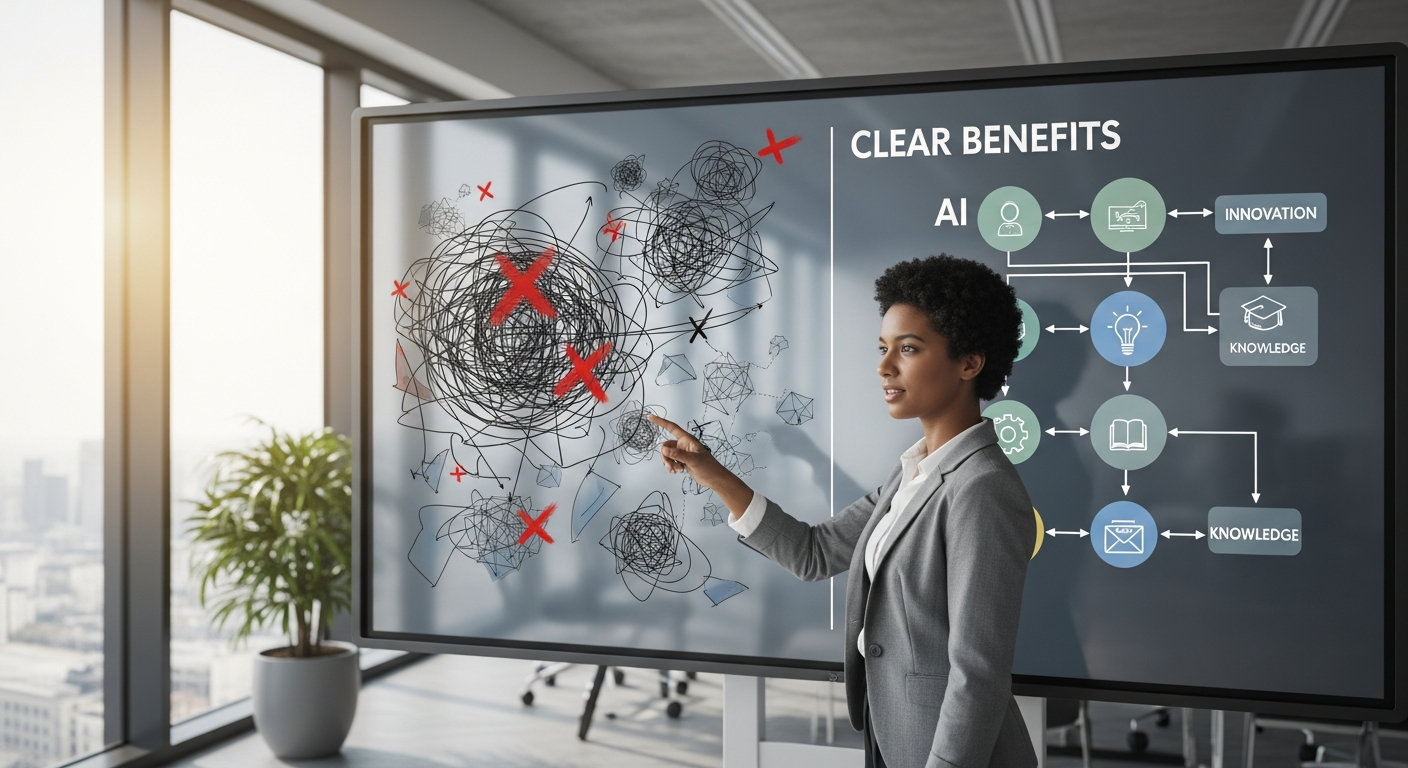
>As an operations manager, you're constantly evaluating technologies that promise to streamline processes and boost efficiency. When it comes to learning and development, the buzz around AI is impossible to ignore. Specifically, the <Gemini AI new model for personalized learning experiences holds immense promise, yet it's often shrouded in misconceptions. Many operational leaders I speak with view AI in learning with a healthy dose of skepticism. Honestly, their initial exposure has often been to consumer-grade chatbots or overhyped solutions that failed to deliver tangible ROI. This article aims to cut through the noise, debunking common myths, and revealing how Gemini AI can genuinely transform your organization's learning landscape. It's not just another tech toy; it's a strategic operational asset.
>Do you think AI is just another fancy chatbot for education, a glorified search engine that answers questions? That's a common, but gross, oversimplification. This belief often stems from the initial wave of AI tools that focused heavily on user-facing chat interfaces, or perhaps from marketing materials that leaned too heavily on the "talking bot" aspect. For operations leads, this translates into a fear of investing in "another tech toy" that will demand significant resources without delivering measurable improvements in efficiency, employee performance, or cost reduction. Let's dismantle these fears, one myth at a time.<
Myth #1: Gemini AI Requires Massive Custom Data Sets to be Effective
One of the most persistent myths I encounter is the idea that deploying Gemini AI for personalized learning demands a complete overhaul of your existing data infrastructure or the immediate creation of proprietary, massive custom datasets. This couldn't be further from the truth. Modern Gemini AI models leverage extensive pre-training on vast general knowledge datasets. This means they arrive "smart" out of the box. They're capable of understanding context, generating relevant content, and adapting learning paths with surprisingly minimal initial custom data.
Think about it: transfer learning is a game-changer. You don't need to teach Gemini AI what a "spreadsheet" is or how to structure a basic paragraph. It already knows. Your operational focus shifts from data creation to data *curation* and *integration*. You can begin by feeding it your existing training manuals, policy documents, product specifications, or even historical performance data. I've seen organizations achieve significant personalization with just a few hundred pages of well-structured internal documentation. This dramatically reduces setup time and resource allocation, allowing for rapid deployment and quicker time-to-value. For instance, a manufacturing company could upload their equipment operation manuals (PDFs, Word docs) and quickly have Gemini AI generating scenario-based quizzes and troubleshooting guides tailored to individual roles, without needing to manually tag every single data point.
Myth #2: Personalization Means More Manual Oversight and Maintenance
The thought of providing personalized learning for hundreds, if not thousands, of employees often conjures images of an overwhelmed L&D team drowning in manual content creation and tracking. This is a legitimate concern for operations managers focused on scalability and resource allocation. However, Gemini AI fundamentally flips this script. Instead of increasing manual workload, it automates the most time-consuming aspects of personalization.
Here’s how it works: Gemini AI observes learner interactions, assesses their progress, identifies knowledge gaps, and then dynamically adapts content, recommends resources, and generates targeted feedback. This isn't about a human trainer manually picking the next module for each learner. It's about the AI engine intelligently constructing individual learning paths in real-time. The shift for your operations team moves from manual content creation and curation to strategic oversight and performance analysis. You’ll be focusing on refining the AI's parameters, analyzing aggregated learning data to identify systemic issues, and evolving the overall curriculum – not getting bogged down in individual learner management. This translates directly into efficiency gains, allowing your L&D resources to focus on higher-value activities.
Myth #3: Implementing Gemini AI is an Expensive, Long-Term IT Project
>The specter of a multi-year, multi-million-dollar IT project is enough to make any operations manager wary. Historically, large-scale software implementations, especially in learning management systems (LMS), have been exactly that. However, the landscape for Gemini AI integration is radically different today. The vast majority of Gemini AI solutions for learning are cloud-based, offered as Software-as-a-Service (SaaS). This means no heavy on-premise infrastructure, no complex server management, and significantly reduced upfront capital expenditure.<
Deployment often involves API integrations with existing systems (like your current LMS or HRIS) rather than rip-and-replace strategies. I've seen pilot programs go from concept to initial deployment in a matter of weeks, not months or years. These iterative deployment models allow for quick wins and measurable ROI almost immediately. You can start with a specific training module, evaluate its impact on key operational metrics (e.g., reduced onboarding time), and then scale. For example, a modern AI-powered learning platform like Acme AI Learn> (hypothetical product) offers a robust API and pre-built connectors that can integrate with most enterprise LMS platforms in days, not months. This drastically cuts down on the IT burden and accelerates your path to realizing benefits from a Gemini AI new model for personalized learning experiences.<
Myth #4: Gemini AI Replaces Human Trainers and Subject Matter Experts
This is perhaps the most emotionally charged myth: the fear that AI will render human trainers and subject matter experts (SMEs) obsolete. Let me be clear: Gemini AI does not replace humans; it augments them. Think of it as a powerful assistant that takes on the repetitive, data-heavy, and scalable aspects of training, freeing up your human experts for what they do best – complex problem-solving, nuanced mentorship, empathy, and strategic curriculum design.
Consider a sales training scenario. Gemini AI can generate an infinite number of practice scenarios, provide immediate, objective feedback on pitch delivery (based on tone, keyword usage, etc.), and identify precisely where a trainee struggles. This means a human sales trainer spends less time on basic drills and more time on advanced role-playing, addressing complex client objections, or mentoring individual reps on soft skills that AI can't yet fully replicate. The result is improved trainer efficiency and effectiveness, leading to a more highly skilled workforce. Your SMEs become architects and strategists, leveraging AI to amplify their impact across the organization, rather than being bogged down in manual content delivery.
Myth #5: Measuring ROI from AI-Driven Learning is Too Complex and Vague
For operations leads, if you can't measure it, you can't manage it. The concern that AI's impact on learning efficiency is hard to quantify is a valid one, especially given the qualitative nature of some learning outcomes. However, Gemini AI, by its very nature, generates immense amounts of data that can be directly tied to operational metrics.
Here are specific, measurable metrics that operations leads can track:
- Reduced Training Time Per Employee: AI adapts to individual pace, allowing faster learners to progress quickly and slower learners to get targeted support, often shortening overall training duration.
- Increased Knowledge Retention Scores: Personalized, adaptive content and spaced repetition (features often powered by AI) demonstrably improve long-term recall.
- Lower Error Rates Post-Training: Better comprehension and retention directly translate to fewer mistakes in operational tasks.
- Faster Onboarding Times: Streamlined, personalized onboarding paths get new hires productive more quickly.
- Reduced Support Tickets: Employees who are better trained and have quick access to AI-powered knowledge bases generate fewer support requests for L&D or IT.
- Compliance Adherence Rates: Automated tracking and targeted reminders ensure higher compliance.
Gemini AI platforms often include analytics dashboards that provide these metrics directly. This allows you to track progress, identify bottlenecks, and demonstrate clear ROI. I've seen companies reduce onboarding time by 20% and training costs by 15% within the first year of a targeted Gemini AI implementation.
Myth #6: Gemini AI Introduces Significant Data Privacy and Security Risks
Data privacy and security are paramount for any operations manager, especially when dealing with sensitive employee information and proprietary company knowledge. The idea of feeding all your data into an "AI" can feel inherently risky. However, modern AI platforms, including those built on Gemini, are designed with enterprise-grade security and compliance at their core. This is a non-negotiable for reputable vendors.
Key considerations and features include:
- Compliance: Adherence to global regulations like GDPR, CCPA, HIPAA, ISO 27001, etc. Reputable vendors will explicitly state their compliance certifications.
- Data Anonymization and Pseudonymization: Techniques used to protect individual identities while still allowing the AI to learn from patterns.
- Encryption: Data is encrypted both in transit and at rest, a standard practice for cloud services.
- Access Controls: Granular permissions ensure only authorized personnel can access specific data.
- Secure Infrastructure: Hosting on major cloud providers (AWS, Azure, Google Cloud) that have massive security budgets and expertise.
The risk profile is often *lower* than traditional manual data handling, where human error or insecure local storage can be major vulnerabilities. The critical step for operations is due diligence: selecting vendors who are transparent about their security protocols and compliance frameworks. For enhanced data governance and security in AI applications, consider platforms like GuardVault AI Solutions (hypothetical product), which specialize in secure data handling for enterprise AI deployments, offering advanced encryption and audit trails.
Myth #7: Personalized Learning is Only for Complex, Niche Training Needs
Some operations leaders assume that the power of a Gemini AI new model for personalized learning experiences is overkill for basic, general, or simpler training needs. They might think it's only valuable for highly specialized technical skills or executive development. This is a misconception that overlooks significant efficiency gains across the board.
Gemini AI can optimize even the most fundamental training, such as:
- Compliance Training: Instead of a one-size-fits-all module, AI can adapt the content based on an employee's role, location, prior knowledge, and even their preferred learning style, ensuring faster comprehension and higher completion rates.
- Onboarding: Tailoring introductory material to a new hire's specific department and prior experience accelerates their integration and productivity.
- Software Tutorials: Adapting instructions based on a user's current skill level with a particular application prevents frustration for advanced users and provides necessary hand-holding for beginners.
By making even basic training more engaging and efficient, Gemini AI reduces the time employees spend away from their core tasks, minimizes frustration, and ensures a higher baseline of knowledge across the entire workforce. This benefits broader operational efficiency by creating a more competent and adaptable employee base, regardless of the complexity of the initial training subject.
What Actually Works: Leveraging Gemini AI for Operational Efficiency in Learning
>Having debunked the common myths, let's pivot to the actionable truths. Gemini AI, when strategically implemented, is a powerful engine for operational efficiency in learning and development. It's not about replacing humans or creating endless IT headaches; it's about intelligent automation and data-driven optimization.<

Here are the real benefits for operations:
- Automated Content Adaptation: Gemini AI dynamically adjusts learning paths, content difficulty, and examples based on individual learner performance, pace, and preferences. This means less manual customization by L&D teams.
- Data-Driven Insights for Optimization: The AI constantly collects data on learner engagement, struggles, and successes. This provides granular insights that human teams can use to refine curriculum, identify systemic knowledge gaps, and predict training needs.
- Scalable Personalization Without Increased Manual Load: This is the holy grail for ops managers. You can deliver hyper-personalized experiences to thousands of employees simultaneously without needing a proportional increase in L&D staff.
- Reduced Training Costs & Time: By making learning more efficient and effective, you reduce the time employees spend in training (time away from productive work) and potentially the costs associated with external trainers or extensive content development.
- Enhanced Employee Performance & Retention: Better, more relevant training leads to more competent, confident employees who are less likely to make errors and more likely to stay engaged with the organization.
>To put this into perspective, consider this comparison:<
| Operational Metric | Traditional Learning Approach | AI-Driven Learning (Gemini) |
|---|---|---|
| Content Development Effort | High; manual creation, updates, and tailoring for different roles. | Lower; AI assists in content generation, adaptation, and updates based on data. |
| Personalization Scale | Limited; often one-size-fits-all or basic role-based tracks. | High; individualized paths for thousands of learners simultaneously. |
| Training Time/Employee | Often fixed, potentially inefficient for fast learners or struggling ones. | Optimized; faster for those who grasp quickly, more support for those who need it. |
| Data for Insights | Basic completion rates, subjective feedback, manual surveys. | Granular performance data, engagement metrics, predicted knowledge gaps. |
| ROI Measurement | Often qualitative, hard to link directly to operational KPIs. | Directly measurable via reduced errors, faster onboarding, higher retention. |
| Resource Allocation (L&D) | Heavy on content delivery and tracking. | Shift to strategic oversight, curriculum design, and performance analysis. |
How to Apply This: Concrete Next Steps for Operations Leads
Ready to move beyond the myths and leverage a Gemini AI new model for personalized learning experiences? Here are concrete, actionable steps for operations leads:
- Identify a Pilot Project with Clear Efficiency Metrics: Don't try to overhaul everything at once. Choose a specific training area that has clear, measurable operational pain points. Examples: New employee onboarding, compliance training, a new software rollout, or a specific safety protocol. Define success metrics beforehand (e.g., "reduce onboarding time by 15%," "decrease compliance errors by 10%").
- Start with Existing Data; Don't Wait for Perfection: You likely have a wealth of existing training materials, manuals, and FAQs. Begin by feeding this into a Gemini AI-powered learning platform. The AI will learn and improve over time. Waiting for a perfectly structured, comprehensive dataset will only delay your ROI. My advice? Scan your most critical 100-200 pages of content and start there.
- Partner with AI Vendors Who Prioritize Operational Integration and Security: Look for solutions that offer robust APIs, clear integration pathways with your existing LMS/HRIS, and transparent, enterprise-grade security and compliance certifications. Request a detailed security whitepaper and ask for examples of successful integrations with companies similar to yours.
- Focus on Measurable Outcomes and Iterate: Implement, measure, analyze, and refine. Use the data provided by the AI platform to understand what's working and what isn't. Make incremental improvements to the content, the AI's prompts, or the learning flow. This iterative approach ensures continuous improvement and demonstrable value.
- Upskill Existing Trainers to Leverage AI Tools: Your L&D team isn't being replaced; their roles are evolving. Invest in training your trainers and SMEs on how to work *with* Gemini AI – how to prompt it effectively, how to interpret its data, and how to use it to create even more impactful learning experiences. This might involve short workshops on "AI Prompt Engineering for L&D" or "Data Analysis for Learning Outcomes."
>Remember, the goal is to start small, achieve measurable wins, and then scale your Gemini AI initiatives strategically across the organization. This isn't just about "cool tech"; it's about driving tangible operational efficiency and enhancing your workforce's capabilities.<
FAQ: Your Gemini AI Learning Questions Answered
How quickly can we see ROI from Gemini AI in learning?
In my experience, pilot projects focused on specific, measurable operational pain points (like onboarding time or error rates) can show initial ROI within 3-6 months. Significant, broader organizational ROI typically becomes evident within 12-18 months as the system matures and adoption increases. The key is to define clear metrics upfront and monitor them diligently.

What's the minimal viable product (MVP) for Gemini AI in learning?
An MVP could be as simple as an AI-powered knowledge base for a specific department, an adaptive quiz generator for a critical compliance module, or a personalized onboarding pathway for new hires in a single role. The goal is to tackle one specific problem, prove the concept, and gather initial data before expanding.
How do we ensure content accuracy when using Gemini AI?
Ensuring accuracy is a multi-step process. First, feed the AI high-quality, verified source material. Second, implement a human-in-the-loop review process for AI-generated content, especially initially. Third, leverage the AI's feedback mechanisms: if learners consistently flag inaccuracies, it's a signal to review and refine the source data or the AI's generation parameters. Many platforms offer confidence scores for AI-generated responses.
What resources are needed internally to implement Gemini AI for learning?
You'll need a project lead (often from L&D or Operations), subject matter experts to provide and validate content, and minimal IT support for initial integrations. The beauty of cloud-based AI is that it significantly reduces the internal IT burden compared to traditional software deployments. Focus on people who understand your training needs and can interpret data.
Can Gemini AI integrate with our existing LMS?
Yes, most modern Gemini AI learning solutions are designed with API-first architectures, allowing for seamless integration with existing LMS platforms (e.g., Workday Learning, Cornerstone OnDemand, Moodle, Canvas). This often means you can augment your current system with AI capabilities rather than replacing it entirely, preserving your existing investments and workflows. Always confirm specific integrations with potential vendors.