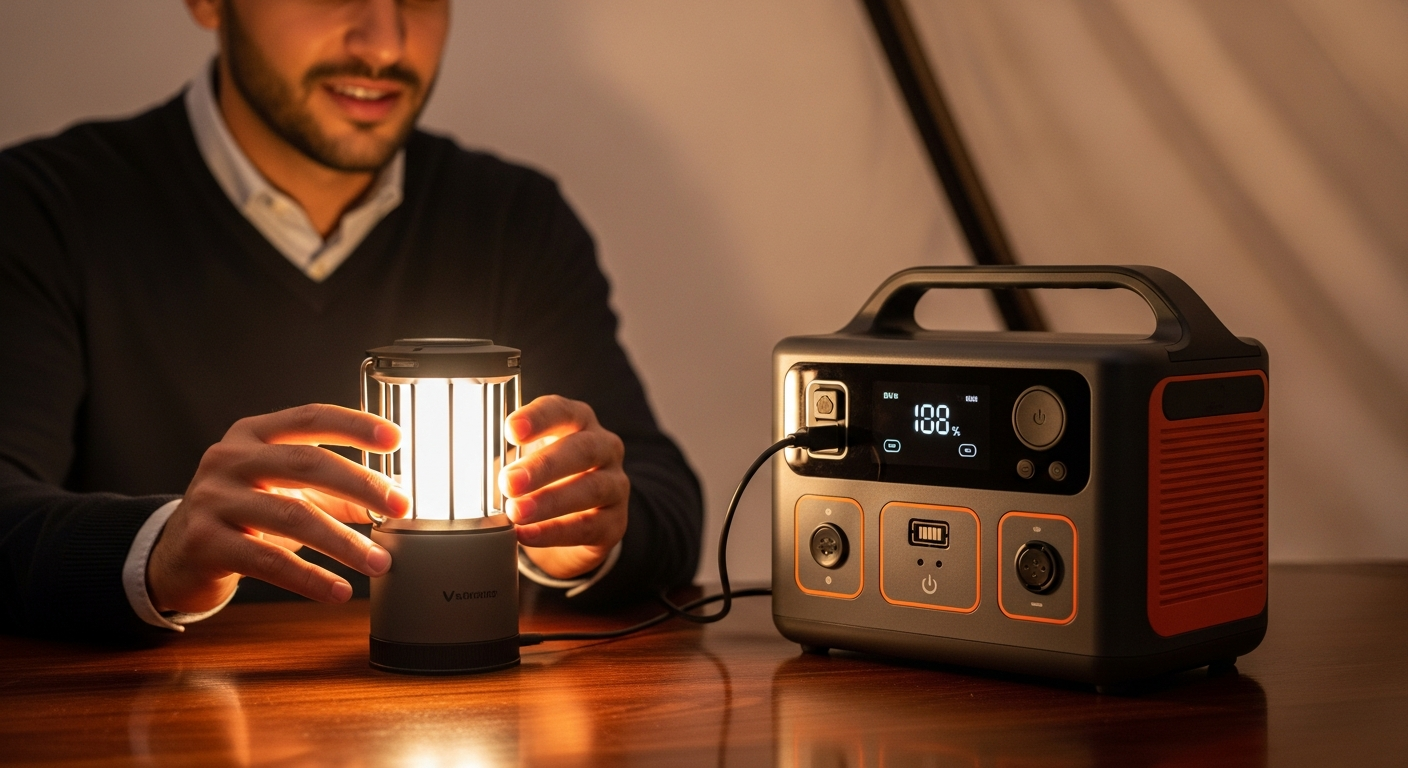
Portable Power for Extended Camping: Smart-Home Pro's Guide
Uninterrupted Power for the Modern Professional: Your Guide to Portable Power Stations for Extended Camping
>>As a business professional deeply invested in smart home technology, you understand the critical importance of reliable power. When your escape involves an extended camping trip, the last thing you need is to be disconnected from your essential devices – whether it's for emergency communications, powering your drone, keeping your <portable projector running, or simply ensuring your CPAP machine operates through the night. The promise? To empower you with the knowledge to select a portable power station that seamlessly integrates into your high-tech lifestyle, providing the robust, long-duration energy you need, wherever your adventure takes you, without compromise.<
>Gone are the days when "roughing it" meant complete digital detox. Today's extended camping demands a sophisticated approach to power management. You're not just charging a phone; you're sustaining a mini-ecosystem of devices, from advanced GPS units and satellite communicators to portable refrigerators and even Starlink terminals. The challenge lies in finding a portable power station that offers the right balance of capacity, output versatility, durability, and smart features to meet these diverse needs, especially when you're off-grid for days, or even weeks.<
This comprehensive guide is engineered for the discerning professional. We'll cut through the marketing jargon, providing you with data-driven insights and actionable recommendations. Our focus is on solutions that deliver reliability, efficiency, and the smart integration you've come to expect in your connected life. Prepare to power your extended adventures with confidence.
Executive Shortlist: Top Portable Power Stations for Extended Camping
For the busy professional, time is currency. Here’s a quick overview of our top recommendations, meticulously chosen for their capacity, output, durability, and smart features, ideal for extended off-grid use.
Model
Capacity (Wh)
Output (W)
Battery Type
Key Feature for Extended Use
Approx. Price Range
Verdict
EcoFlow DELTA Pro
3600 (Expandable to 25 kWh)
3600 (Surge 7200W)
LFP (LiFePO4)
Massive expandability, X-Stream charging, EV charging support
$3,699 - $4,599
Ultimate power for long durations & high-demand devices.
Jackery Explorer 2000 Pro
2160
2200 (Surge 4400W)
NMC (Li-ion)
Fast solar charging, robust build, user-friendly interface
$2,099 - $2,299
Reliable workhorse for significant power needs.
BLUETTI AC200MAX
2048 (Expandable to 8192 Wh)
2200 (Surge 4800W)
LFP (LiFePO4)
Modular design, app control, 15 outlets, long lifespan
$1,899 - $2,099
Excellent balance of capacity, output, and expandability.
Durable, long-lasting, and surprisingly portable for its size.
Prices are approximate and subject to change. Always check the latest pricing from the retailer.
Ready to dive deeper into the specifics that will define your next off-grid power solution? Let's explore each of these contenders in detail.
In-Depth Analysis: Powering Your Extended Adventures
Selecting a portable power station for extended camping is more than just picking the biggest number. It's about understanding your power profile, anticipating your needs, and investing in a system that offers longevity, versatility, and smart management. Here, we break down our top picks, evaluating them against the rigorous standards of a tech-savvy professional.
1. EcoFlow DELTA Pro: The Uncompromising Powerhouse
>The EcoFlow DELTA Pro isn't just a portable power station; it's a modular energy ecosystem designed for serious off-grid applications. With a staggering base capacity of 3600Wh and an AC output of 3600W (7200W surge), it can power virtually any appliance you'd bring camping, from microwaves and air conditioners to power tools and even electric vehicle charging (with an adapter). Its true genius lies in its expandability. You can link two DELTA Pros together for 7200Wh, and then add up to two Smart Extra Batteries to each, pushing the total capacity to an incredible 25kWh. This level of scalable power is unmatched, making it ideal for multi-week expeditions or even remote cabin backup.<
Key Features & Benefits:
Unprecedented Expandability: Start with 3.6kWh and scale up to 25kWh. This is critical for extended trips where resupply is impossible or infrequent.
X-Stream Fast Charging: Recharges from 0-80% in just 65 minutes from an AC wall outlet. Imagine plugging it into your RV's shore power for a quick top-up.
Multi-Charging Options: Supports AC, solar (up to 1600W input), car, and even EV charging. Its solar input efficiency is particularly impressive for sustained off-grid operation.
LFP Battery Chemistry: Offers over 3500 cycles to 80% capacity, translating to a lifespan of 10+ years with regular use. This durability is paramount for a significant investment.
Smart App Control: Monitor power usage, customize settings, and control the unit remotely via the EcoFlow app – a feature smart home enthusiasts will appreciate.
Robust Build & Portability: While heavy at 99 lbs, its integrated wheels and telescopic handle make it surprisingly manageable for its size.
Ideal Use Case:
The DELTA Pro is for the professional who demands the absolute best in capacity and versatility. Perfect for extended family camping with high-draw appliances, remote work setups, medical device reliance (CPAP, oxygen concentrators), or anyone building a resilient off-grid energy system. If you plan to run a portable refrigerator, charge multiple laptops, power a Starlink dish, and still have reserves for unexpected needs, this is your go-to solution.
Considerations: Its size and weight require dedicated transport space. The initial investment is substantial, but justified by its performance and longevity.
" class="affiliate-link">View EcoFlow DELTA Pro on Amazon
2. Jackery Explorer 2000 Pro: The Reliable Workhorse
Jackery has carved out a strong reputation for user-friendly, reliable portable power solutions, and the Explorer 2000 Pro is their flagship for serious adventurers. With 2160Wh capacity and 2200W AC output (4400W surge), it's a formidable contender for extended camping. It's designed for rapid solar recharging, capable of accepting up to 1400W of solar input, which means you can fully recharge it in just 2.5 hours under optimal sunlight – a game-changer for multi-day trips where grid power is nonexistent.
Key Features & Benefits:
Ultra-Fast Solar Charging: The ability to recharge in 2.5 hours with 6x SolarSaga 200W panels is unmatched in its class, ensuring continuous power on sunny days.
Robust & Durable Design: Built to withstand the rigors of outdoor use, featuring a sturdy handle and an impact-resistant shell.
Pure Sine Wave Inverter: Ensures clean, stable power for sensitive electronics, just like your home outlet.
Comprehensive Safety Features: Advanced BMS (Battery Management System) protects against over-voltage, over-current, over-temperature, and short-circuiting.
Quiet Operation: Fan noise is minimal, which is a significant advantage in a quiet camping environment.
User-Friendly Interface: A clear, intuitive LCD screen displays vital information, making it easy to monitor.
Ideal Use Case:
The Jackery Explorer 2000 Pro is perfect for the professional who values ease of use, rapid solar replenishment, and a proven track record of reliability. It’s excellent for powering medium-to-high draw devices like portable fridges (for several days), electric grills, power tools, and multiple device charges. If your extended camping involves ample sunlight and you prioritize quick, efficient solar recovery, the Jackery 2000 Pro is an outstanding choice.
Considerations: Uses NMC battery chemistry, which generally has a shorter cycle life (around 500-800 cycles to 80%) compared to LFP batteries. Not expandable in the same way as the EcoFlow or BLUETTI, so choose your capacity wisely.
" class="affiliate-link">Explore Jackery Explorer 2000 Pro
3. BLUETTI AC200MAX: The Modular & Versatile Companion
BLUETTI has consistently delivered innovative and robust power solutions, and the AC200MAX stands out as a highly versatile option for extended camping. It starts with a solid 2048Wh LFP battery and 2200W AC output (4800W surge), but its true strength lies in its modularity. You can expand its capacity by adding up to two BLUETTI B230 (2048Wh each) or B300 (3072Wh each) external battery modules, reaching a maximum of 8192Wh. This flexibility allows you to tailor your power setup precisely to the length and demands of your trip.
Key Features & Benefits:
Modular Capacity Expansion: Grow your power from 2048Wh up to 8192Wh. This scalability is excellent for adapting to different trip lengths.
LFP (LiFePO4) Battery: Provides over 3500 cycles to 80% capacity, ensuring a long and reliable service life.
Numerous Output Ports: Boasts 15 different outlets, including 6 AC outlets, a 30A RV port, USB-A, USB-C (100W PD), wireless charging pads, and DC ports, covering all your device needs.
Dual Fast Charging: Can combine AC and solar input for a rapid 1400W total charging speed, allowing a full recharge in approximately 2 hours.
Intuitive Touchscreen & App Control: Easy to monitor and manage settings directly on the unit or via the BLUETTI app.
Smart-Home Integration Potential: The app control and LFP battery align well with the long-term, reliable energy management principles of smart homes.
Ideal Use Case:
The BLUETTI AC200MAX is ideal for the professional seeking a highly adaptable and durable power solution. If your camping trips vary in length and power requirements, or if you appreciate the long-term value of LFP batteries and extensive port options, the AC200MAX is an excellent fit. It’s particularly good for powering sensitive electronics, CPAP machines, and a range of communication devices over several days, with the option to expand for longer durations.
Considerations: While modular, adding extra batteries increases the overall footprint and weight. The base unit is substantial but manageable.
" class="affiliate-link">Check Price for BLUETTI AC200MAX
4. Goal Zero Yeti 1500X: The Trusted Ecosystem
Goal Zero has long been a pioneer in portable power, and the Yeti 1500X represents their commitment to a robust, reliable, and integrated ecosystem. With 1516Wh capacity and 2000W AC output (3500W surge), it offers substantial power for extended camping, backed by a brand renowned for its quality and customer support. The Yeti 1500X stands out for its well-engineered MPPT solar charge controller, ensuring maximum efficiency from solar panels, and its compatibility with a wide array of Goal Zero accessories, from lights to expansion batteries.
Key Features & Benefits:
Integrated MPPT Charge Controller: Maximizes efficiency when charging from solar panels, crucial for extended off-grid trips.
Robust Build Quality: Known for its durable construction, designed to withstand outdoor conditions.
Comprehensive Port Selection: Includes multiple AC, USB-A, USB-C (60W PD), 12V car, and 12V HPP ports, catering to diverse charging needs.
Expandable Capacity: Can be expanded with Goal Zero Tank Expansion Batteries (Lead-Acid) for even longer durations, though this is a different battery chemistry.
Goal Zero App Integration: Monitor and control your Yeti from your smartphone, a convenience for smart home users.
Proven Reliability: A trusted brand with a strong track record in outdoor power solutions.
Ideal Use Case:
>The Goal Zero Yeti 1500X is perfect for the professional who values a premium brand with a proven ecosystem. If you already own Goal Zero solar panels or accessories, or if you prioritize top-tier customer support and a highly efficient solar charging system, the 1500X is an excellent choice. It’s well-suited for powering laptops, cameras, drones, and small appliances for several days, with efficient solar replenishment.<
Considerations: Uses NMC battery chemistry, similar to Jackery, with a shorter cycle life than LFP options. Expansion batteries use lead-acid, which is heavier and less efficient than lithium. Higher price point for its capacity compared to some competitors.
" class="affiliate-link">Discover Goal Zero Yeti 1500X
5. Anker PowerHouse 767: The Long-Lasting & Portable Solution
Anker, a name synonymous with reliable charging solutions, brings its expertise to the portable power station market with the PowerHouse 767. Boasting 2048Wh capacity and 2300W AC output (4600W surge), it’s a strong contender for extended camping. What truly sets it apart is its use of long-lasting LiFePO4 (LFP) batteries rated for 3000 cycles to 80% capacity, and Anker's innovative HyperFlash charging technology, which allows it to charge from 0 to 80% in just 1 hour from an AC outlet. Plus, its integrated wheels and extendable handle make it surprisingly portable for a unit of its power.
Key Features & Benefits:
Long-Lasting LFP Battery: Offers a 10-year lifespan with 3000 charge cycles, providing excellent value over time.
HyperFlash Fast Charging: Recharges incredibly quickly from AC, minimizing downtime between uses.
Wheeled Design with Handle: Enhances portability significantly, making it easier to transport around a campsite or between vehicles.
High Power Output: 2300W continuous output handles demanding appliances with ease.
Anker App Control: Monitor and manage the power station from your smartphone, a familiar and convenient feature for tech-savvy users.
Robust & Safe Construction: Anker's reputation for quality and safety extends to this unit, featuring multiple protections.
Ideal Use Case:
The Anker PowerHouse 767 is perfect for the professional who prioritizes long-term durability, ultra-fast charging, and enhanced portability for a unit of its capacity. If you need a powerful station that you can easily move around your campsite, and you want the peace of mind of a 10-year lifespan, the Anker 767 is an excellent choice. It’s ideal for powering a wide range of devices for multi-day trips, from portable ovens to projectors, without worrying about battery degradation.
Considerations: While portable for its size, it's still a substantial unit. Solar input is strong but not as high as some competitors for the fastest possible solar recharge times.
Strategic Investment: Pricing & Suitability by Segment
Understanding the value proposition of these portable power stations requires more than just looking at the sticker price. It's about aligning the investment with your specific needs, the duration of your trips, and the critical nature of the devices you intend to power. Let's break down the suitability by different professional segments and their typical camping scenarios.
The Weekend Warrior (1-3 Day Trips with Tech)
Typical Needs: Charging phones, tablets, drone batteries, camera gear, small portable fridge (30-40W), laptop for light work, LED lighting.
Ideal Capacity Range: 1000Wh - 1500Wh.
Recommended Units: While our reviewed units are generally larger, the Goal Zero Yeti 1500X, though powerful, could serve this segment if future expansion or higher demand is anticipated. For a slightly smaller, more budget-conscious option outside our top 5, consider the Jackery Explorer 1000 Pro or BLUETTI EB70S.
Investment Justification: Ensures all devices stay charged, allowing for photography, drone footage, and maintaining communication. Over-specifying slightly ensures headroom for unexpected needs.
The Extended Adventurer (3-7 Day Trips, Moderate Power Demands)
Typical Needs: All "Weekend Warrior" needs plus CPAP machine (30-60W for 8 hours), Starlink terminal (50-75W), portable projector, electric kettle, multiple laptop recharges, high-capacity drone charging.
Ideal Capacity Range: 1500Wh - 2500Wh.
Recommended Units:
Jackery Explorer 2000 Pro: Excellent for its fast solar charging, keeping you powered through the week.
BLUETTI AC200MAX: Great for its modularity, allowing you to start with 2048Wh and add more if needed for longer trips.
Anker PowerHouse 767: Offers great durability and fast AC charging for quick top-ups if you pass through a powered site.
Investment Justification: Critical for maintaining essential medical devices, ensuring connectivity for remote work or emergencies, and powering comfort appliances for a true "glamping" experience.
The Expeditionary Professional (7+ Day Trips, High Power Demands)
Typical Needs: Sustained power for all high-draw devices, potentially running a portable AC unit (500-1000W intermittently), electric cooking appliances, multiple Starlink dishes for a team, power tools, comprehensive medical equipment. Need for robust solar input and/or generator integration.
EcoFlow DELTA Pro: Unrivaled expandability up to 25kWh makes it the clear winner for multi-week expeditions or even remote base camp power. Its high AC output handles almost anything.
BLUETTI AC200MAX (with expansion batteries): Can reach 8192Wh, providing a very strong option for extended high-demand scenarios, offering a balance of capacity and portability.
Investment Justification: Ensures mission-critical operations, safety, and comfort for long durations in remote locations. This is an investment in self-sufficiency and uninterrupted productivity, even in the wilderness.
When considering the price, also factor in the cost of associated accessories like solar panels. While the initial outlay for a high-capacity LFP unit like the EcoFlow DELTA Pro or BLUETTI AC200MAX is higher, their superior cycle life often translates to a lower cost per Wh over their operational lifespan compared to NMC alternatives.
Persona Matching: Your Ideal Power Partner
Let's refine the selection process by matching these powerful units to specific professional personas. Your lifestyle, work demands, and camping style will dictate the perfect fit.
Profile: You work remotely, often from scenic locations. Your gear includes a high-end laptop, multiple monitors, a robust internet connection (Starlink or cellular hotspot), drone, camera equipment, and a portable espresso maker. You value seamless connectivity and productivity, even off-grid.
Ideal Match: EcoFlow DELTA Pro or BLUETTI AC200MAX (with expansion).
Why EcoFlow DELTA Pro: Its immense capacity and high output are perfect for running a full remote workstation, including multiple displays and Starlink, for days on end. The fast charging ensures quick turnarounds when you do find power.
Why BLUETTI AC200MAX: The modularity allows you to scale up for longer projects, and its LFP battery provides the longevity you need for frequent, extended use. Multiple ports mean you can power all your devices simultaneously.
The Outdoor Enthusiast with Smart Home Sensibilities
Profile: Your home is a hub of smart devices, and you expect similar efficiency and control in the wilderness. You enjoy extended trips, bringing along comfort items like a portable fridge, electric blankets, and perhaps a projector for outdoor movies. Reliability and user experience are key.
Ideal Match: Jackery Explorer 2000 Pro or Anker PowerHouse 767.
Why Jackery Explorer 2000 Pro: Its legendary ease of use, robust build, and incredibly fast solar charging align with a desire for hassle-free, efficient power management. It’s like the "smart thermostat" of portable power.
Why Anker PowerHouse 767: The integrated wheels and handle make it easy to deploy, and its 10-year lifespan resonates with the long-term investment mindset of smart home owners. The app control offers that familiar digital management experience.
The Medical Device Dependent Professional
Profile: You rely on a CPAP machine, oxygen concentrator, or other critical medical equipment, and extended camping shouldn't compromise your health. You need absolute certainty of power for multiple nights, potentially alongside other essential devices.
Ideal Match: EcoFlow DELTA Pro or BLUETTI AC200MAX.
Why EcoFlow DELTA Pro: Its sheer capacity provides the longest runtimes for critical medical devices, offering unparalleled peace of mind. The ability to expand means you can guarantee power for weeks.
Why BLUETTI AC200MAX: The LFP battery's longevity and the option to add expansion batteries ensure reliable, long-duration power. Its multiple DC ports can often directly power CPAP machines more efficiently than AC outlets.
The Expedition Leader / Group Organizer
Profile: You're responsible for powering a group's devices, communication equipment, and potentially a communal kitchen setup. Durability, high output, and the ability to charge multiple devices simultaneously are paramount.
Ideal Match: EcoFlow DELTA Pro or BLUETTI AC200MAX (with expansion).
Why EcoFlow DELTA Pro: The massive capacity and high AC output can handle multiple users' needs and even run larger appliances like induction cooktops or small heaters.
Why BLUETTI AC200MAX: Its 15 outlets and modular expansion make it highly versatile for a group setting, allowing different devices to be charged simultaneously without issue.
Mastering Your Mobile Power: Implementation & Getting Started Guide
>Acquiring a powerful portable power station is just the first step. Maximizing its utility and ensuring a seamless experience on your extended camping trips requires strategic planning and understanding of best practices. Here's your implementation guide to becoming a mobile power master.<
Phase 1: Pre-Trip Planning & Power Profiling
Audit Your Devices: List every electrical device you plan to bring. Note their wattage (W) and how many hours (h) you'll use them per day. Check labels or manufacturer specifications.
Calculate Daily Energy Consumption:
Example:
Laptop: 60W x 4 hours = 240Wh
Portable Fridge: 40W x 24 hours = 960Wh (note: fridge consumption is often intermittent, but this is a good conservative estimate)
Add a 20-30% buffer for efficiency losses and unexpected usage. For our example: 1630Wh * 1.25 = ~2037.5Wh per day.
Determine Trip Duration & Total Capacity Needed: If your trip is 5 days, you'd need 2037.5Wh/day * 5 days = ~10,187.5Wh. This immediately tells you that a base 2000Wh unit won't cut it without significant solar replenishment or expansion.
Assess Recharging Capabilities:
Solar: How many watts of solar panels can you realistically bring and deploy? What are the typical sun hours for your destination? (e.g., 400W panels * 5 peak sun hours * 0.7 (efficiency factor) = 1400Wh/day). Compare this to your daily consumption.
Vehicle Charging: Useful for topping up while driving, but generally slow for large stations.
Generator: If you're bringing a small gas generator, ensure it can provide enough AC output for your power station's fast charging input.
Choose the Right Cables & Adapters: Ensure you have all necessary cables (AC, DC, solar connectors like MC4, USB-C PD) and any specific adapters for your devices (e.g., CPAP DC adapter for higher efficiency).
Phase 2: On-Site Optimization & Management
Strategic Placement:
Keep the power station in a well-ventilated, shaded area to prevent overheating, which can reduce efficiency and lifespan.
>Protect it from direct rain, dust, and extreme temperatures.<
Position it close enough to your main power draw points to minimize cable runs.
Optimize Solar Panel Deployment:
Angle panels directly towards the sun. Adjust them every few hours for maximum efficiency.
Avoid shadows on any part of the panel. Even a small shadow can significantly reduce output.
Secure panels to prevent wind damage.
Prioritize DC Over AC: Whenever possible, use DC outputs (12V car port, USB-A, USB-C) instead of AC outlets. Converting DC battery power to AC and then back to DC for charging devices incurs energy loss (typically 10-15%). Many laptops, CPAPs, and fridges have DC adapters available.
Monitor Via App: Utilize the companion app (EcoFlow, Jackery, BLUETTI, Goal Zero, Anker all offer them) to monitor input/output, battery status, and customize settings without constantly checking the unit. Set charging limits if you want to extend battery lifespan (e.g., charge only to 80% for storage).
Power Down Unused Devices: Simple but effective. Unplug or turn off devices not in active use.
Cold Weather Considerations: Lithium-ion batteries perform less efficiently in cold temperatures and cannot be charged below freezing without risking damage. If camping in cold climates, keep your power station insulated or bring it inside your tent at night.
Phase 3: Post-Trip Maintenance & Storage
Recharge to Storage Level: For optimal long-term health, charge your power station to around 50-80% before storing it. Avoid storing it fully depleted or at 100% for extended periods.
Clean the Unit: Wipe down the exterior, ensure vents are clear of dust and debris.
Store in a Cool, Dry Place: Protect it from extreme temperatures and humidity.
Periodic Check-ins: If storing for very long periods, check the battery level every few months and top up to the recommended storage level.
By following these steps, you'll not only extend the life of your portable power station but also ensure it's always ready to perform flawlessly on your next extended camping adventure, maintaining your comfort and connectivity.
Ready to Power Your Next Adventure?
The wilderness shouldn't mean sacrificing your modern conveniences or critical power needs. With the right portable power station, you can maintain connectivity, power essential medical devices, fuel your remote work, and elevate your extended camping experience to unparalleled levels of comfort and productivity.
Don't let power limitations dictate the length or enjoyment of your next escape. Invest in reliability, capacity, and smart technology that aligns with your professional standards.
Frequently Asked Questions About Portable Power Stations for Extended Camping
Q1: What capacity (Wh) do I really need for extended camping?
A1: This is the most critical question. For "extended" trips (3+ days), we recommend a minimum of 1500Wh, ideally 2000Wh or more, especially if you plan to run a portable fridge, CPAP machine, or work from a laptop. As detailed in our "Pre-Trip Planning" section, calculate your daily power consumption and multiply by the number of days you'll be off-grid. Always add a 20-30% buffer. If you have significant solar input, you might be able to manage with a slightly smaller base unit, but for true self-sufficiency over many days, higher capacity or expandability is key.
Q2: Is LFP (LiFePO4) battery better than NMC (Li-ion) for extended camping?
A2: For extended camping and long-term investment, LFP batteries (like those in EcoFlow DELTA Pro, BLUETTI AC200MAX, Anker PowerHouse 767) are generally superior. They offer significantly more charge cycles (3000-3500+ to 80% capacity) compared to NMC (500-800 cycles), meaning a much longer lifespan. LFP batteries are also safer, more stable, and perform better in a wider range of temperatures. While NMC batteries tend to be lighter and offer higher energy density for their weight, the longevity and safety of LFP make them the preferred choice for a serious, long-term portable power solution for extended off-grid use.
Q3: How important is solar charging input for extended trips?
A3: Extremely important. For any trip longer than 2-3 days without access to grid power, reliable solar charging becomes essential for sustained operation. A high solar input capacity (e.g., 1000W+ for units like Jackery 2000 Pro or EcoFlow DELTA Pro) allows you to replenish a significant portion, if not all, of your daily power consumption from the sun. This makes you truly independent. Without adequate solar, even the largest power station will eventually run dry. Always factor in how many solar panels you can realistically transport and deploy.
Q4: Can these power stations run a CPAP machine for multiple nights?
A4: Absolutely. Most modern CPAP machines consume between 30-60W (without a humidifier). A 2000Wh power station could theoretically run a 50W CPAP for around 40 hours (2000Wh / 50W). This translates to 5 nights of 8-hour sleep. To maximize runtime, always use a DC adapter for your CPAP if available, as it avoids the 10-15% power loss from AC inversion. Higher capacity units or those with expansion batteries will naturally provide even longer runtimes, ensuring critical medical support throughout your extended trip.
Q5: Are these units truly "portable" for camping, given their size and weight?
>A5: While they are significantly heavier than smaller power banks, the term "portable" in this context refers to their ability to be moved and used in various off-grid locations, not necessarily backpacked. Units like the EcoFlow DELTA Pro (99 lbs) and Anker PowerHouse 767 (67 lbs) often include integrated wheels and telescopic handles to aid transport. They are designed to be moved from your vehicle to a campsite or tent, rather than carried on long hikes. For extended camping, the trade-off in weight is often justified by the unparalleled power capacity and output they provide.<
Q6: Can I charge my portable power station while it's being used (pass-through charging)?
A6: Yes, all the recommended high-end portable power stations for extended camping support pass-through charging. This means you can charge the unit via solar panels or an AC outlet while simultaneously drawing power from it to run your devices. This is a crucial feature for extended trips, allowing you to continuously harvest energy from the sun while powering your campsite, effectively turning your power station into an uninterrupted power supply (UPS) for your off-grid setup.
Q7: What safety features should I look for?
A7: A robust Battery Management System (BMS) is paramount. Look for features like over-voltage protection, over-current protection, short-circuit protection, over-temperature protection, and low-temperature charging protection. All the units we've reviewed from reputable brands like EcoFlow, Jackery, BLUETTI, Goal Zero, and Anker incorporate advanced BMS to ensure