Best Power Station for Family Camping 2024 - Smart-Home Pro Guide
Powering Your Family's Adventure: The Definitive Guide to the Best Power Station for Family Camping 2024
>
As a busy business professional, your time is a premium, and your family's comfort and safety during an outdoor escape are non-negotiable. You've invested in smart home technology to streamline your life; why should your camping experience be any different? The last thing you need is a dead phone, a cold meal, or a dark tent when you're trying to reconnect with nature and your loved ones.
<
The Problem: Traditional camping often means sacrificing the conveniences you rely on daily. Keeping devices charged, running essential appliances, or even powering CPAP machines can be a significant challenge, leading to stress rather than relaxation. Navigating the crowded market of portable power stations, each with its own array of specs and features, adds another layer of complexity.
Our Promise: This comprehensive guide cuts through the noise. We've meticulously analyzed the top contenders for 2024 to bring you a data-driven, expert-backed selection of the best power stations specifically tailored for family camping. We'll help you make an informed decision, ensuring your next outdoor adventure is powered by convenience, reliability, and peace of mind, just like your smart home.
>Quick Comparison: Top Power Stations for Family Camping 2024<
For those who need a high-level overview to start, here's a snapshot of our top recommendations. Dive into the detailed reviews below for a deeper understanding of each model's strengths and weaknesses.
In-Depth Analysis: The Best Power Stations for Your Family's Camping Needs
Choosing the right power station involves more than just capacity. We've evaluated these units based on critical factors for family camping: capacity, output power, portability, charging speed, battery chemistry (LFP for longevity vs. NMC), safety features, and smart integrations, which will resonate with your smart-home sensibilities.
1. EcoFlow Delta 2 Max: The Speed Demon with Smart Integration
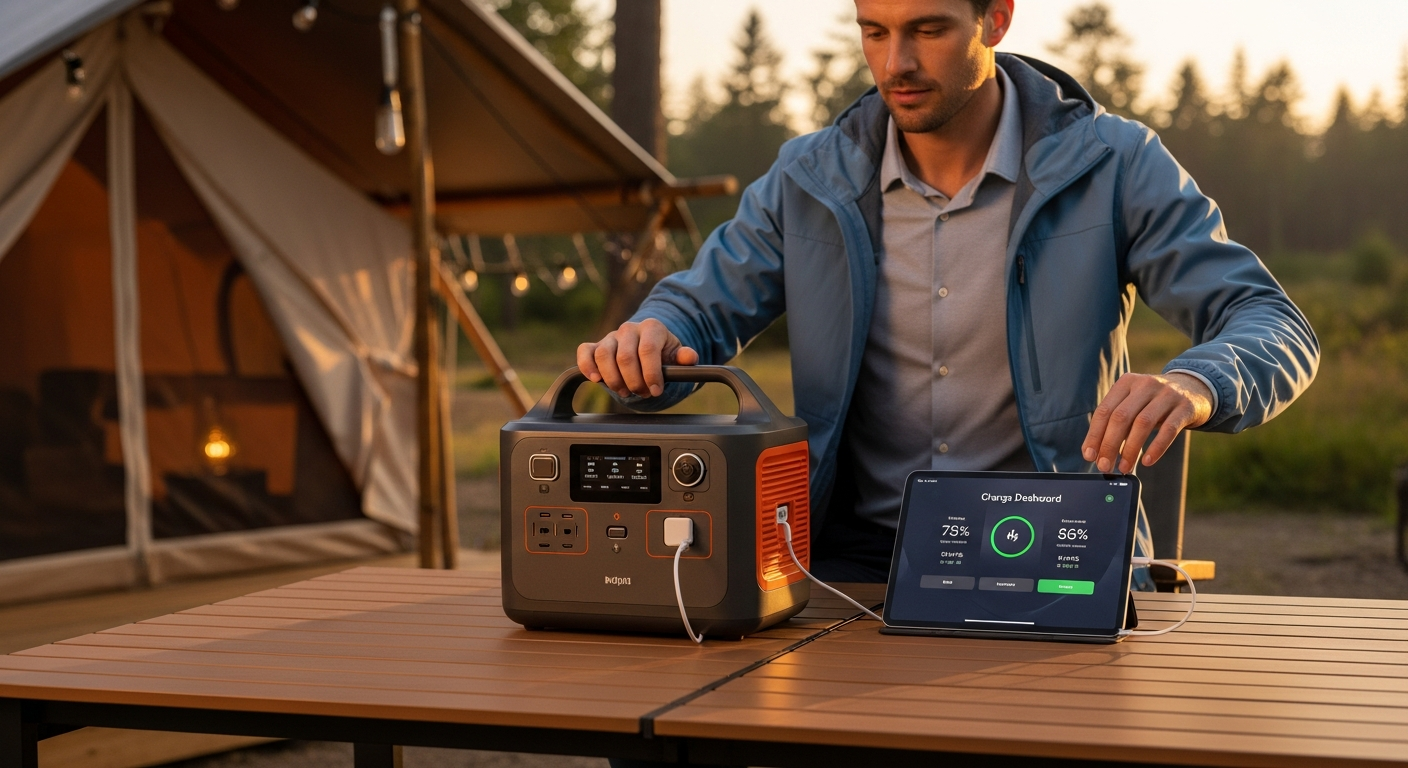
Overview: The EcoFlow Delta 2 Max stands out as a formidable contender for families prioritizing rapid charging and versatile power delivery. With a substantial 2048Wh capacity, expandable to an impressive 6144Wh with two extra batteries, it offers ample power for extended trips. Its 2400W AC output (with X-Boost up to 3400W for certain appliances) can handle nearly any standard camping appliance, from mini-fridges and electric grills to coffee makers and CPAP machines.
Key Features for Family Camping:
Lightning-Fast Recharging: One of its strongest selling points. It can charge from 0-80% in just 50 minutes via AC, significantly reducing downtime. For solar, it supports up to 1000W input, allowing a full charge in approximately 2.3 hours under ideal conditions.
LFP Battery Chemistry: Provides over 3,000 full charge cycles to 80% capacity, translating to roughly 10 years of daily use. This ensures long-term reliability and a sound investment.
X-Boost Technology: This proprietary feature allows the Delta 2 Max to power appliances requiring up to 3400W, preventing overload and expanding its utility for more demanding devices.
Smart App Control: Manage your power station remotely via the EcoFlow app. Monitor input/output, battery status, customize charging speeds, and control outlets – a familiar convenience for smart-home users.
Quiet Operation: Important for maintaining a peaceful camping environment, especially at night.
Pros:
Unmatched fast AC charging (0-80% in 50 mins)
High 2400W output (X-Boost to 3400W)
Durable LFP battery with 3000+ cycles
Excellent expandability (up to 6.1kWh)
Intuitive mobile app control
Relatively lightweight for its capacity
Cons:
Premium price point
Fan can be audible under heavy load
No integrated wheels, though handles are sturdy
Best Suited For: Families who value rapid turnaround times for recharging, need robust power for a variety of appliances, and appreciate the convenience of smart app control. Ideal for those who might use it for home backup as well.
" target="_blank" class="cta-button">Check Price & Availability for EcoFlow Delta 2 Max
2. Jackery Explorer 2000 Plus: The Robust Workhorse
Overview:> Jackery has long been a household name in portable power, and the Explorer 2000 Plus reinforces their reputation for reliability and robust performance. With a base capacity of 2042Wh, it's expandable up to a massive 24kWh with multiple battery packs, making it suitable for anything from a weekend getaway to an extended off-grid expedition. Its 3000W AC output (6000W surge) is one of the highest in its class, capable of powering virtually any appliance you'd bring camping, including high-demand tools if needed.<
Key Features for Family Camping:
Exceptional Power Output: The 3000W continuous output ensures you can run high-wattage appliances simultaneously without concern.
LFP Battery Technology: Offers an impressive 4,000 cycles to 70% capacity, indicating even greater longevity than some competitors.
Parallel Functionality: Can be paralleled with another 2000 Plus to double output, though this is likely overkill for most family camping scenarios, it showcases its versatility.
Robust & Durable Design: Built to withstand outdoor conditions, with a sturdy handle and a design that feels resilient.
Comprehensive Ecosystem: Jackery offers a wide range of compatible solar panels and accessories, simplifying system expansion.
Pros:
Highest continuous AC output (3000W)
Superior LFP battery cycle life (4000 cycles)
Massive expandability up to 24kWh
Proven brand reliability and customer support
Solid, durable construction
Cons:
Heavier than some competitors (61.3 lbs)
Charging speed, while good, isn't as fast as EcoFlow's Delta 2 Max
Higher initial investment
Best Suited For: Families who need serious power for multiple high-draw appliances, anticipate longer trips, or desire a system that can grow with their needs. Excellent for those who value long-term durability and a trusted brand.
" target="_blank" class="cta-button">Explore Jackery Explorer 2000 Plus Options
3. Goal Zero Yeti 1500X: The Balanced Performer with Proven Reliability
Overview: Goal Zero has been a pioneer in portable power, and the Yeti 1500X continues their legacy of quality and reliability. While its 1516Wh capacity is slightly lower than the 2000Wh behemoths, it's still more than sufficient for multi-day family camping trips, especially when paired with solar panels. Its 2000W AC output (3500W surge) handles most standard appliances with ease, making it a versatile choice for the discerning camper.
Key Features for Family Camping:
Trusted Brand & Ecosystem: Goal Zero's reputation for robust, well-engineered products is a significant advantage. Their extensive line of accessories, from solar panels to light kits, integrates seamlessly.
Diverse Port Selection: Features a wide array of ports including multiple AC, USB-A, USB-C PD (60W), 12V car, and 12V high-power ports, ensuring compatibility with all your devices.
App Monitoring & Control: Connect via Wi-Fi to the Goal Zero Yeti App to monitor power usage, battery health, and control ports from your smartphone.
NMC Battery Chemistry: While not LFP, Goal Zero's NMC batteries are known for their high energy density and are engineered for safety and performance, offering 500+ cycles to 80% capacity.
Modular Design: While not as expandable as some LFP units, Goal Zero offers link modules to connect multiple Yeti X units for increased capacity.
Pros:
Exceptional build quality and reliability
Comprehensive port selection for varied devices
Intuitive app for remote monitoring and control
Wide range of integrated accessories available
Relatively lighter and more portable than 2000Wh LFP units
Cons:
NMC battery offers fewer cycles than LFP alternatives
Lower capacity (1516Wh) compared to 2000Wh units
AC charging is not as fast as EcoFlow
Higher cost per Wh compared to some new entrants
Best Suited For: Families who prioritize a proven track record, a comprehensive ecosystem of accessories, and a balanced approach to capacity and portability. Excellent for those who value reliability above all else and don't need the absolute highest capacity or fastest charging.
Overview: Anker, a leader in charging technology, brings its expertise to the portable power station market with the SOLIX F2000 (formerly PowerHouse 2000). Boasting a 2048Wh capacity and 2400W AC output (4800W surge), it's a direct competitor to the top-tier units. Anker differentiates itself with a focus on durability, safety, and an industry-leading warranty, making it a compelling choice for families seeking long-term peace of mind.
Key Features for Family Camping:
Premium LFP Battery: Utilizes EV-grade LFP batteries rated for 3,000 cycles to 80% capacity, ensuring longevity and safety.
Industry-Leading 5-Year Warranty: This is a significant differentiator, providing exceptional confidence in your investment. Most competitors offer 2-3 years.
HyperFlash™ AC Charging: Recharges from 0-80% in approximately 1 hour, putting it squarely in the fast-charging category.
Durable & Drop-Proof Design: Anker emphasizes ruggedness, designing the F2000 to withstand the rigors of outdoor use.
Smart Temperature Control System: Monitors internal temperatures 100 times per second to optimize performance and safety, a feature smart-home users will appreciate.
Pros:
Exceptional 5-year warranty
Fast AC charging (0-80% in 1 hour)
Robust, drop-proof design
Durable LFP battery with 3000+ cycles
Reliable brand known for charging tech
Cons:
Heavier than some competitors (63.1 lbs)
Not as expandable as some other LFP units (no modular batteries, though a sub-battery system is in development for future models)
App functionality is competent but not as feature-rich as EcoFlow's.
Best Suited For: Families who prioritize durability, safety, and an extended warranty for ultimate peace of mind. Ideal for those who want a robust, reliable unit from a trusted brand without sacrificing fast charging or high output.
" target="_blank" class="cta-button">Shop Anker SOLIX F2000 Now
5. BLUETTI AC200MAX: The Modular Powerhouse for Expandability
Overview:> The BLUETTI AC200MAX is a highly popular and versatile power station that shines in its modularity and expandability. Starting with a 2048Wh LFP battery, it can be expanded up to a massive 8192Wh by connecting two BLUETTI B230 (2048Wh each) or B300 (3072Wh each) battery modules. Its 2200W continuous AC output (4800W surge) is more than adequate for typical family camping needs, including running a small RV AC unit for short bursts.<
Key Features for Family Camping:
Exceptional Expandability: The ability to scale up to 8kWh makes it perfect for extended trips or even small cabin power.
LFP Battery Technology: Offers 3,500+ cycles to 80% capacity, ensuring a decade of reliable use.
Multiple Charging Options: Supports up to 900W solar input and 500W AC input, allowing for rapid recharging (approx. 2 hours with combined AC+Solar).
Intuitive Touchscreen Display: Provides real-time data on power input/output, battery status, and allows for easy control of settings directly on the unit.
Robust Port Selection: Includes six AC outlets, multiple USB-A and USB-C (100W PD) ports, a 12V/30A RV outlet, and two wireless charging pads.
AC charging speed is good but not as blazing fast as EcoFlow's
App control is functional but less refined than competitors.
Best Suited For: Families who anticipate needing significant power for longer durations or who desire the flexibility to expand their power system over time. Ideal for RVers, glampers, and those who want a future-proof investment.
Pricing & Suitability by Segment: Matching Value to Your Needs
Understanding the investment required for these sophisticated devices is crucial. While prices can fluctuate, here's a general guide and suitability assessment based on common family camping profiles.
The Weekend Warrior (1-3 Days): ~$1500 - $1800
Needs: Power for phones, tablets, laptops, portable lights, small fan, mini-fridge (occasionally), CPAP machine for 1-2 nights.
Ideal Capacity: 1000Wh - 1500Wh is generally sufficient.
Recommended Units:
Goal Zero Yeti 1500X: Excellent for its reliability and comprehensive port selection. Slightly lower capacity but very efficient for shorter trips.
EcoFlow Delta 2 Max (base unit): While overkill on capacity for a short trip, its fast charging means you can top it off quickly if needed, and its efficiency is top-tier.
Value Proposition: These units offer a balance of power and portability without overspending on features you might not fully utilize on shorter outings.
The Extended Explorer (3-7 Days): ~$1700 - $2200
Needs: Consistent power for all devices, extended mini-fridge use, electric kettle, maybe an air pump for inflatables, CPAP for multiple nights, potentially a small electric grill.
Ideal Capacity: 2000Wh - 3000Wh, with solar charging capability highly recommended.
Recommended Units:
EcoFlow Delta 2 Max: Its 2048Wh is perfect, and the option to expand if needed offers future-proofing. Blazing fast AC and solar charging are a huge plus.
Anker SOLIX F2000: Great 2048Wh capacity, fast charging, and the 5-year warranty provides peace of mind for longer-term use.
BLUETTI AC200MAX: The 2048Wh base unit is strong, and its exceptional expandability means you can add more battery modules for truly extended trips.
Value Proposition: These units provide the robust capacity and output needed for more demanding, multi-day adventures, often featuring LFP batteries for longevity.
The Glamping & RV Enthusiast (7+ Days or High-Demand): ~$2000 - $3000+
Needs: Powering small RV appliances (microwave, AC for short bursts), multiple high-draw devices, extended CPAP use, consistent power for entertainment systems, potential home backup.
Ideal Capacity: 2000Wh+ with significant expandability, and high continuous output.
Recommended Units:
Jackery Explorer 2000 Plus: Highest output (3000W) and massive expandability up to 24kWh make it ideal for serious power needs.
BLUETTI AC200MAX (with expansion batteries): Its ability to reach 8kWh offers unparalleled capacity for extended off-grid living.
EcoFlow Delta 2 Max (with expansion batteries): While not reaching Jackery's peak output, its combined 6.1kWh capacity and rapid charging are incredibly versatile.
Value Proposition: These are premium systems designed for maximum flexibility, longevity, and the ability to handle the most demanding power requirements, blurring the line between portable power and small-scale home backup.
Who Should Use What? Matching the Power Station to Your Professional Persona
As a business professional, you understand the importance of matching the right tool to the task. Here's how our top picks align with different professional camping personas:
Your Persona: You value speed, seamless integration, and getting the most out of every minute. You optimize your workflows, automate where possible, and expect technology to keep pace with your demands.
Why it Fits: The Delta 2 Max's industry-leading fast charging (0-80% in 50 minutes) means minimal downtime, allowing you to maximize your family time. Its intuitive app control mirrors the smart home experience you're accustomed to, offering remote monitoring and management. You appreciate efficient power delivery (X-Boost) and the ability to quickly scale capacity if your needs evolve.
Scenario: You arrive at the campsite late Friday, quickly set up, plug in your Delta 2 Max to a solar panel, and it's ready to power your mini-fridge and charge devices by dinner, leaving you free to enjoy the evening.
The "Reliability & Scalability Strategist" (Jackery Explorer 2000 Plus)
Your Persona: You plan for the long term, prioritize robust solutions, and think about future growth. You invest in systems that are proven, durable, and can adapt to increasing demands.
Why it Fits: Jackery's reputation for reliability and the Explorer 2000 Plus's superior LFP cycle life (4000+ cycles) align with your long-term investment philosophy. Its massive expandability (up to 24kWh) ensures it can grow from a family camping essential to a significant home backup solution. The high 3000W output handles any unforeseen power needs.
Scenario: You're planning annual multi-week family trips and want a power solution that will last a decade and can handle a full array of comforts, potentially even powering a small RV.
The "Established & Dependable Leader" (Goal Zero Yeti 1500X)
Your Persona: You trust established brands, value proven performance, and prefer solutions that are well-supported and integrate within a mature ecosystem. You prioritize stability and a consistent user experience.
Why it Fits: Goal Zero is the original in portable power, offering a track record of quality and a comprehensive, well-developed accessory ecosystem. The Yeti 1500X provides reliable power with a wide array of ports, and its app offers clear, concise monitoring. It's a "set it and forget it" solution with excellent support.
Scenario: You want a no-fuss, reliable power station from a company you trust, knowing it will consistently perform for your family's weekend and week-long camping trips without any surprises.
The "Risk Averse Innovator" (Anker SOLIX F2000)
Your Persona: You embrace innovation but demand strong guarantees and robust safety measures. You appreciate cutting-edge features but only when backed by exceptional warranties and proven reliability.
Why it Fits:> Anker brings its charging expertise and a remarkable 5-year warranty to the F2000, addressing any concerns about new entrants in the power station market. Its durable, drop-proof design and advanced temperature control system speak to your preference for robust, safe technology. Fast charging capabilities are a bonus.<
Scenario: You're upgrading your camping gear and want the latest tech with the strongest possible warranty, ensuring your investment is protected for years to come.
The "Strategic Value Investor" (BLUETTI AC200MAX)
Your Persona: You seek maximum utility and flexibility for your investment. You look for solutions that offer significant features and expandability at a competitive price point, optimizing for long-term value.
Why it Fits: The AC200MAX provides exceptional expandability up to 8kWh at a highly competitive price when considering its LFP battery, high output, and diverse port options. You appreciate the ability to start with a solid base and add capacity as your family's camping adventures grow.
Scenario: You're planning for increasingly ambitious camping or off-grid scenarios and want a single power station that can adapt from a standard weekend trip to powering a small remote cabin setup, all while delivering excellent value.
Implementation & Getting Started: Your Smart Approach to Portable Power
Integrating a portable power station into your family camping routine should be as seamless as adding a new device to your smart home ecosystem. Here's a practical guide to getting started and maximizing your investment:
1. Initial Setup & First Charge
Unbox and Inspect: Upon arrival, check for any shipping damage. Familiarize yourself with the unit's ports, display, and controls.
Read the Manual (Yes, Really): Even for seasoned tech users, each power station has unique features and safety guidelines. Pay attention to charging protocols and storage recommendations.
Full Initial Charge: Before your first trip, fully charge your power station using the AC wall charger. This calibrates the battery management system (BMS) and ensures you start with maximum capacity. Note the charging time – some units are significantly faster than others.
Download the App (If Applicable): For units like EcoFlow, Goal Zero, and Anker, download their respective mobile apps. Connect your power station via Wi-Fi or Bluetooth. This enables remote monitoring and control, a key convenience for smart-home users.
2. Planning Your Power Needs for the Trip
This is where your professional planning skills come in. Don't guess; calculate!
List All Devices: Make a comprehensive list of every electrical device your family plans to bring: phones, tablets, laptops, portable fans, lights, CPAP machines, mini-fridge, electric kettle, air pump, etc.
Determine Wattage & Run Time:
Wattage (W): Check the power rating on each device (usually on a label or in its manual).
Estimated Run Time: How long will each device be used per day? (e.g., phone charging 2 hours, mini-fridge 24 hours, CPAP 8 hours).
Calculate Daily Energy Consumption (Wh): Multiply wattage by hours of use. Example: 60W mini-fridge x 24 hours = 1440Wh per day.
Total Trip Consumption: Multiply daily consumption by the number of days. Add a 20-30% buffer for unexpected usage or efficiency losses.
Compare with Power Station Capacity: Ensure your chosen power station's Wh capacity can comfortably meet your total trip consumption. If not, consider a larger unit, expansion batteries, or solar recharging.
Example Calculation: If your family needs 1500Wh per day for 3 days, you need ~4500Wh. A 2000Wh unit would require recharging or expansion batteries, or significant solar input.
3. Charging Strategies in the Field
Solar Panels: The most sustainable and often essential charging method for extended trips. Invest in compatible solar panels (often sold separately) and understand their maximum input. Position panels for optimal sunlight.
Car Charging: Useful for topping off during drives, but typically slower. Be mindful of your vehicle's battery.
Generator (Last Resort): If you have a portable gas generator, it can rapidly recharge your power station, but consider noise and fuel.
Shore Power: If camping at a site with electrical hookups, you can use the AC charger for a quick and full recharge.
4. Best Practices for Longevity & Safety
Avoid Deep Discharges: While LFP batteries are robust, try not to regularly drain them below 10-20% for optimal lifespan.
Optimal Storage: For long-term storage, charge the unit to 50-80% and store it in a cool, dry place away from direct sunlight.
Ventilation: Ensure adequate airflow around the power station during operation, especially when running high-wattage appliances, to prevent overheating.
Weather Protection: While many units are rugged, they are not typically waterproof. Protect them from rain, heavy dew, and extreme temperatures.
5. Integrating with Your Smart Devices
Think of your power station as the hub for your outdoor "smart home."
Smart Lighting: Connect USB-powered LED strip lights or smart lanterns that can be controlled via an app for ambiance and convenience.
Portable Wi-Fi Hotspot: Keep your hotspot powered to maintain connectivity for all your devices, essential for navigation, entertainment, or even remote work if necessary.
Security: Power a portable security camera or motion-activated lights for added peace of mind around your campsite.
Entertainment: Keep portable projectors, Bluetooth speakers, and e-readers fully charged for family entertainment.
By approaching your portable power station with the same strategic mindset you apply to your professional life, you'll ensure a seamless, powered, and truly relaxing family camping experience.
Ready to Power Your Next Family Adventure?
You've seen the data, understood the capabilities, and matched the perfect power station to your family's needs and your professional persona. Now it's time to transform your camping experience from basic to brilliantly powered.
Frequently Asked Questions About Family Camping Power Stations
Q1: What is the most important factor to consider when buying a power station for family camping?
A1: The most critical factor is capacity (measured in Watt-hours - Wh), followed closely by continuous AC output (measured in Watts - W). You need enough capacity to power your devices for the duration of your trip, and enough output to run your highest-wattage appliances (e.g., mini-fridge, electric kettle, CPAP machine). Always calculate your estimated daily consumption and multiply by the number of days you'll be off-grid, adding a buffer.
Q2: Are portable power stations safe for indoor use, like in a tent or RV?
A2: Yes, absolutely. Unlike gasoline generators, portable power stations produce no emissions, fumes, or loud noise, making them perfectly safe for use inside tents, RVs, cabins, or even your home. This is a significant advantage for family camping, as you can power devices without ventilation concerns or disturbing others.
Q3: What's the difference between NMC and LFP batteries in power stations? Which is better for camping?
A3:
NMC (Nickel Manganese Cobalt) batteries (e.g., Goal Zero Yeti X series) offer higher energy density, meaning they can store more power in a smaller, lighter package. However, they typically have a shorter cycle life (500-800 cycles to 80% capacity) and are generally more sensitive to extreme temperatures.
LFP (Lithium Iron Phosphate) batteries (e.g., EcoFlow, Jackery, Anker, BLUETTI) are heavier and bulkier for the same capacity but offer significantly longer cycle life (3,000-4,000+ cycles to 80% capacity), are more stable, and safer.
For family camping, LFP is generally preferred due to its superior longevity, safety, and durability, making it a better long-term investment. The slight increase in weight is often a worthwhile trade-off for these benefits.
Q4: Can these power stations run a CPAP machine for multiple nights?
A4: Yes, most 1500Wh+ power stations are well-suited for running CPAP machines. A typical CPAP machine uses 30-60W (less if you turn off the humidifier/heater). A 2000Wh power station could potentially power a CPAP for 30-60 hours, translating to 3-7 nights. To maximize run time, always disable the humidifier and heated tubing, as these are major power draws.
Q5: How important is solar charging for family camping?
A5: Solar charging is highly important, especially for trips longer than 2-3 days or if you have significant power demands (like a mini-fridge). It provides a sustainable and silent way to replenish your power station without needing an electrical outlet. While slower than AC charging, it's crucial for extending your off-grid time. Look for power stations with high solar input capabilities (e.g., 500W-1000W) and consider investing in compatible