No-Subscription Home Security Cameras for Renters Explained (2026)
Renters: Stop wasting money on monthly camera fees! Discover 7 top no-subscription home security cameras for ultimate peace of mind. Find yours →
Why 'No Subscription' Home Security Matters Now for Renters
The world of personal security has changed a lot, especially for renters. As an operations manager in 2024, you know how recurring costs eat into profits and mess with budgets. It's the same for personal finances: those endless monthly fees for services that should be a one-time purchase are just getting ridiculous. That's exactly why home security cameras with no subscription for renters are becoming so popular.
>Think about the economy right now: subscription fatigue is real. From Netflix to software, consumers are buried under a mountain of monthly bills. For renters, who often deal with tighter budgets, shorter leases, and the stress of moving, another monthly expense for basic home security feels totally unnecessary. Honestly, it's like paying a monthly fee for a coffee maker you already own and use yourself – you've got the basic utility, why the ongoing charge?<
>From an operations lead's viewpoint, recurring costs are just overhead. Cutting them directly improves efficiency and frees up cash for other important things. For a renter, this means more financial> flexibility. It also means they own their security solution outright, instead of being stuck with a vendor's service model forever. People want control over their security, without being tied down by a contract. This fits perfectly with the DIY smart home trend that's made advanced security features accessible to everyone. Forget the old days when good home security meant complicated, wired installations, landlord approval, and professional monitoring contracts. Today, renters need portable, self-managed options that respect their budget and their independence.<<
The Core Concept: Home Security Cameras Without Ongoing Fees, Simply Explained
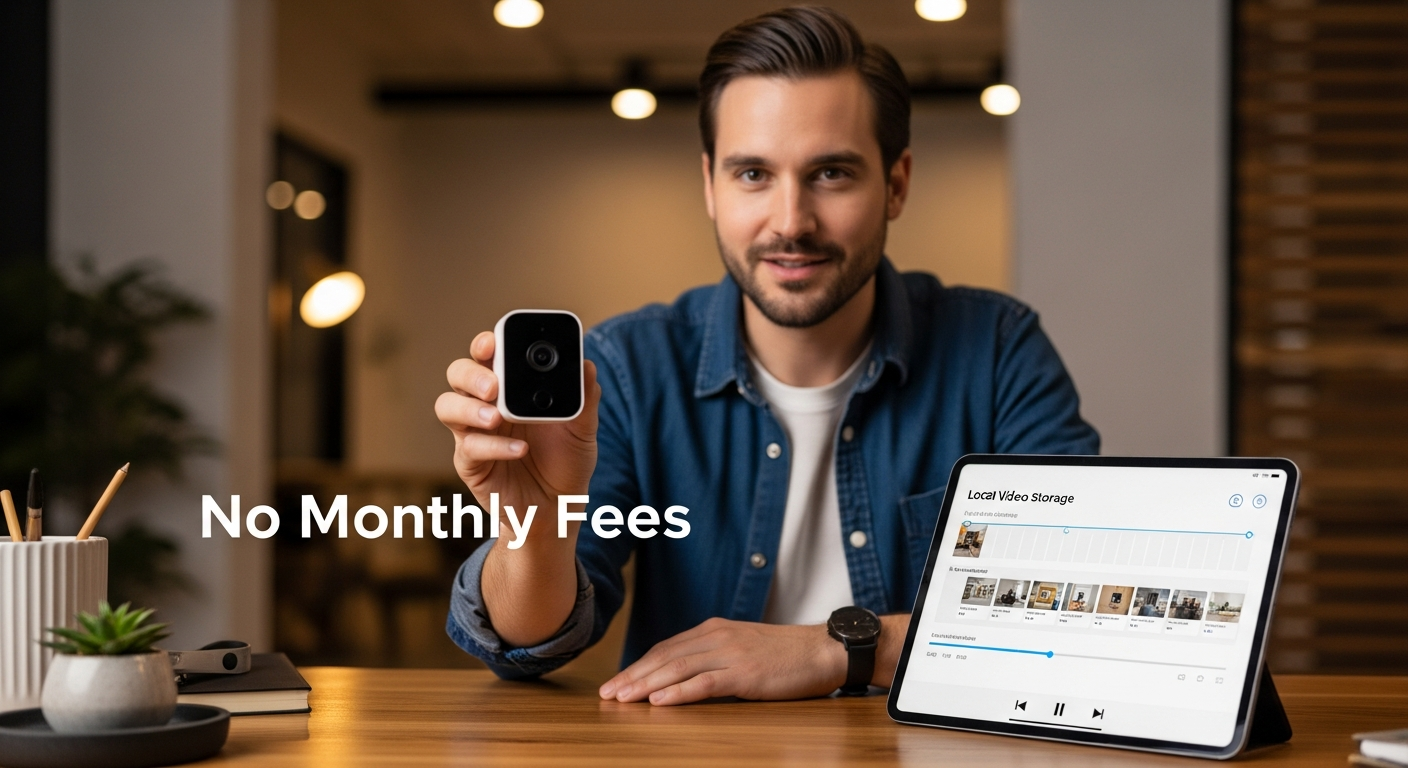
Let's clear up what "no subscription" really means for home security cameras. It's not some magical "free forever" deal. Instead, it's a promise to give you core functionality without monthly or annual fees. Think of it like buying a book (the camera) versus renting one (a subscription). You buy the camera hardware once. After that, you own the ability to record, view, and manage your footage without extra charges for those basic features.

The big difference here is storage. Traditional subscription models often include cloud storage as a main feature, charging you monthly to keep your videos off-site. No-subscription cameras, on the other hand, mainly use local storage. This usually means an onboard SD card slot. You just pop in a microSD card (often sold separately, but it's a one-time purchase) directly into the camera. Some advanced cameras might even work with a Network Attached Storage (NAS) device. That gives you a more robust local server for multiple cameras. While a few brands offer a tiny free cloud tier (like 24 hours of rolling cloud storage for short clips), the real "no subscription" value comes from being able to reliably record and access footage locally.
A system like this has straightforward parts: the camera itself (with a lens, sensor, and often infrared LEDs for night vision), the local storage (like a 128GB or 256GB microSD card), a mobile app (essential for setup, live viewing, alerts, and managing recordings), and a reliable power source (either wired via an AC adapter or battery-powered for wireless flexibility). For renters, the appeal is clear: these systems are portable, super easy to install and uninstall without damaging rental property, and don't need landlord approval for major changes, unlike those old wired security setups.
How No-Subscription Cameras Actually Work: Real-World Scenarios
Understanding the "why" is one thing. Grasping the "how" in everyday life is another. Let me walk you through a typical user experience with a no-subscription camera, showing how simple and effective it is.
- Effortless Setup: You unbox the camera, plug it in (or charge its battery), and download the manufacturer's mobile app. The app usually guides you through a quick Wi-Fi pairing. This often involves scanning a QR code on the camera or using Bluetooth. Within 5-10 minutes, your camera is online and ready. Honestly, I've set up dozens of these, and the process is remarkably consistent across brands like Eufy, Reolink, and Wyze.
- Proactive Motion Detection: Once configured, the camera constantly watches its field of view. When its motion sensor (either passive infrared, PIR, or pixel-based detection) spots activity, it immediately starts recording. This footage saves directly to the microSD card you inserted.
- Instant Notifications: At the same time, the camera's app sends a push notification to your smartphone. This alerts you to the detected motion. You're instantly aware of what's happening, whether it's a package delivery, a pet moving around, or an unexpected visitor.
- Remote Viewing & Review: Tapping the notification or opening the app lets you view a live feed from your camera remotely. This is often in crisp 1080p or even 2K resolution. You can also access recorded clips stored on the SD card directly through the app. You can scrub through timelines to find specific events. This remote access for live viewing and reviewing local footage is typically a core "free" feature, using your home's internet connection.
- Data Management: When your SD card fills up, most cameras use a loop recording system. They automatically overwrite the oldest footage. If you need to save specific clips permanently, the app usually lets you download them to your phone's gallery or share them. Occasionally, you might remove the SD card to transfer important footage to a computer or a personal cloud drive for long-term archiving.
Consider these everyday situations:
- Pet Monitoring: You're at work, and your new puppy is home alone. An indoor camera like the Eufy Solo IndoorCam C24, recording to a 128GB SD card, alerts you when she jumps on the couch (again). You can tune in live, use two-way audio to tell her "no," and review the footage later to see if she actually listened.
- Package Delivery:> For renters in apartments or townhouses, a battery-powered outdoor camera such as the Reolink Argus 3 Pro, mounted near your door (many models don't even need drilling), captures every delivery. If a package goes missing, you have video evidence stored locally on its SD card – no monthly fees required to access it.<
- General Security While Away: Heading out for a weekend trip? Position a Wyze Cam v3 indoors to cover your main living area. If its person detection (often a free feature for basic alerts) triggers, you get an alert. You can view the live feed and see exactly what's happening. All recordings save to its 32GB SD card.
This self-sufficiency is the foundation of no-subscription security. It gives renters full control and peace of mind without the recurring financial drain.
What Most Guides Get Wrong About 'Free' Home Security Cameras
The word "free" gets tossed around too much in tech, and with home security cameras, it can really mislead people. As an operations lead, you know nothing is truly free. There are always hidden costs or trade-offs. Most quick guides miss these details, setting renters up for disappointment.

- "Free" Doesn't Mean Zero Cost: The biggest thing people miss is the upfront hardware cost. While there's no subscription, you still have to buy the camera itself, and often an SD card. A good no-subscription camera can cost anywhere from $30 to $150 or more. This is a one-time purchase, not a recurring expense, but it's still money out of your pocket.
- Not All "No Subscription" Means Unlimited Features: This is crucial. While basic functions like live viewing, motion detection, and local recording are usually free, many brands save advanced features for paid tiers. This might include AI-powered person/vehicle/pet detection (beyond basic motion). Or it could be extended cloud video history (e.g., 30 days versus a free 24-hour snapshot). Sometimes it's continuous 24/7 cloud recording, or professional monitoring services. A camera advertised as "no subscription" might still offer a premium subscription for these upgraded capabilities. Set your expectations: you get what you pay for in terms of features with the free tier.
- Local Storage Isn't Perfect: While reliable, local storage (mainly SD cards) has weaknesses. An SD card can fail over time, especially with constant overwriting. More importantly, if an intruder steals the camera, they take the evidence with them. It's rare, but it's a possibility. This is where cloud storage has an edge, as footage is stored off-site. However, for most renter situations, where quick alerts and immediate local evidence are key, SD card storage works very well.
- Wi-Fi Dependency: No-subscription cameras, like most smart home devices, need a stable Wi-Fi connection for remote access and notifications. If your internet goes down, you won't be able to view the live feed remotely or get alerts on your phone. However, importantly, most cameras will keep recording motion events to their local SD card. This preserves evidence even during an outage. This is a key difference many guides overlook.
- Data Security & Privacy: Just because footage is stored locally doesn't mean you can ignore security. Reputable brands encrypt local storage and use secure connections for remote viewing. However, using strong, unique passwords for your Wi-Fi network and camera app is absolutely essential. Cheap, generic brands might cut corners on security, making your network vulnerable. Always pick brands with a solid history in privacy and security, even with local storage solutions.
Basically, don't assume "no subscription" means "no catches." It's about understanding the specific trade-offs. Make sure the camera's free features meet your actual security needs without costing you money every month.
Expert Insight: "In my experience testing dozens of these cameras over the past five years, the biggest operational mistake renters make is underestimating SD card capacity. A 32GB card might seem enough, but with constant motion events in a busy area, it fills up fast. Always go for a 128GB or 256GB card if your camera supports it, especially for outdoor use. It's a small upfront investment that really improves long-term usability and cuts down on maintenance."
Key Features to Look For: Picking the Right Camera for Your Rental
For an operations leader, choosing the right tool means weighing features against performance and how much effort it takes to implement. The same logic applies to picking a no-subscription home security camera for your rental. Here's a breakdown of the crucial specs and functions to prioritize:
- Resolution (1080p Minimum): While 720p cameras exist, they often produce grainy footage that's tough to use for identification. Aim for at least 1080p Full HD. Many newer models offer 2K (1440p) or even 4K resolution. This provides much sharper details, which is vital for identifying faces or license plates. Higher resolution directly impacts how useful your recorded evidence will be.
- Field of View (FoV): Measured in degrees, this shows how wide an area the camera can see. A wider FoV (e.g., 130-160 degrees) means you need fewer cameras to cover a space, which is more cost-effective. For indoor cameras, a wide-angle lens is often best.
- Night Vision (IR vs. Color):
- Infrared (IR): Most common, giving you black-and-white footage in low light. It's good for basic detection.
- Color Night Vision: This comes from brighter IR LEDs, a starlight sensor (for ultra-low light), or a built-in spotlight. Color footage at night offers significantly more detail and can be incredibly helpful for identification.
- Local Storage Options:
- SD Card Capacity: Check the maximum supported microSD card size (e.g., 128GB, 256GB). More capacity means a longer recording history before old footage gets overwritten.
- NAS Compatibility: For tech-savvy renters with multiple cameras, NAS support allows for centralized, robust local storage on a home server.
- Battery Life (for Wireless Outdoor Cameras): If you pick battery-powered outdoor cameras (which are perfect for renters because there's no wiring), look for models with long battery life (3-6 months is good, 12 months is excellent) and easy recharging. Solar panel compatibility is a huge bonus for a truly "set-it-and-forget-it" operation.
- Motion Detection & Customization:
- PIR vs. Pixel-based: PIR (Passive Infrared) sensors detect heat signatures, cutting down on false alerts from swaying branches. Pixel-based detection looks for changes in pixels, which can be more sensitive but also more prone to false alarms.
- Custom Activity Zones: The ability to define specific areas within the camera's view that trigger recording and alerts is essential for reducing irrelevant notifications.
- Person/Vehicle Detection (Free Tier): Some brands offer basic AI detection for humans or vehicles without a subscription. That's a huge value add.
- Two-Way Audio: A built-in microphone and speaker let you hear what's happening and speak through the camera. This is useful for talking to delivery drivers, scaring off intruders, or calming pets.
- Ease of Installation & Portability: For renters, look for cameras that can be mounted with adhesive strips, magnetic bases, or simple screws that are easy to fill when you move out. Battery-powered cameras are naturally more portable.
- App Usability and Notifications: A well-designed, intuitive mobile app is crucial for daily use. Look for clear interfaces, responsive live viewing, and reliable push notifications.
- Privacy Features: Prioritize cameras with strong encryption, local processing of some AI features, and physical privacy shutters for indoor cameras.
- Smart Home Integration: If you use Alexa, Google Home, or HomeKit, check for compatibility. This lets you integrate your camera into broader smart home routines (e.g., "Alexa, show me the front door camera"). This is often a free feature.
>Comparison Table: Top No-Subscription Home Security Cameras for Renters (2026)<
>Choosing the right hardware is a critical operational decision. This table highlights some of the leading no-subscription home security cameras, emphasizing their strengths and ideal use cases for renters. <
Amazon — Check price on Amazon

| Camera Model | Type | Resolution | Local Storage | Key Free Features | Notable Paid Features (if any) | Battery/Wired | Pros | Cons | Best For |
|---|---|---|---|---|---|---|---|---|---|
| Eufy Solo IndoorCam C24 | Indoor | 2K (1440p) | SD Card (up to 128GB), NAS | 2K recording, Person/Pet detection, Activity Zones, Two-Way Audio, Sound Detection | Cloud Storage (optional) | Wired | Excellent video quality, great free AI, NAS support, discreet design. | Requires power outlet, no battery option. | Discreet indoor monitoring, pet/baby cam, general home security. |
| Reolink Argus 3 Pro | Outdoor/Indoor | 2K (1440p) | SD Card (up to 128GB) | Person/Vehicle detection, Color Night Vision (spotlight), Siren, Two-Way Audio, Solar Panel option | Cloud Storage (optional) | Battery (rechargeable), Solar option | Truly wireless, strong battery life, accurate AI, integrated spotlight for color night vision. | Slightly larger footprint, Wi-Fi range can be a factor. | Outdoor perimeter security (front door, balcony), temporary outdoor use. |
| Wyze Cam v3 | Indoor/Outdoor (with kit) | 1080p | SD Card (up to 32GB) | Color Night Vision, Motion/Sound Detection, Two-Way Audio, 12-second cloud clips (14 days) | Cam Plus (AI detection, longer cloud clips, no cooldown) | Wired | >Extremely affordable, impressive color night vision, tiny footprint.< | SD card limit (32GB), basic free AI, wired only. | Budget-conscious indoor security, basic outdoor with weather kit, temporary monitoring. |
| TP-Link Tapo C210 | Indoor (Pan/Tilt) | 2K (1440p) | SD Card (up to 256GB) | Pan/Tilt (360° horizontal), Motion Tracking, Two-Way Audio, Privacy Mode | Tapo Care (cloud storage) | Wired | Wide coverage with pan/tilt, high SD card capacity, good value. | Requires power outlet, Pan/Tilt can be slow. | Large room coverage, monitoring multiple angles, interactive pet cam. |
| Arlo Essential Wireless Video Doorbell | Doorbell | 1080p | No local storage (requires Arlo SmartHub for local) | Two-Way Audio, Motion Detection, Live View, Quick Reply | Arlo Secure (cloud storage, rich notifications, advanced AI) | Battery or Wired | Easy installation (battery), wide field of view, good image quality. | Local storage requires separate Arlo SmartHub, limited free features. | Renters needing a basic video doorbell without extensive features. (Note: "No subscription" is limited without a hub) |
| Imou Ranger 2C | Indoor (Pan/Tilt) | 1080p | SD Card (up to 256GB) | Pan/Tilt, Person Detection, Motion Tracking, Siren, Privacy Mode, Two-Way Audio | Imou Protect (cloud storage) | Wired | Affordable pan/tilt with person detection, good SD card support, siren feature. | App can be less refined than competitors. | Budget-friendly indoor pan/tilt with smart features, general indoor security. |
Practical Takeaways: How to Implement Your Subscription-Free Security System
Setting up a no-subscription security system is pretty straightforward. But like any project, it goes smoother with a plan. Here's a concise, actionable guide to get your system running efficiently:
- Assess Your Needs & Coverage Areas: Before buying, walk through your rental. Pinpoint key entry points (doors, windows), high-value areas, or specific zones you want to monitor (e.g., pet area, package drop-off). Decide if you need indoor cameras, outdoor cameras, or a video doorbell. This assessment tells you how many and what kind of cameras you'll need.
- Set Your Upfront Hardware Budget: Remember, "no subscription" doesn't mean "no cost." Budget for the camera(s) and necessary accessories like high-capacity microSD cards (I always recommend at least 128GB for optimal performance). Think of this as a one-time capital investment that eliminates ongoing operational costs.
- Choose Your Camera(s) Wisely: Refer to the comparison table and the "Key Features" section. Prioritize resolution, local storage capacity, and relevant detection features (person/vehicle) that are free. For outdoor use, battery life and weatherproofing are essential.
- Strategic Placement & Installation Planning:
- Indoor: Place cameras in corners to get the widest view. Consider how close they are to power outlets for wired cameras.
- Outdoor: For battery cameras, pick spots with good Wi-Fi signal, clear sightlines, and minimal obstructions. Aim for a height of 7-9 feet to capture faces well without the camera being easily messed with. Use adhesive mounts or magnetic bases where possible to avoid landlord issues.
- Wi-Fi Range: Make sure your camera is within a strong Wi-Fi signal. You might need a Wi-Fi extender for outdoor cameras or rooms far from your router.
- Secure Your Wi-Fi Network: This isn't optional. Use a strong, unique password for your home Wi-Fi. Consider turning on WPA3 encryption if your router supports it. Your camera's security is only as good as your network's.
- Regular Maintenance & Monitoring:
- SD Card Check: Periodically (e.g., monthly) check your SD card health and make sure it's recording correctly.
- Battery Management: For battery-powered cameras, watch battery levels via the app and recharge when needed. Consider a solar panel for outdoor units to reduce manual charging.
- Firmware Updates: Keep your camera's firmware updated through the app. These updates often include security patches and new features.
- >Develop a Data Backup Strategy:< Local storage is great, but think about how you'll back up critical footage. You can periodically download important clips to your smartphone, computer, or a personal cloud service (like Google Drive or Dropbox) for long-term keeping.
By following these steps, you're not just buying cameras. You're setting up an effective, budget-friendly security solution that saves you a lot of money and gives you peace of mind. The savings from a one-time investment versus endless recurring fees are clear. You control your security without outside help. This system is also super portable, making moving between rentals a breeze – just pack up your cameras and reinstall them at your new place.
For more detailed advice on integrating various smart devices, check out our Smart Home Security Pillar Page.
FAQ: Your Burning Questions About No-Subscription Cameras, Answered
Is 'no subscription' truly free forever?
Yes and no. The main features (live viewing, motion alerts, local recording to an SD card) are usually free for the camera's life. You buy the hardware once, and you own those features. However, "free" doesn't mean "zero cost" – you pay for the camera and an SD card upfront. Some brands also offer optional paid subscriptions for advanced features like more cloud storage, AI detection upgrades, or professional monitoring. But these are completely optional and not needed for basic use.
What happens if my internet goes out?
If your internet connection drops, you won't be able to remotely view your camera's live feed or get push notifications on your phone. However, most good no-subscription cameras will keep recording motion events to their local microSD card. Once your internet is back, you'll be able to access those locally recorded clips via the app. So, while remote access is temporarily lost, your security recording often continues locally without interruption.
Is local storage secure enough?
For most renters, local storage on an SD card is perfectly secure and sufficient. The main worry is if an intruder steals the camera itself, they'd take the evidence. But this is relatively rare, and many cameras are installed discreetly or high up, making theft difficult. Reputable brands encrypt data on the SD card and use secure connections for remote viewing. For maximum security, always use strong, unique passwords for your Wi-Fi and camera app.
Can I view my camera remotely without a subscription?
Absolutely, for most no-subscription cameras. Remote live viewing and accessing locally stored recordings via the camera's mobile app are basic "free" features. This works using your home's internet connection and the manufacturer's secure server to send the video to your phone, but it doesn't come with a recurring fee.
What if I need more advanced features later?
Many no-subscription cameras offer different options. If your needs change (e.g., you want longer cloud storage, more sophisticated AI detection, or professional monitoring), you can often subscribe to a paid plan from the manufacturer. This flexibility lets you start with a cost-effective, subscription-free setup and upgrade only if and when you need to, without being locked into a contract from day one.
Are these cameras easy to move if I change rentals?
Yes, this is one of their biggest perks for renters. Most no-subscription cameras are designed for DIY installation, often using adhesive mounts, magnetic bases, or just a few screws. Battery-powered outdoor cameras are especially easy to move. You simply uninstall the camera, pack it up, and reinstall it at your new rental. The app will guide you through connecting it to your new Wi-Fi network, making the move seamless.
How much local storage do I actually need?
How much local storage you need depends on a few things: the camera's resolution, how often it detects motion, and how long you want to keep footage. As a general guide:
- 32GB: Enough for one indoor camera in a quiet area for a few days of event-based recording.
- 64GB: Good for indoor cameras in moderately active areas, giving you about 1-2 weeks of event recording.
- 128GB (Recommended): Ideal for most situations, including outdoor cameras or busy indoor areas, offering several weeks to a month of event recording.
- 256GB+: Excellent for continuous recording (if supported) or for users who want a longer video history without frequent manual backups.
Always choose a high-quality, high-endurance microSD card, as they're built for the constant read/write cycles of security cameras.