Sap Ai Agent Solutions For Inventory Optimization 2024
Compare the best sap ai agent solutions for inventory optimization 2024 — expert analysis, pricing, and recommendations.
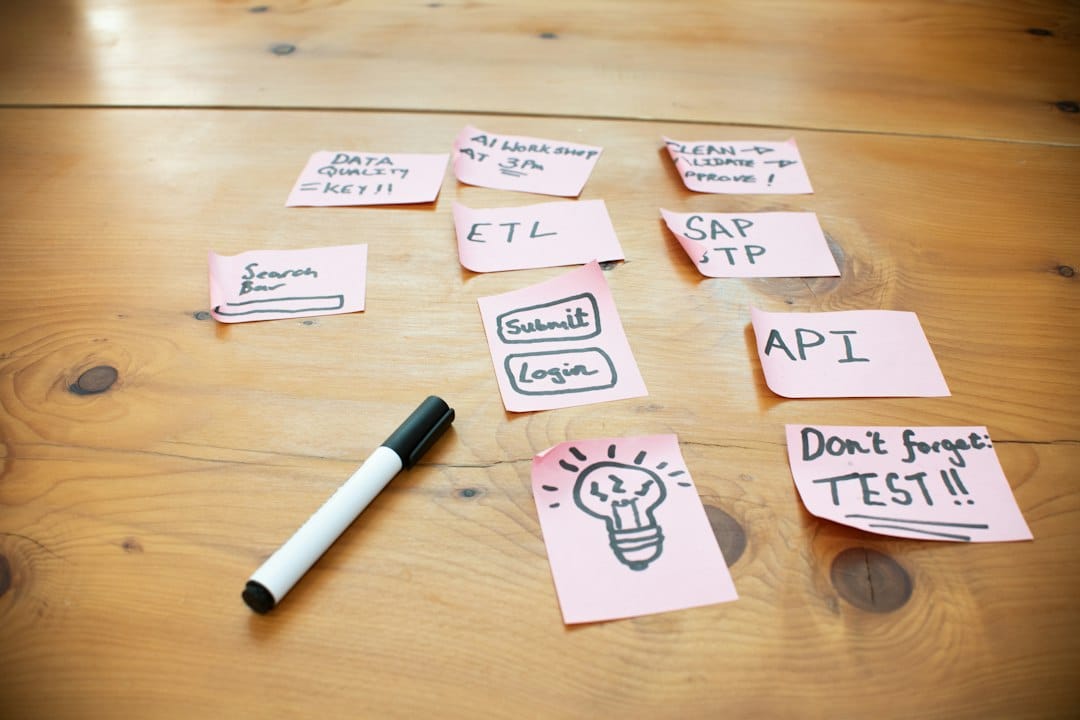
Revolutionize Inventory: Discover Top SAP AI Agent Solutions for Optimization in 2024
>Are you grappling with the complexities of inventory management in an increasingly volatile supply chain? Overstocking leading to capital lockup, understocking causing missed sales, and manual forecasting errors are costing your business millions. The traditional approaches are no longer sufficient to maintain competitive edge and profitability.<
The good news?> The future of inventory optimization is here, powered by sophisticated SAP AI agents. In 2024, these intelligent solutions promise to transform your operations from reactive to predictive, enabling unprecedented accuracy, efficiency, and cost savings. This comprehensive guide will navigate you through the leading SAP AI agent solutions designed specifically for inventory optimization, helping you identify the perfect fit to unlock significant value for your enterprise.<
Quick Comparison: Top SAP AI Agent Solutions for Inventory Optimization (2024)
To give you a rapid overview, here's a snapshot of the leading SAP AI agent solutions we've evaluated for their capabilities in inventory optimization. Dive into the detailed reviews below for a deeper understanding of each platform.
| Solution | Key Strengths for Inventory | Best For | Typical Use Cases | Complexity | Integration | Pricing Model | Learn More |
|---|---|---|---|---|---|---|---|
| SAP Integrated Business Planning (IBP) for Inventory | Multi-stage inventory optimization, safety stock calculation, service level targets. | Large Enterprises, Manufacturing, Retail | Global inventory planning, demand-driven replenishment, service level optimization. | High | Native SAP S/4HANA, ECC | Subscription (modular) | Details |
| SAP S/4HANA with Embedded PP/DS & ML | Real-time inventory visibility, predictive analytics, embedded machine learning for forecasting. | SAP S/4HANA Users, Mid-Large Enterprises | Real-time stock management, short-term planning, demand sensing. | Medium-High | Native SAP S/4HANA | Included with S/4HANA, additional licenses for advanced features. | Details |
| SAP Business Technology Platform (BTP) with AI/ML Services | Custom AI agents, flexible integration, extensibility, powerful data analytics. | Innovators, Custom Needs, Hybrid Environments | >Predictive maintenance for inventory, custom demand forecasting models, intelligent automation.< | High (requires development) | Any SAP/Non-SAP via APIs | Consumption-based | Details |
| SAP Digital Supply Chain (DSC) Portfolio (e.g., Ariba, EWM, TM) | End-to-end supply chain visibility, intelligent procurement, warehouse optimization. | Enterprises with Complex Supply Chains | Supplier risk management, optimal warehouse slotting, transport efficiency impacting inventory. | High | Native SAP, Cloud Integration | Subscription (modular) | Details |
| SAP Ariba with Guided Buying & AI | Intelligent procurement for optimal inventory levels, spend analysis, supplier negotiation. | Procurement-Centric Organizations | Automated PO creation, contract compliance, inventory policy enforcement through buying. | Medium | Native SAP, Cloud Integration | Subscription | Details |
| SAP Analytics Cloud (SAC) for Supply Chain Planning | Advanced planning, forecasting, and predictive analytics with intuitive dashboards. | Business Analysts, Planning Teams | "What-if" scenario planning, budget vs. actuals for inventory, predictive demand. | Medium | Native SAP, Cloud Integration | Subscription | Details |
Amazon — See top-rated resources on Amazon
Ready to compare these solutions side-by-side and see which one fits your unique inventory challenges?
Detailed Analysis: SAP AI Agent Solutions for Inventory Optimization
Let's delve deeper into each of these powerful SAP solutions, understanding their core capabilities, how their AI agents function, and what specific inventory optimization benefits they deliver.
1. SAP Integrated Business Planning (IBP) for Inventory
Overview: SAP IBP is a cloud-based planning solution that provides a unified platform for sales and operations planning (S&OP), demand planning, supply planning, and inventory optimization. Its Inventory module is particularly robust, leveraging advanced algorithms and AI-driven insights to manage multi-echelon inventory across complex supply networks.
AI Agent Capabilities & How They Optimize Inventory:
- Multi-Echelon Inventory Optimization (MEIO): At its core, IBP Inventory uses sophisticated optimization algorithms, which act as intelligent agents, to calculate optimal safety stock levels and target stock levels across your entire supply chain network. These agents consider demand variability, supply variability, lead times, service level targets, and cost parameters (holding costs, obsolescence costs, shortage costs) to minimize total inventory costs while achieving desired customer service levels.
- Service Level Optimization: AI agents within IBP dynamically recommend service level targets based on product criticality, customer segmentation, and cost-to-serve analysis, moving beyond a one-size-fits-all approach. This ensures capital is invested where it yields the highest return.
- Predictive Analytics for Variability: The solution incorporates machine learning to better understand and predict demand and supply variability, feeding these insights into the MEIO calculations. This reduces the bullwhip effect and ensures more resilient inventory buffers.
- Scenario Planning & Simulation: IBP's powerful "what-if" scenario capabilities allow you to simulate the impact of various planning decisions (e.g., changing lead times, increasing service levels, supplier disruptions) on inventory levels and costs. This proactive intelligence helps prevent future inventory issues.
Key Benefits for Inventory Optimization:
- Significant reduction in working capital tied up in inventory (typically 10-20%).
- Improved customer service levels and reduced stockouts.
- Enhanced visibility across the entire supply chain network.
- More accurate and automated safety stock calculations.
- Better alignment between inventory targets and strategic business goals.
Ideal For:
Large enterprises with complex, multi-stage supply chains, manufacturing companies, and global retailers looking for a comprehensive, strategic approach to inventory optimization. Businesses already using or planning to adopt SAP IBP for other planning functions will find this module a seamless extension.
Pricing:
SAP IBP is offered on a subscription basis, typically licensed per user or based on the volume of data/transactions. The Inventory module is an add-on or part of specific IBP suites, with costs varying significantly based on scope and enterprise size. Expect significant investment for full implementation and ongoing subscriptions.
Request an SAP IBP DemoAmazon — Find SAP & AI books on Amazon
2. SAP S/4HANA with Embedded PP/DS & Machine Learning
Overview: SAP S/4HANA, as the intelligent ERP, provides a foundational platform for real-time business operations. Its embedded capabilities, particularly Production Planning and Detailed Scheduling (PP/DS) and native machine learning functionalities, directly contribute to advanced inventory optimization.
AI Agent Capabilities & How They Optimize Inventory:
- Embedded Predictive Analytics & ML: S/4HANA leverages machine learning algorithms (e.g., using SAP HANA's built-in ML libraries or integration with SAP BTP AI services) to analyze historical demand patterns, sales orders, and external factors. These "agents" generate highly accurate demand forecasts, detect anomalies, and predict potential stockouts or overstocks.
- Demand-Driven MRP (DDMRP): S/4HANA supports DDMRP, an intelligent planning methodology that strategically decouples inventory flows using buffers. AI helps in dynamically adjusting these buffer levels based on real-time demand and supply signals, ensuring inventory is positioned optimally to absorb variability without excessive stock.
- Real-time Inventory Visibility & Insights: The in-memory architecture of S/4HANA provides unparalleled real-time visibility into current stock levels, goods in transit, and consumption patterns. AI agents continuously monitor these metrics, flagging deviations from norms and triggering alerts for proactive intervention.
- Automated Replenishment & Optimization: For certain materials, S/4HANA can automate replenishment processes based on AI-driven forecasts and current inventory levels, minimizing manual intervention and reaction times. This includes optimizing lot sizes and reorder points.
Key Benefits for Inventory Optimization:
- Real-time inventory data for faster, more informed decisions.
- Improved forecast accuracy leading to reduced safety stock and fewer stockouts.
- Streamlined and automated inventory processes within the ERP.
- Enhanced ability to react to sudden demand shifts or supply disruptions.
- Strong foundation for integrating with other advanced planning solutions.
Ideal For:
Existing SAP S/4HANA users looking to maximize their investment, mid-to-large enterprises requiring real-time operational inventory management, and businesses focused on integrating advanced planning directly into their core ERP processes. Particularly valuable for discrete manufacturing and process industries.
Pricing:
The core S/4HANA license includes many of these functionalities. Advanced PP/DS capabilities and specific machine learning scenarios might require additional licensing or consumption of SAP BTP services. Pricing is typically based on users, revenue, or specific modules.
Explore SAP S/4HANA Inventory FeaturesAmazon — Find SAP & AI books on Amazon
3. SAP Business Technology Platform (BTP) with AI/ML Services
Overview: SAP BTP is a platform-as-a-service (PaaS) that offers a comprehensive suite of services, including database and data management, analytics, application development and integration, and crucially, intelligent technologies like AI and machine learning. While not an out-of-the-box inventory solution, BTP allows businesses to build, extend, and integrate custom AI agents for highly specific inventory optimization needs.
AI Agent Capabilities & How They Optimize Inventory:
- Custom AI/ML Model Development: Using services like SAP AI Core, SAP AI Launchpad, or pre-built AI Business Services (e.g., Document Information Extraction, Data Attribute Recommendation), developers can train and deploy custom machine learning models. These models can act as "agents" to predict demand for highly niche products, identify slow-moving or obsolete inventory, or optimize storage locations.
- Intelligent Automation: BTP enables the creation of intelligent robotic process automation (RPA) bots (using SAP Build Process Automation) that can interact with various systems (SAP and non-SAP) to automate inventory tasks. Examples include automated reordering based on custom thresholds, reconciliation of inventory discrepancies, or intelligent routing of stock transfers.
- Advanced Analytics & Forecasting: Leveraging SAP HANA Cloud and SAP Analytics Cloud on BTP, businesses can build sophisticated predictive analytics models for demand forecasting, supplier lead time prediction, and risk assessment, feeding these insights into inventory decisions.
- Integration & Extensibility: BTP's robust integration capabilities (via SAP Integration Suite) allow AI agents developed on the platform to connect with virtually any SAP system (S/4HANA, ECC, IBP) or third-party inventory management systems, enabling a holistic approach.
Key Benefits for Inventory Optimization:
- Unmatched flexibility to address unique and complex inventory challenges.
- Ability to create highly specialized AI agents tailored to specific business processes.
- Leveraging advanced data science for deeper insights beyond standard solutions.
- Future-proofing with a scalable, cloud-native platform.
- Enables innovation and competitive differentiation through custom AI.
Ideal For:
Enterprises with highly specific, complex, or unique inventory optimization requirements that standard solutions cannot fully address. Companies with in-house data science and development teams, or those partnering with system integrators, will find BTP invaluable for building bespoke intelligent inventory solutions. Also ideal for hybrid landscapes requiring flexible integration.
Pricing:
Consumption-based pricing, where you pay for the services you use (e.g., compute, storage, data transfer, API calls for AI services). This can be highly cost-effective for focused use cases but requires careful monitoring and management. Initial development costs can be significant.
Learn More About SAP BTP AI ServicesAmazon — See top-rated resources on Amazon
4. SAP Digital Supply Chain (DSC) Portfolio (e.g., Ariba, EWM, TM)
Overview: The SAP Digital Supply Chain portfolio isn't a single AI agent for inventory, but rather a suite of interconnected solutions (including SAP Ariba for procurement, SAP Extended Warehouse Management (EWM) for warehousing, and SAP Transportation Management (TM) for logistics) that collectively contribute to inventory optimization through intelligent processes across the entire supply chain.
AI Agent Capabilities & How They Optimize Inventory:
- Intelligent Procurement (SAP Ariba): AI agents in Ariba analyze spend patterns, supplier performance, and market conditions to suggest optimal purchasing strategies. This directly impacts inventory by preventing over-ordering, identifying cost-saving opportunities, and ensuring timely supply to maintain target stock levels. Predictive analytics help identify supplier risks that could impact inventory.
- Smart Warehouse Management (SAP EWM): EWM uses AI/ML for optimized warehouse processes. This includes intelligent slotting (placing inventory optimally for picking efficiency), dynamic task assignment for warehouse robots/staff, and predictive maintenance for warehouse equipment. While not directly optimizing stock levels, efficient warehousing minimizes inventory loss, damage, and improves throughput, making existing inventory more effective.
- Optimized Transportation (SAP TM): AI in TM optimizes routes, consolidates shipments, and predicts delivery times. By ensuring goods arrive precisely when needed, it reduces the need for large safety stocks and minimizes inventory in transit. Intelligent agents can also re-route shipments dynamically in case of disruptions, protecting inventory availability.
- End-to-End Visibility: The integration across the DSC portfolio provides a holistic view of inventory status, movement, and potential disruptions. AI agents monitor this data to provide early warnings and actionable insights across the supply chain, allowing for proactive inventory adjustments.
Key Benefits for Inventory Optimization:
- Holistic optimization across procurement, warehousing, and logistics.
- Reduced carrying costs through efficient storage and movement.
- Improved supplier collaboration and risk management affecting inventory.
- Faster response to supply chain disruptions.
- Enhanced operational efficiency leading to indirect inventory savings.
Ideal For:
Large, complex enterprises with intricate global supply chains that require end-to-end integration and optimization. Businesses looking to achieve not just inventory optimization but overall supply chain resilience and efficiency will benefit greatly from adopting a comprehensive DSC approach.
Pricing:
Each component of the DSC portfolio (Ariba, EWM, TM, etc.) is typically licensed separately on a subscription basis, often based on transaction volume, users, or specific functionalities. Implementing the full suite represents a significant investment.
5. SAP Ariba with Guided Buying & AI
Overview:> While part of the broader DSC portfolio, SAP Ariba deserves a standalone mention due to its direct impact on inventory optimization through intelligent procurement. Ariba is a leading cloud-based procurement solution that connects buyers and suppliers on a single network, leveraging AI to streamline purchasing processes and improve spend management.<
AI Agent Capabilities & How They Optimize Inventory:
- Intelligent Guided Buying: AI agents guide users to preferred suppliers and contracted items, ensuring compliance with inventory policies and purchasing agreements. This prevents rogue spending that can lead to non-standard or excess inventory.
- Predictive Sourcing & Supplier Risk: AI analyzes supplier performance, historical delivery data, and external risk factors (e.g., geopolitical, weather) to predict potential supply disruptions. This intelligence allows procurement teams to proactively find alternative suppliers or adjust inventory buffers to mitigate risks to stock availability.
- Spend Analysis & Optimization: AI agents analyze vast amounts of spend data to identify opportunities for consolidation, negotiation, and cost savings. By optimizing purchasing, businesses can acquire materials at better prices and quantities, directly influencing inventory holding costs and levels.
- Automated PO & Contract Compliance: AI can automate the creation of purchase orders based on system-generated demand (e.g., from S/4HANA or IBP), ensuring adherence to contracts and inventory replenishment rules. This reduces manual errors and ensures consistent inventory levels.
Key Benefits for Inventory Optimization:
- Reduced procurement costs directly impacting total inventory cost.
- Improved supplier reliability and reduced supply chain risk.
- Better adherence to inventory policies through guided buying.
- Streamlined and automated purchasing processes.
- Enhanced visibility into future supply, allowing for better inventory planning.
Ideal For:
Organizations where procurement plays a critical role in inventory management. Businesses looking to centralize and automate their purchasing, improve supplier relationships, and mitigate supply chain risks that directly affect inventory levels will find Ariba highly beneficial. Especially useful for industries with high material costs or complex supplier networks.
Pricing:
SAP Ariba is offered as a cloud subscription, typically tiered based on spend volume, number of users, or specific modules (e.g., Sourcing, Procurement, Supplier Management). Costs can range from mid-market to enterprise-level, depending on the scope.
6. SAP Analytics Cloud (SAC) for Supply Chain Planning
Overview: SAP Analytics Cloud (SAC) is a single solution for business intelligence (BI), planning, and predictive analytics, running on SAP BTP. When applied to supply chain and inventory, SAC acts as a powerful front-end and analytical engine, leveraging AI and machine learning for enhanced forecasting and decision support.
AI Agent Capabilities & How They Optimize Inventory:
- Smart Predict & Forecasting: SAC's Smart Predict feature uses embedded machine learning algorithms (acting as intelligent agents) to analyze historical data and generate highly accurate demand forecasts. These forecasts can consider multiple drivers, seasonality, and trends, providing a crucial input for inventory planning.
- "What-if" Scenario Planning: Users can build interactive planning models in SAC to simulate the impact of various scenarios (e.g., a surge in demand, a supplier delay, a price change) on inventory levels, costs, and service levels. This allows planners to proactively adjust inventory strategies.
- Predictive Analytics for Anomaly Detection: AI agents in SAC can monitor inventory performance, sales data, and other relevant metrics to automatically detect anomalies (e.g., unexpected stockouts, unusual demand spikes) that require immediate attention.
- Augmented Analytics: SAC uses AI to provide "smart insights" and explain key drivers behind inventory trends or forecast deviations, making complex data more accessible and actionable for business users.
Key Benefits for Inventory Optimization:
- Significantly improved forecast accuracy and demand sensing.
- Powerful scenario planning for resilient inventory strategies.
- Enhanced visibility and understanding of inventory drivers.
- Better decision-making through data-driven insights.
- Unified platform for planning, analytics, and BI.
Ideal For:
>Business analysts, supply chain planners, and financial teams who need robust forecasting, planning, and analytical capabilities to drive inventory decisions. Companies looking for a user-friendly, cloud-based solution to augment their existing SAP (or non-SAP) planning systems with advanced analytics will find SAC highly valuable.<
Pricing:
SAP Analytics Cloud is a subscription-based service, typically priced per user per month, with different tiers offering varying levels of functionality (e.g., Standard, Professional). There may also be consumption-based charges for specific advanced features or data volume.
Pricing & Suitability by Business Segment
Understanding the investment required and how each solution aligns with your business size and complexity is crucial. SAP solutions generally cater to mid-market to large enterprises, with varying levels of scalability and TCO (Total Cost of Ownership).
| Solution | Typical Pricing Model | Estimated Investment Range (Annual) | Suitability by Business Segment |
|---|---|---|---|
| SAP IBP for Inventory | Subscription (modular), user/data volume based | $150,000 - $1,000,000+ | Enterprise/Large: Best for global, complex supply chains requiring deep, strategic multi-echelon optimization. Requires significant planning process maturity. |
| SAP S/4HANA (Embedded ML/PP/DS) | Included with S/4HANA license; additional for advanced features/BTP consumption | $200,000 - $2,000,000+ (S/4HANA total, inventory part is embedded) | Mid-Large/Enterprise: Ideal for existing or migrating S/4HANA users wanting real-time operational inventory control within their core ERP. Strong for discrete manufacturing. |
| SAP BTP with AI/ML Services | Consumption-based (pay-as-you-go) | $50,000 - $500,000+ (for specific projects/solutions) | Innovators/Custom Needs: Best for businesses with unique, complex inventory challenges requiring bespoke AI solutions, or those with strong in-house development capabilities. High flexibility, but requires development effort. |
| SAP Digital Supply Chain Portfolio | Subscription (modular per component) | $250,000 - $2,000,000+ (for multiple components) | Enterprise/Complex Supply Chains: For organizations seeking holistic, end-to-end supply chain transformation, where inventory optimization is one part of a larger strategy covering procurement, warehousing, and logistics. |
| SAP Ariba with Guided Buying & AI | Subscription (spend volume/users/modules) | $75,000 - $750,000+ | Mid-Large/Enterprise (Procurement-Centric): Excellent for companies where intelligent procurement directly impacts inventory levels, costs, and supplier risk. Focuses on controlling inbound supply. |
| SAP Analytics Cloud (SAC) for Supply Chain Planning | Subscription (per user/month, tiered) | $20,000 - $200,000+ (depending on users/scope) | Mid-Market/Large (Planning & Analytics Focused): Best for businesses needing robust forecasting, scenario planning, and advanced analytics to inform inventory decisions, often complementing existing ERP/planning systems. |
Note on Pricing: The estimated investment ranges are highly variable and depend on factors such as the specific modules chosen, number of users, data volume, implementation partner costs, customization, and ongoing support. It's crucial to engage directly with SAP or a certified partner for a tailored quote.
Who Should Use What? Persona Matching for Inventory Optimization
Choosing the right SAP AI agent solution depends heavily on your role, your company's strategic goals, and your existing technology landscape. Here's a guide to help you match solutions to common business personas:
1. The Global Supply Chain VP / Chief Operating Officer (COO)
Goal: Strategic inventory reduction, improved service levels across the entire network, global supply chain resilience, and capital efficiency.
- Recommended Solution(s): SAP Integrated Business Planning (IBP) for Inventory. Its MEIO capabilities provide the strategic oversight and optimization needed for complex global networks. Complement with elements of the SAP Digital Supply Chain Portfolio for end-to-end visibility and control.
- Why: IBP offers a holistic, strategic approach to inventory that aligns with top-level business objectives, focusing on service level agreements and total cost optimization across multiple echelons.
2. The Inventory Manager / Demand Planner
Goal: Accurate forecasting, reduced stockouts, optimized safety stock, efficient replenishment, and improved planning cycles.
- Recommended Solution(s): SAP S/4HANA with Embedded PP/DS & ML for operational control and real-time insights. Supplement with SAP Analytics Cloud (SAC) for Supply Chain Planning for advanced "what-if" scenarios and predictive forecasting capabilities.
- Why: S/4HANA provides the operational backbone and real-time data, while SAC empowers planners with advanced analytical tools to refine forecasts and test strategies, directly impacting daily inventory decisions.
3. The Head of Procurement / Sourcing Director
Goal: Cost-effective purchasing, supplier risk mitigation, contract compliance, and ensuring timely, quality inbound materials to support inventory targets.
- Recommended Solution(s): SAP Ariba with Guided Buying & AI.
- Why: Ariba's intelligent procurement agents directly impact inventory by optimizing purchasing decisions, ensuring compliance, and proactively managing supplier relationships, which are critical for maintaining optimal stock levels.
4. The IT Director / Enterprise Architect
Goal: Scalable, integrated, and future-proof solutions; leveraging existing SAP investments; enabling innovation through new technologies.
- Recommended Solution(s): SAP Business Technology Platform (BTP) with AI/ML Services. Also, ensuring full utilization of SAP S/4HANA's embedded capabilities.
- Why: BTP provides the flexibility to build custom AI agents and extend existing SAP functionalities, addressing unique business needs while maintaining a robust, integrated architecture. It's the platform for innovation and differentiation.
5. The Business Transformation Lead / Innovation Manager
Goal: Drive competitive advantage through cutting-edge technology, identify new efficiencies, and foster data-driven decision-making across the organization.
- Recommended Solution(s): A combination of SAP BTP with AI/ML Services for groundbreaking custom solutions, and SAP Analytics Cloud for democratizing data insights and fostering a culture of predictive planning.
- Why:> These platforms offer the agility and power to experiment with new AI models, integrate diverse data sources, and visualize complex scenarios, driving continuous improvement and innovation in inventory management.<
Implementation & Getting Started Guide for SAP AI Inventory Solutions
Implementing SAP AI agent solutions for inventory optimization is a strategic project that requires careful planning and execution. Here’s a high-level guide to help you get started:
Phase 1: Discovery & Strategy
- Define Your Goals & KPIs: Clearly articulate what you want to achieve (e.g., 15% inventory reduction, 99% service level, 20% reduction in obsolete stock). Establish measurable KPIs.
- Assess Current State: Conduct a thorough analysis of your existing inventory processes, data quality, IT landscape, and pain points. Identify areas with the highest potential for AI impact.
- Data Readiness Assessment: AI thrives on data. Evaluate your data sources (ERP, WMS, CRM, external market data), data quality, and accessibility. Plan for data cleansing and integration if necessary.
- Solution Selection: Based on your goals, current state, budget, and persona matching, identify the most suitable SAP AI solution(s). Consider a phased approach if multiple solutions are in play.
- Build the Business Case: Quantify the potential ROI, including cost savings, revenue uplift from improved service, and efficiency gains. This is critical for executive buy-in.
Phase 2: Planning & Design
- Form a Cross-Functional Team: Include representatives from IT, Supply Chain, Operations, Finance, and Procurement. AI projects require diverse expertise.
- Detailed Requirements Gathering: Map out specific business requirements, process flows, and technical specifications for the chosen solution(s).
- Architecture & Integration Design: Plan how the new AI solution will integrate with your existing SAP landscape (e.g., S/4HANA, ECC) and any non-SAP systems. SAP BTP often plays a key role here.
- Data Strategy & Governance: Define how data will be collected, transformed, stored, and secured for the AI agents. Establish data governance policies.
- Proof of Concept (PoC) / Pilot: For complex or custom AI solutions (especially with BTP), consider a small-scale PoC to validate assumptions and demonstrate value quickly.
Phase 3: Implementation & Deployment
- Configuration & Customization: Configure the chosen SAP solution(s) to align with your business processes and requirements. This might involve setting up parameters for IBP, configuring DDMRP in S/4HANA, or developing custom ML models on BTP.
- Data Integration & Migration: Connect data sources and migrate necessary historical data for AI model training and operational use.
- AI Model Training & Validation: For solutions with custom AI (e.g., BTP), train your machine learning models with relevant data. Rigorously test and validate their accuracy and performance.
- Testing (Unit, Integration, User Acceptance): Ensure the solution functions as expected, integrates seamlessly, and meets user needs.
- User Training & Change Management: Train your end-users on the new system and processes. Effective change management is crucial for user adoption and realizing benefits.
- Go-Live: Deploy the solution into your production environment.
Phase 4: Post-Implementation & Optimization
- Monitor Performance: Continuously monitor the AI agents' performance and the solution's impact on your inventory KPIs.
- Iterative Improvement: AI models are not static. Regularly review and retrain models with new data to maintain accuracy and adapt to changing business conditions.
- Expand Scope: Once initial success is achieved, look for opportunities to extend the solution to other business units, product lines, or supply chain segments.
- Stay Updated: Keep abreast of new features and updates from SAP to continuously leverage the latest AI innovations.
Key Success Factors: Strong executive sponsorship, clean and reliable data, cross-functional collaboration, a clear understanding of business processes, and a willingness to adapt to new, AI-driven ways of working are paramount for a successful implementation.
Ready to Transform Your Inventory with SAP AI?
The time to move beyond reactive inventory management is now. By embracing SAP AI agent solutions, you can achieve unparalleled accuracy, significant cost reductions, and a resilient supply chain that fuels growth.
Don't let outdated processes hold your business back. Explore the power of intelligent inventory optimization today.
Take the Next Step: Compare Solutions or Speak to an Expert!
Frequently Asked Questions About SAP AI Agent Solutions for Inventory Optimization
Q1: What exactly is an "SAP AI agent" in the context of inventory optimization?
A:> An SAP AI agent for inventory optimization refers to an intelligent software component or algorithm embedded within SAP solutions (like IBP, S/4HANA, or BTP) that leverages artificial intelligence and machine learning to perform tasks, make decisions, or provide insights related to inventory. These agents can automate forecasting, optimize safety stock levels, predict demand fluctuations, identify anomalies, and recommend replenishment actions, all without constant human intervention.<
Q2: How do SAP AI agents differ from traditional inventory planning methods?
A: Traditional methods often rely on statistical models, fixed reorder points, and manual adjustments, which struggle with high variability and complexity. SAP AI agents, conversely, use advanced machine learning algorithms to learn from vast datasets, identify complex patterns, adapt to changing conditions, and make more accurate, dynamic, and proactive decisions. They can process more data, consider more variables, and react faster than human planners or older statistical models.
Q3: Is my company too small for SAP AI inventory solutions?
A: While many SAP enterprise solutions are designed for mid-to-large businesses, the landscape is evolving. Solutions like SAP Analytics Cloud can offer powerful AI-driven insights for smaller organizations. For highly specific needs, SAP BTP allows for flexible, consumption-based development of custom AI agents, which can be scaled to various company sizes. The key is the complexity of your inventory challenges and the potential ROI, rather than just company size.
Q4: What kind of data is required for these SAP AI agents to function effectively?
A: Effective SAP AI agents require high-quality, comprehensive historical data. This typically includes:
- Demand Data: Sales orders, consumption history, customer forecasts.
- Supply Data: Purchase orders, production orders, supplier lead times, delivery performance.
- Inventory Data: Current stock levels, safety stock, carrying costs, obsolescence rates.
- Master Data: Product master, location master, bill of materials.
- External Data: Market trends, economic indicators, weather patterns, competitor data (can be integrated for richer insights).
Q5: What is the typical ROI for implementing SAP AI inventory optimization?
A: The ROI can be substantial and varies by industry and initial state, but common benefits include:
- Inventory Reduction: Typically 10-30% reduction in working capital tied up in inventory.
- Improved Service Levels: 5-15% increase in on-time, in-full (OTIF) delivery rates and reduced stockouts.
- Reduced Obsolescence: Up to 20% reduction in write-offs due to better demand sensing.
- Operational Efficiency: Significant reduction in manual planning efforts and expedited freight costs.
Q6: How long does it take to implement an SAP AI inventory solution?
A: Implementation timelines vary significantly based on the chosen solution, scope, existing IT landscape, and data readiness.
Related Articles
- Best Ai-Powered Video Editing Software For Mac
- Best Chatbot Platforms for E-commerce
- N8N Automation For Sap Consultants
- Best Foam Roller for Back Pain Sports Direct
- Mini Portable Projector For Home Theater Comparison
- n8n vs Boomi for Enterprise Integration Consultants 2024
Read more

Best AI Copilot for SAP Basis: Boost Efficiency
Revolutionize SAP Basis with AI Copilots. Compare top solutions for predictive analytics, automation, and proactive administration for your SAP landscape.

Gemini AI for Gmail: Master Email Responses & Save Hours
Boost Gmail productivity with Gemini AI. Compare tools for generating email responses, saving time, and improving communication. ```

Gemini Multimodal Image Analysis Guide
Compare the best gemini multimodal image analysis guide — expert analysis, pricing, and recommendations.

CyberGhost vs PIA 2026 Features
Business VPN Comparison & Expert Analysis Compare CyberGhost vs PIA for 2026. Detailed feature analysis, speed, security, and pricing for business professionals