ZeroWater vs Clearly Filtered for PFAS
Executive Guide to Pure Water Compare ZeroWater and Clearly Filtered for PFAS removal. Expert analysis for business professionals on filtration, cost, and taste
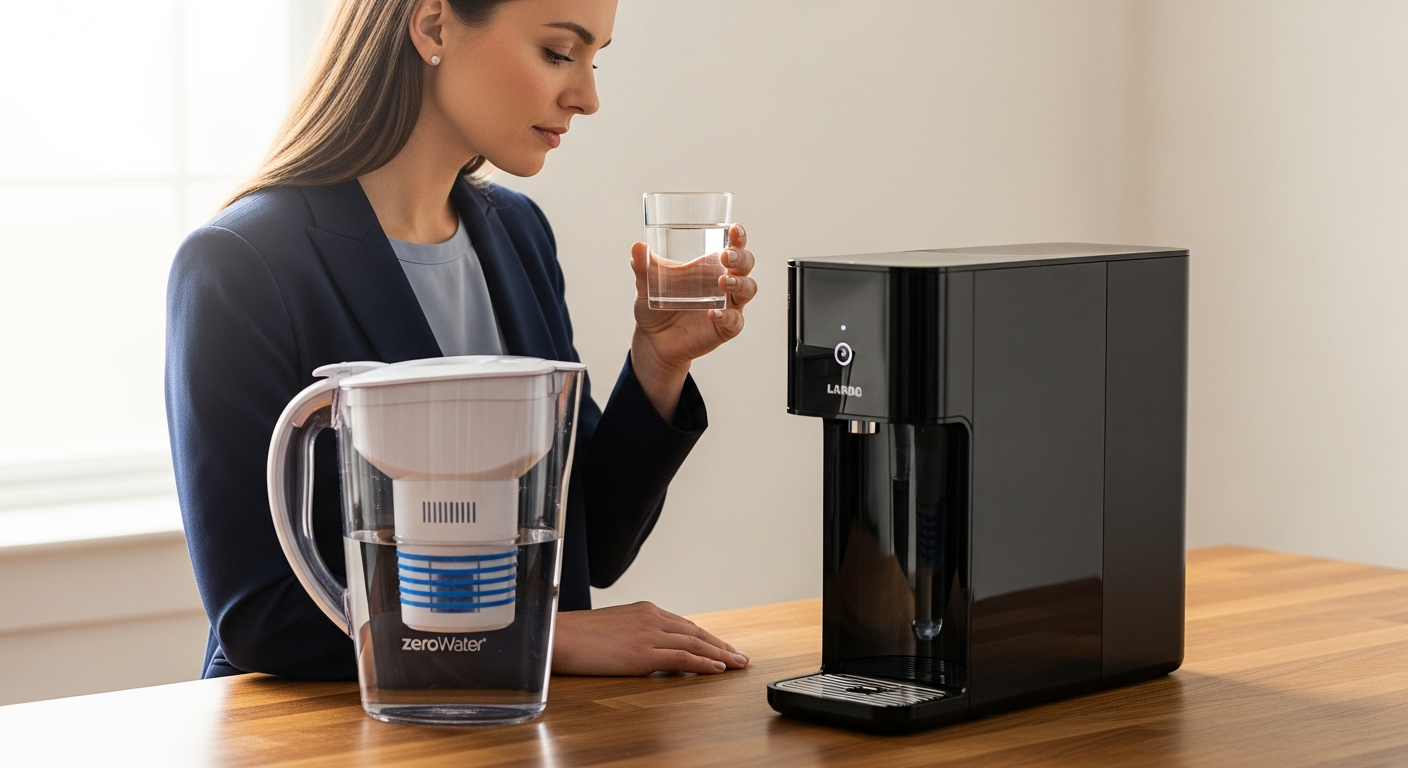
ZeroWater vs. Clearly Filtered Pitcher for PFAS: The Executive's Definitive Guide to Pure Water
The Challenge:> As a discerning business professional, you meticulously optimize every aspect of your life for peak performance, from your investment portfolio to your fitness regimen. Yet, the quality of the water you drink—a fundamental element of health—is often overlooked, particularly in the face of pervasive contaminants like PFAS (Per- and Polyfluoroalkyl Substances).<
PFAS, known as "forever chemicals," are linked to serious health concerns, including immune system disruption, thyroid issues, and certain cancers. Tap water, even in seemingly pristine areas, can contain these persistent compounds. You need a reliable, effective solution that aligns with your commitment to health and efficiency.
Our Promise:> This comprehensive guide cuts through the marketing noise to provide you with an executive-level analysis of the two leading contenders for PFAS removal in pitcher filters: ZeroWater and Clearly Filtered. We’ll equip you with the data, comparisons, and actionable insights needed to make an informed decision, ensuring your hydration strategy is as robust as your business strategy.<
Amazon — Check price on Amazon
>Quick Comparison: ZeroWater vs. Clearly Filtered for PFAS Removal<
Before diving into the granular details, here’s a high-level overview to help you quickly assess which pitcher might be the immediate front-runner for your needs.
| Feature | ZeroWater Pitcher | Clearly Filtered Pitcher |
|---|---|---|
| Primary Filtration Mechanism | 5-Stage Ion Exchange (TDS reduction to 0) | 3-Stage Affinity Filtration (Activated Carbon, Ion Exchange, Sub-micron) |
| PFAS Removal Claim | Certified to reduce PFOA/PFOS by 99% (NSF/ANSI 53) | >Certified to remove 99.8% of PFOA/PFOS, 99.9% of PFNA (NSF/ANSI 53 & 401)< |
| Total Dissolved Solids (TDS) Reduction | Guaranteed 0 TDS (comes with a TDS meter) | Significant reduction, but not to 0 TDS |
| Filter Lifespan (Approx.) | 25-40 gallons (varies by water quality) | 100 gallons or 4 months |
| Initial Pitcher Cost (Approx.) | $30 - $50 | $80 - $120 |
| Replacement Filter Cost (Approx.) | $15 - $20 (pack of 2-4 often available) | $50 - $60 |
| Cost Per Gallon (Approx.) | $0.50 - $0.80 | $0.50 - $0.60 |
| Taste Profile | Extremely pure, almost distilled taste (due to 0 TDS) | Clean, crisp, retains beneficial minerals |
| Key Differentiator | Achieves 0 TDS, comes with a meter for verification. | Removes a broader spectrum of contaminants while retaining essential minerals. |
In-Depth Analysis: Decoding the Filtration Efficacy for PFAS
ZeroWater Pitcher: The Pursuit of Zero Total Dissolved Solids (TDS)
ZeroWater has carved out a unique niche in the water filtration market by promising and delivering 0 Total Dissolved Solids (TDS). This is a bold claim, and they back it up by including a TDS meter with every pitcher, allowing users to verify the water purity themselves. But how does this translate to PFAS removal?

Filtration Technology:
- 5-Stage Ion Exchange Filtration: ZeroWater employs a multi-stage system that includes activated carbon and a dual ion-exchange resin.
- Stage 1: Coarse Filter Screen: Removes larger particles and sediment.
- Stage 2: Foam Distributor: Distributes water evenly across the filter.
- Stage 3: Multi-Layer Activated Carbon & Oxidation Reduction Alloy: Filters out chlorine, chloramine, and other organic contaminants.
- Stage 4: Dual Ion-Exchange Resin: This is the powerhouse stage, targeting inorganic compounds like lead, chromium, and importantly, PFAS. It effectively strips ions from the water.
- Stage 5: Non-Woven Membrane: Removes any remaining ultra-fine particles.
PFAS Removal Performance:
ZeroWater is NSF certified to reduce PFOA/PFOS by 99% (NSF/ANSI Standard 53). This is a significant claim and demonstrates their commitment to addressing these specific contaminants. The ion-exchange resin is particularly effective at binding to and removing negatively charged PFAS molecules from the water.
The core principle of ZeroWater's efficacy against PFAS lies in its aggressive TDS reduction. While PFAS are not TDS in the traditional sense (inorganic minerals), the ion-exchange resin is designed to remove a vast array of dissolved solids, including many organic and inorganic compounds, which incidentally includes PFAS. The 0 TDS reading acts as a strong indicator of the filter's overall contaminant removal capability.
Amazon — See latest reviews on Amazon
>Pros for Business Professionals:<
- Verifiable Purity: The included TDS meter provides immediate, tangible proof of filtration effectiveness. For those who value data and measurable outcomes, this is a significant advantage.
- Exceptional Taste Profile: Many users describe ZeroWater's output as tasting like distilled water – incredibly clean and pure, perfect for coffee, tea, and cooking where mineral interference is undesirable.
- Strong PFAS Reduction: NSF certification for PFOA/PFOS removal offers peace of mind.
- Cost-Effective Initial Investment: The pitcher itself is relatively inexpensive, making it an accessible entry point.
Cons for Business Professionals:
- Frequent Filter Changes: Depending on your tap water's initial TDS level, filters can exhaust quickly. In areas with high TDS, a filter might last only 20-25 gallons, leading to higher long-term operational costs.
- Removes Beneficial Minerals: The aggressive filtration to 0 TDS also strips away naturally occurring beneficial minerals like calcium and magnesium, which some prefer to retain for taste and health.
- Slower Filtration Rate: The multi-stage, gravity-fed system can be slower than less complex filters.
- Taste Preference: While some love the "pure" taste, others find the lack of minerals makes the water taste "flat" or "lifeless."
Ideal Use Case: For the executive who prioritizes absolute purity, wants measurable verification of filtration, and doesn't mind the potential for more frequent filter changes. Excellent for those who live in areas with known high TDS or specific taste preferences for demineralized water.
Clearly Filtered Pitcher: The Broad-Spectrum Contaminant Defender
Clearly Filtered takes a different approach, focusing on removing a vast array of contaminants while aiming to retain beneficial minerals. Their pitchers are often lauded for their robust filtration capabilities and the quality of water produced.
Filtration Technology:
- 3-Stage Affinity Filtration Technology: Clearly Filtered's system is designed for comprehensive removal of over 270+ contaminants.
- Stage 1: Woven Mesh: Captures larger sediment and particles, protecting the subsequent filter media.
- Stage 2: Activated Carbon & GAC (Granular Activated Carbon): Targets chlorine, chloramines, volatile organic compounds (VOCs), herbicides, pesticides, and some PFAS.
- Stage 3: Ion Exchange & Sub-micron Filtration: This is where the heavy lifting for inorganic contaminants, heavy metals, pharmaceuticals, and the bulk of PFAS reduction occurs. The sub-micron stage ensures ultra-fine particle removal.
PFAS Removal Performance:
Clearly Filtered boasts impressive independent lab test results and NSF certifications (NSF/ANSI Standards 53 & 401). They claim to remove:
Amazon — Check price on Amazon
- 99.8% of PFOA and PFOS
- 99.9% of PFNA (Perfluorononanoic acid)
- And a host of other PFAS compounds.
>Their multi-stage approach, particularly the combination of specialized activated carbon and advanced ion-exchange resins, is highly effective at adsorbing and binding to the complex molecular structures of PFAS chemicals. Unlike ZeroWater, which focuses on overall TDS reduction, Clearly Filtered's filter media are specifically engineered to target and remove a wide spectrum of individual contaminants, including PFAS, while allowing beneficial minerals to pass through.<
Pros for Business Professionals:
- Broad-Spectrum Contaminant Removal: Removes over 270+ contaminants, including lead, mercury, chromium-6, fluoride, pharmaceuticals, and a wide range of PFAS. This offers a more holistic approach to water purity.
- Retains Beneficial Minerals: Unlike ZeroWater, Clearly Filtered aims to leave in healthy minerals like calcium and magnesium, which contributes to a more natural and often preferred taste.
- Longer Filter Lifespan: A single filter lasts for 100 gallons or up to 4 months, which can be more convenient and potentially more cost-effective in the long run, especially for heavy users.
- Excellent Taste Profile: Users consistently report a clean, crisp, and refreshing taste, often described as superior to standard filtered water.
- Robust Certifications: Strong independent lab testing and NSF certifications provide confidence in their claims.
Cons for Business Professionals:
- Higher Initial Investment: The pitcher itself and the replacement filters are significantly more expensive upfront compared to ZeroWater.
- No TDS Meter: While it removes a vast array of contaminants, it doesn't aim for 0 TDS, so you won't get the same "verifiable 0" reading, which might be a drawback for data-driven individuals.
- Slightly Slower Filtration: Due to the dense filter media, the filtration process can be somewhat slow, especially when the filter is new.
Ideal Use Case: For the executive who seeks comprehensive contaminant removal, values retaining beneficial minerals for taste and health, and is willing to invest more for a longer-lasting, high-performance filter. Excellent for those concerned about a wide range of municipal water contaminants beyond just PFAS.
The PFAS-Specific Nuance:
Both pitchers are highly effective at reducing PFAS. However, their methodologies differ:
- ZeroWater: Achieves PFAS reduction as part of its overarching goal to remove all dissolved solids. The 0 TDS is a strong indicator of this aggressive removal.
- Clearly Filtered: Specifically engineers its filter media to target PFAS molecules, among hundreds of other contaminants, while leaving beneficial minerals intact.
If your sole concern is PFAS and you want to verify the absolute removal of "everything" (including beneficial minerals), ZeroWater's 0 TDS and included meter are compelling. If you want targeted PFAS removal alongside a comprehensive reduction of other contaminants, and you prefer to retain healthy minerals, Clearly Filtered is the stronger choice.
>Pricing & Suitability by Segment: Optimizing Your Investment<
Understanding the total cost of ownership (TCO) is crucial for any executive decision. This isn't just about the initial purchase price, but the ongoing expense of replacement filters and the value proposition each pitcher offers.
ZeroWater Pricing Structure:
- Pitcher Cost: $30 - $50 for a standard 10-cup pitcher. Larger dispensers are also available at higher price points.
- Replacement Filters: Approximately $15 - $20 per filter. Often sold in multi-packs (e.g., 2-pack for $30, 4-pack for $50-$60), reducing the per-filter cost.
- Filter Lifespan: Highly dependent on source water TDS.
- Low TDS (e.g., <50 ppm): ~40 gallons
- Medium TDS (e.g., 50-200 ppm): ~25-30 gallons
- High TDS (e.g., >200 ppm): ~10-20 gallons
- >Estimated Annual Cost (Medium TDS, 1 gallon/day):<
- Pitcher: $40 (initial)
- Filters: (365 days / 25 gallons per filter) = ~15 filters/year * $17.50/filter = $262.50
- Total First Year: ~$302.50
- Subsequent Years: ~$262.50
Suitability: Best for budget-conscious individuals who still demand high purity and verifiable results. The initial lower cost of entry is appealing, but be prepared for more frequent filter purchases if your tap water has significant dissolved solids. Ideal for those who enjoy the taste of demineralized water and use it primarily for drinking, coffee, and tea.
Clearly Filtered Pricing Structure:
- Pitcher Cost: $80 - $120 for a standard 10-cup pitcher.
- Replacement Filters: Approximately $50 - $60 per filter. Discounts may be available for subscription services or multi-packs.
- Filter Lifespan: 100 gallons or 4 months, whichever comes first. This is a consistent lifespan, regardless of initial water quality (within reasonable limits).
- Estimated Annual Cost (1 gallon/day):
- Pitcher: $100 (initial)
- Filters: (365 days / 100 gallons per filter) = ~3.65 filters/year (round up to 4) * $55/filter = $220
- Total First Year: ~$320
- Subsequent Years: ~$220
Suitability: Best for professionals who prioritize comprehensive contaminant removal and convenience over the lowest initial price point. The longer, predictable filter lifespan means fewer replacements and less hassle. The slightly higher upfront cost is often offset by the broader range of contaminants removed and the retention of beneficial minerals. Ideal for those who want a premium water experience and are willing to invest in it.
Cost-Benefit Analysis:
While the initial cost of a Clearly Filtered pitcher is higher, the annual filter cost can be comparable or even lower than ZeroWater, especially if your tap water has high TDS. Over a 3-5 year period, the total cost of ownership might equalize or even favor Clearly Filtered due to its longer filter life and broader contaminant removal spectrum. Consider your local water quality (easily found via your municipal water report) when estimating ZeroWater's filter consumption.
Who Should Use What — Persona Matching for Optimal Choice
To assist in your decision-making, let's align these filtration systems with typical business professional profiles.

Choose ZeroWater If You Are:
- The Data-Driven Analyst: You appreciate quantifiable results. The included TDS meter and the promise of 0 TDS water resonate with your need for measurable outcomes. You want to see the numbers prove the filtration is working.
- The Purity Obsessive: Your primary goal is the absolute removal of everything from your water, including beneficial minerals, for a taste profile reminiscent of distilled water. You believe "less is more" when it comes to dissolved content.
- The Budget-Conscious Optimizer: While you prioritize health, you also manage your expenses meticulously. The lower initial pitcher cost is appealing, and you're prepared to manage filter replacements more frequently if it means achieving maximum purity within your budget.
- The Coffee/Tea Connoisseur: You understand that mineral content can dramatically alter the taste of beverages. For consistently perfect coffee, tea, or even ice, 0 TDS water is often preferred to avoid mineral scale and off-flavors.
- Living in a High-TDS Area: If your local water report indicates naturally high levels of dissolved solids, ZeroWater will effectively tackle them, though this will also necessitate more frequent filter changes.
Choose Clearly Filtered If You Are:
- The Holistic Health Advocate: You seek comprehensive protection against a wide array of contaminants (PFAS, lead, fluoride, pharmaceuticals, pesticides, etc.) but also value the presence of beneficial minerals for long-term health and a natural taste.
- The Convenience Seeker: You appreciate a longer filter lifespan (100 gallons/4 months) and predictable replacement schedule, minimizing the hassle of frequent changes. You're willing to pay a premium for this efficiency.
- The Taste Purist (with minerals): You desire water that tastes incredibly clean and refreshing, but not "flat." You prefer the crispness that naturally occurring minerals provide.
- The Proactive Risk Manager: Your concern extends beyond just PFAS to the broader spectrum of emerging contaminants in municipal water supplies. You want a filter that addresses the known and the unknown.
- Seeking a "Set-and-Forget" Solution: While no filter is truly "set-and-forget," Clearly Filtered's longer filter life and robust performance make it a less frequent item on your to-do list.
Implementation & Getting Started Guide
Once you've made your decision, integrating your new water filtration system into your daily routine is straightforward. Here’s a quick guide for both options:
For ZeroWater Users:
- Unpack and Wash: Carefully unbox your ZeroWater pitcher and wash all components (except the filter and TDS meter) with warm, soapy water. Rinse thoroughly.
- Prepare the Filter: Remove the filter from its packaging. There's no need to pre-soak.
- Install the Filter: Screw the filter firmly into the reservoir until it's hand-tight. Ensure a good seal to prevent unfiltered water from bypassing.
- Fill and Filter: Fill the top reservoir with tap water. Allow it to filter through completely into the bottom pitcher. The first few fills might be slightly slower.
- Test with TDS Meter: Use the included TDS meter to test the filtered water. It should read 000. If it doesn't, ensure the filter is correctly installed.
- Monitor Filter Life: Regularly test your filtered water with the TDS meter. Once the reading reaches 006, it's time to replace the filter to maintain optimal purity and PFAS removal.
- Enjoy! Experience the taste of 0 TDS water for drinking, cooking, and beverages.
For Clearly Filtered Users:
- Unpack and Wash: Unbox your Clearly Filtered pitcher and wash all components (except the filter) with warm, soapy water. Rinse well.
- Prepare the Filter: Remove the filter from its sealed packaging. Submerge the filter in a bowl of water for 10-15 minutes to allow the media to fully saturate. This is crucial for optimal performance and flow rate.
- Install the Filter: Firmly screw the filter into the reservoir until it creates a tight seal.
- Flush the Filter: Fill the top reservoir with tap water and allow it to filter through. Discard the first two full pitchers of filtered water. This primes the filter and removes any harmless carbon dust.
- Fill and Filter: Refill the top reservoir. The filtration rate may be slower initially but will improve slightly after a few uses.
- Track Filter Life: Mark your calendar for 4 months from installation, or track your estimated gallon usage (100 gallons). Replace the filter when either benchmark is reached.
- Savor the Difference: Enjoy clean, mineral-rich water that's free from a wide range of contaminants, including PFAS.
Your Next Step: Make an Informed Decision for Your Health
Choosing between ZeroWater and Clearly Filtered for PFAS removal boils down to your specific priorities: absolute TDS reduction vs. comprehensive contaminant removal with mineral retention, and initial cost vs. long-term convenience. Both are excellent choices, far superior to unfiltered tap water when it comes to PFAS.

Consider your personal preferences for taste, your local water quality report, and your willingness to manage filter replacements. Whichever you choose, you're investing in a healthier future, reducing your exposure to harmful "forever chemicals," and optimizing your hydration for peak performance.
Frequently Asked Questions (FAQ)
Q1: Are PFAS truly a concern in tap water, even in major cities?
A: Yes, absolutely. PFAS contamination is a widespread issue affecting water sources across the globe, including many major metropolitan areas. These "forever chemicals" are highly persistent and can enter water systems through industrial discharge, firefighting foams, and consumer products. While concentrations vary, even low levels are a concern due to their cumulative nature and potential health effects. Checking your local water quality report is a good first step, but even then, not all PFAS are regularly tested for or reported.
Q2: How do I know if my water has PFAS?
A: The most reliable way is to review your local municipal water quality report (often called a Consumer Confidence Report or CCR), which is typically available online. Some private labs also offer water testing for PFAS, though this can be expensive. However, given the widespread nature of contamination, assuming a potential presence and filtering your water proactively is a prudent approach for health-conscious individuals.
Q3: Does ZeroWater's 0 TDS mean it removes all contaminants, including PFAS?
A: While 0 TDS is a strong indicator of extremely thorough filtration, it primarily measures inorganic dissolved solids. ZeroWater is NSF certified for PFAS removal (PFOA/PFOS by 99%), and its multi-stage ion-exchange system is highly effective against many organic and inorganic contaminants, including PFAS. So, yes, while TDS isn't a direct measure of PFAS, the system designed to achieve 0 TDS is also highly effective at removing PFAS.
Q4: Why does Clearly Filtered cost more upfront? Is it worth it?
A: Clearly Filtered's higher upfront cost reflects its advanced, proprietary 3-stage filtration technology, which is designed to remove a much broader spectrum of contaminants (over 270+) compared to many other filters, while also retaining beneficial minerals. The filters themselves are also built for a longer lifespan (100 gallons vs. ZeroWater's 20-40 gallons). For many, the comprehensive protection, mineral retention, and extended filter life justify the investment, offering a strong cost-per-gallon value over time.
Q5: Can I use these pitchers for well water?
A: Both ZeroWater and Clearly Filtered pitchers are primarily designed and certified for use with municipal tap water. Well water can have a unique and highly variable contaminant profile, including bacteria, viruses, and very high levels of specific minerals or chemicals that these pitchers may not be designed to handle or effectively remove. If you have well water, it is highly recommended to get a comprehensive well water test first and then consult with a water treatment specialist for a tailored solution, which may involve whole-house systems rather than pitchers.
Q6: How does the taste compare between the two?
A: The taste difference is significant and often a deciding factor. ZeroWater produces water with 0 TDS, which many describe as having a very "pure," "clean," or even "distilled" taste – devoid of any mineral presence. Some find this refreshing, while others perceive it as "flat." Clearly Filtered, by contrast, removes contaminants but aims to retain beneficial minerals, resulting in a taste that is typically described as "crisp," "clean," and "refreshing," with a more natural mouthfeel. Your personal preference will dictate which you prefer.
Q7: Are there any ongoing promotions or subscription options?
A: Both ZeroWater and Clearly Filtered frequently offer promotions on their websites and through retailers like Amazon. Clearly Filtered, in particular, often provides subscription services for replacement filters, which can offer a discount and ensure you receive new filters automatically. It's always advisable to check their official websites or their Amazon storefronts for the latest deals before purchasing.
Disclaimer: This article contains affiliate links. If you make a purchase through these links, we may earn a commission at no extra cost to you. We only recommend products we believe in and have thoroughly researched. Prices and specifications are subject to change and accurate at the time of publication.