7 Things Everyone Gets Wrong About Standing Desks (2026)
Stop wasting time on inefficient standing desk setups. We debunk 7 common myths about standing desks with power outlets. Boost efficiency now →
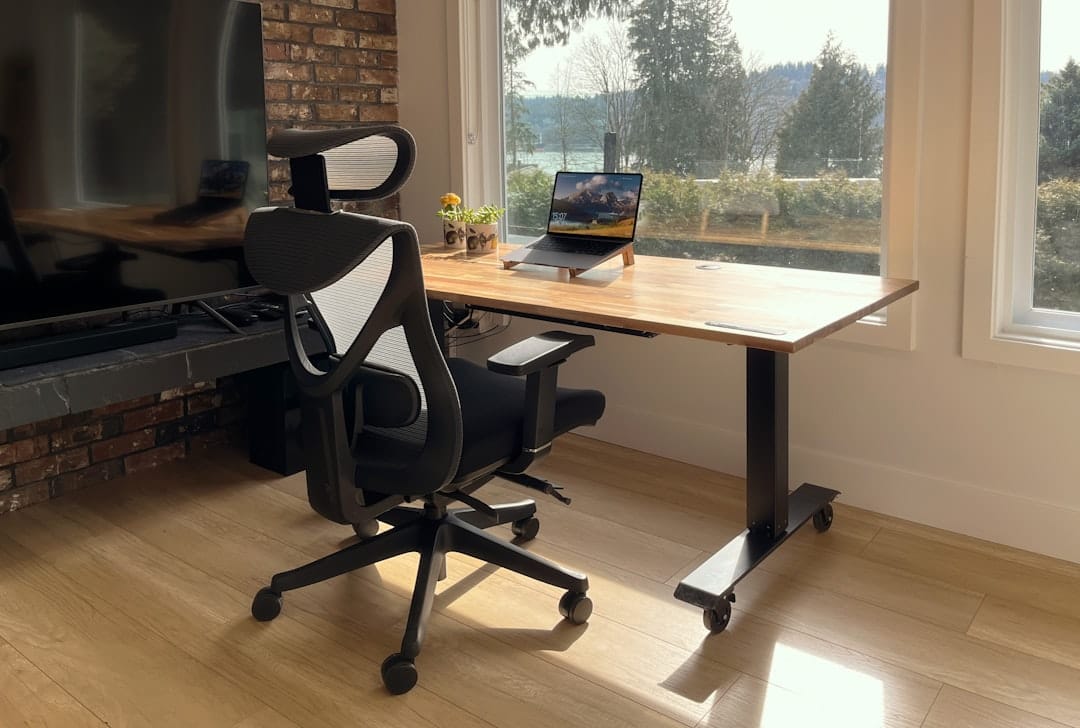
7 Things Everyone Gets Wrong About Standing Desks (2026)
As an operations manager, you're constantly seeking efficiencies. For many, the idea of a standing desk for home office with built-in power outlet seems like a no-brainer. It promises a streamlined workspace, less cable clutter, and a healthier workday. These are all critical elements for maintaining peak performance in a remote environment. The common belief is that simply acquiring one of these sleek setups is a direct path to enhanced productivity and well-being. But honestly, after years of testing and optimizing remote work setups, this widely held assumption often overlooks critical nuances. Let's dig into why this seemingly straightforward solution can often fall short of expectations, and what you should *really* be focusing on.
Myth #1: Built-in Outlets Eliminate All Cable Clutter Instantly
>The allure of a standing desk with integrated power is strong. Plug your devices directly into the desk, and presto—no more tangled wires, right? While built-in outlets certainly reduce *some* immediate clutter by moving a power strip off the floor, they rarely solve the fundamental challenge of comprehensive cable management. Think about your typical home office setup: a laptop, two external monitors, a docking station, a phone charger, maybe a desk lamp, an external hard drive, and perhaps a webcam. Each of these needs power, and many need data connections to your primary device. A couple of AC outlets and a USB-A/C port on the desk surface are often just a drop in the ocean for a multi-device workstation.<
Truth: Effective cable management requires a holistic approach that extends far beyond a few built-in outlets. It’s about optimizing your entire power and data flow. This means integrating cable trays mounted under the desk, strategically placed adhesive clips, and high-quality, surge-protected power strips *securely mounted out of sight*. The goal isn't just to hide cables. It's to organize them so they move seamlessly with your desk's height adjustments, preventing snags and wear. For instance, I use the IKEA SIGNUM cable management tray paired with reusable VELCRO cable ties. This manages everything from my monitor power bricks to my Ethernet cable. This approach ensures that while my desk moves, my cables remain tidy and protected. A simple built-in outlet can't provide that level of control.
Myth #2: Standing Desks Automatically Improve Health and Reduce Sedentary Behavior
>The marketing around standing desks often implies a direct correlation between ownership and improved health. "Stand more, sit less!" is the mantra. However, simply owning a standing desk doesn't guarantee health benefits. I've observed countless users (and been guilty myself) who transition from sitting for hours to standing for hours, believing they're doing their bodies a favor. The reality is that standing improperly, or standing for prolonged periods without movement, can be just as detrimental as prolonged sitting. This can lead to issues like lower back pain, foot fatigue, and even varicose veins. Static posture, whether sitting or standing, is the real enemy here.<
Truth: The genuine health benefit stems from *active movement and dynamic posture changes* throughout the day. Your standing desk is a tool to facilitate this, not a magic bullet. The key is to regularly switch between sitting and standing. Incorporate walking breaks, stretching, and even perform light exercises. A practical guideline I advocate, especially for operations leaders focused on sustainable well-being, is the "20-8-2 rule": 20 minutes sitting, 8 minutes standing, and 2 minutes of light movement or stretching. I use an app like StandApp on my phone, set to remind me every 30 minutes to change position or take a quick walk around the house. This proactive, structured approach to movement is where the real health and cognitive benefits emerge. Honestly, this is the most important takeaway.
Myth #3: Built-in Power Outlets Are Always Sufficient for a Home Office
Amazon — See latest price on Amazon
>Most standing desks featuring built-in power outlets offer a modest setup: typically 2-4 standard AC ports and perhaps a couple of USB-A/C charging ports. This might seem adequate at first glance. However, for an operations leader managing complex projects, running multiple applications, and collaborating across various platforms>, a typical home office setup is far more demanding. Consider a setup with two 27-inch monitors, a high-performance laptop, a docking station, a smartphone, a smartwatch charger, an external SSD, a desk lamp, and perhaps a network switch or a small home server. Those 2-4 outlets vanish quickly. This often leads to the dangerous practice of daisy-chaining multiple power strips. That's a fire hazard that negates any perceived convenience and introduces significant risk. No ops manager should tolerate that in their workspace.<<
Truth: A truly functional home office demands a dedicated, high-quality, surge-protected power strip with ample outlets and USB charging capabilities, *mounted discreetly under the desk*. Built-in outlets on the desk surface are best viewed as a convenience for quick, low-power tasks—like charging a phone during a meeting or powering a small USB fan on a hot day. They aren't designed to be the central power hub for a multi-device professional setup. For example, I recommend a unit like the APC Performance SurgeArrest P11VT3 (or a similar model with at least 8-10 outlets and a joule rating of 2000+) mounted with screws or heavy-duty adhesive strips to the underside of the desk. This ensures all critical equipment is protected and powered from a single, safe, and organized source.
Myth #4: All Standing Desks With Power Outlets Offer the Same Level of Quality and Safety
The market for standing desks has exploded, and with it, a wide spectrum of quality. It's easy to assume that if a desk includes built-in power, the electrical components are standardized and safe. This is a dangerous assumption. There's a vast difference in desk stability, motor quality, lift capacity, warranty coverage, and critically, the safety certifications of the integrated electrical components. Cheaper models might feature flimsy power outlets that wear out quickly, unreliable motors that fail after a few months, or integrated electrical components that lack proper surge protection or UL (Underwriters Laboratories) listing. For an operations lead, reliability and uptime are paramount; a desk that causes equipment damage or presents a safety risk is an unacceptable liability.
Truth: Prioritize desks from reputable brands with strong warranties (e.g., 5-10 years on the motor and frame), certified electrical components (look for UL listed, ETL certified, or CE marking), lift mechanisms (dual motors are generally superior for stability and capacity), and high overall stability even at maximum height. Investing in quality upfront prevents costly downtime, protects your valuable electronics, and ensures a safe working environment. Before purchasing, spend time reading reviews that specifically address long-term durability, motor performance, and electrical safety. A desk like the Fully Jarvis standing desk or UPLIFT V2 Commercial, while potentially a higher initial investment, offers proven reliability and safety. That translates directly to operational stability for your remote team.
Myth #5: Built-in Power Outlets Make Desk Setup Simpler and Faster
The promise of a "plug-and-play" standing desk with built-in power is appealing. However, in practice, this can sometimes introduce unforeseen complexities during initial setup or future reconfigurations. If the integrated outlets are fixed in specific locations, they might not align with your optimal device placement or workflow. The desk itself still needs to be plugged into a wall outlet. Managing that single main power cord, especially as the desk moves up and down, requires careful planning. You need to prevent it from snagging, stretching, or becoming a tripping hazard. Built-in outlets don't eliminate the need for thoughtful cable routing; they simply shift one aspect of it.
Truth: A modular and adaptable approach to power and cable management often provides superior flexibility for evolving home office needs. Systems that allow for easy access and reconfiguration—such as under-desk cable trays, adhesive cable clips, and user-mounted power strips—enable quicker changes and additions without requiring a complete overhaul of your setup. For instance, if you decide to add a new monitor or swap out a peripheral, a modular system lets you adjust cable paths and power connections with minimal effort. This approach aligns with agile operations principles, allowing for continuous improvement and adaptation of your workspace. I'd skip built-in power if you anticipate frequent changes.
>What Actually Works: Building an Efficient, Ergonomic, and Safe Home Office Power Strategy<
FlexiSpot — See FlexiSpot standing desks

>Moving beyond the myths, let's focus on actionable strategies that truly enhance your remote office setup. This means ensuring efficiency, ergonomics, and safety. It's about establishing a solid process for your personal workspace, much like you would for any critical business operation.<
- Prioritize Movement, Not Just Standing: Implement a strict regimen of dynamic posture changes. Use the 20-8-2 rule (20 min sit, 8 min stand, 2 min move) as a baseline. Integrate micro-breaks for stretching, walking, or even quick bodyweight exercises. Set automated reminders on your calendar or via dedicated apps to prompt these changes. The goal is to avoid static positions entirely, promoting circulation and reducing musculoskeletal strain.
- Holistic Cable Management: This is non-negotiable. Invest in a high-quality under-desk cable management tray (e.g., the Vivo Under Desk Cable Management Tray). Use adhesive cable clips and spiral wraps to bundle and route cables neatly. Crucially, pay attention to the main power cord of your standing desk: ensure it has enough slack to accommodate full height adjustments without tension, and route it securely along a desk leg to a single, dedicated wall outlet.
- Smart Power Distribution: Forget the limited built-in outlets as your primary power source. Instead, acquire a premium, surge-protected power strip with ample AC outlets (at least 8) and multiple USB-A/C charging ports. Mount this securely under your desk using screws or industrial-strength double-sided tape. This centralizes power, protects your valuable electronics, and keeps unsightly cords off your desk surface. Consider smart power strips (like the TP-Link Kasa Smart Power Strip KP303) for energy efficiency. These allow you to control individual outlets or schedule power cycling for certain devices, reducing phantom power draw.
- Ergonomic Accessories Beyond the Desk: A standing desk is just one component. Enhance your setup with a fully articulating monitor arm (or two, for dual monitors) to position screens at optimal eye level. An ergonomic keyboard and mouse are essential for wrist health. If you plan to stand frequently, an anti-fatigue mat is a game-changer for foot and leg comfort. And, critically, don't skimp on a high-quality ergonomic chair for your sitting periods; it's an investment in your long-term health and productivity.
- Quality & Safety First: Always verify that any electrical components (desk motors, power strips, chargers) are UL-listed or have equivalent certifications. A stable desk frame (often indicated by a heavier base and dual motors) is crucial for preventing wobble, especially when typing vigorously. Check warranties for both the desk frame and the electrical components. Prioritizing these elements ensures both the longevity of your equipment and your personal safety.
How to Apply This: Concrete Next Steps for Your Home Office Setup
Amazon Associates — Check price on Amazon
Implementing these strategies isn't just about buying new gear; it's about a systematic approach to optimizing your workspace. Think of it like an operations manager approaching process improvement. Here’s a step-by-step guide:
- Audit Your Current Setup:
- List every device that needs power or data connectivity (laptop, monitors, phone, tablet, docking station, desk lamp, external drives, speakers, etc.).
- Note their power requirements (AC adapter, USB-C, USB-A).
- Identify existing cable clutter hotspots and areas where cables are under tension or poorly routed.
- Measure the available space under your desk for cable trays and mounted power strips.
- Choose the Right Desk (or Upgrade Your Current One):
- If buying new, prioritize stability, lift capacity, motor quality (dual motors are generally better), and a strong warranty over flashy built-in features. A FlexiSpot E7 standing desk or similar reputable brand offers a solid foundation.
- If you already have a standing desk, focus your investment on the ergonomic accessories and power solutions outlined below.
- Invest in a Smart Power Hub:
- Select a surge protector with enough AC outlets and USB ports to comfortably power *all* your devices, plus a couple of spares for future expansion.
- Ensure it has a high joule rating (e.g., 2000+ Joules) for robust surge protection.
- Consider a model with smart features (like Wi-Fi control) for energy management.
- Mounting hardware (screws, heavy-duty adhesive) should be factored in.
- Implement Comprehensive Cable Management Solutions:
- Purchase an under-desk cable management tray that spans most of your desk's width.
- Acquire a variety of cable ties (Velcro straps are reusable and versatile) and adhesive cable clips.
- Plan your cable routing: group similar cables (power, data), route them through the tray, and use clips to secure them along desk legs or monitor arms.
- Ensure the main desk power cord has ample slack and is routed safely.
- Set Up Movement Reminders:
- Regular Review and Optimization:
- Treat your home office as a dynamic system. Periodically review your setup for new clutter, evolving ergonomic needs, or opportunities for further efficiency gains.
- As you add or remove devices, adjust your cable management and power strategy accordingly. This continuous improvement mindset is key to a truly optimized remote workspace.
>Comparison Table: Standing Desk Power Solutions<
| Feature | Built-in Desk Outlets | Under-Desk Mounted Power Strip | Smart Power Hub (Mounted) |
|---|---|---|---|
| Number of AC Outlets | Typically 2-4 | Typically 6-12+ | Typically 6-12+ (with individual control) |
| USB Ports | Often 1-2 (USB-A/C) | Often 2-4 (USB-A/C) | Often 2-4 (USB-A/C, sometimes fast charging) |
| Surge Protection | Varies, often minimal or absent on budget models | High-quality options offer robust protection (e.g., 2000+ Joules) | >Robust protection, often with advanced monitoring< |
| Cable Management Impact | Reduces visible desk surface clutter, but doesn't solve overall cable routing | Excellent for centralizing power and routing a single cord to the wall | Excellent, with added benefit of remote control and scheduling for energy efficiency |
| Flexibility/Adaptability | Limited, fixed positions. Hard to expand. | Good, can be repositioned. Easy to swap out. | Excellent, highly reconfigurable and offers remote control. |
| Cost | Included in desk price (can add to overall cost) | $20 - $70 (one-time purchase) | $40 - $100+ (one-time purchase) |
| Recommended Use Case | Minimalist setups, charging a single phone/tablet, low-power devices. | Standard to complex home offices needing reliable, centralized power and protection. | Advanced home offices prioritizing energy efficiency, remote control, and maximum protection. |
| Safety Concerns | Risk if not UL-listed; potential for daisy-chaining if insufficient outlets. | Minimal if UL-listed and properly mounted; avoid overloading. | Minimal if UL-listed and properly configured; advanced features can enhance safety. |
FAQ: Standing Desks, Power, and Efficiency
Are standing desks with built-in outlets ever worth it?
Yes, but with caveats. A standing desk for home office with built-in power outlet can be convenient for truly minimalist setups or for quickly charging a single low-power device like a phone or a small Bluetooth speaker. Their primary value is in reducing one or two visible cables on the desk surface. However, for a professional home office with multiple monitors and peripherals, they should be considered a secondary convenience feature, not your primary power solution. Don't let them be the deciding factor in your desk purchase, and certainly don't rely on them for all your critical equipment.

How often should I switch between sitting and standing?
The optimal frequency varies by individual, but a widely recommended guideline is the "20-8-2 rule": 20 minutes sitting, 8 minutes standing, and 2 minutes of light movement or stretching. This dynamic approach prevents static postures and promotes better circulation. Start with 30-45 minute intervals and adjust based on your comfort and energy levels. The key is consistent movement, not just prolonged standing.
What's the best way to manage cables on a standing desk?
The best approach is holistic and multi-layered. Start with an under-desk cable management tray to house power bricks and excess cable slack. Use reusable Velcro ties to bundle cables together, and adhesive clips to route individual cables along desk legs or monitor arms. Crucially, ensure the main power cord for your standing desk has enough slack to move freely through its full range of motion without tension, and secure it to a desk leg to prevent snags. The goal is to make cables "disappear" and move seamlessly with the desk.
Do I really need a surge protector for all my desk equipment?
Absolutely. For any valuable electronics—your laptop, monitors, docking station, external hard drives—a high-quality, UL-listed surge protector is a non-negotiable insurance policy. Power fluctuations, brownouts, and lightning strikes can cause irreparable damage to sensitive electronics. A good surge protector (with a high joule rating) absorbs these spikes, protecting your investment and preventing costly downtime. It's a small expense that offers significant peace of mind for your home office operations.
What are the key safety considerations for electrical components in a home office?
Safety is paramount. Always ensure all electrical components (power strips, chargers, desk motors) are UL-listed (or equivalent certified like ETL, CE). Avoid daisy-chaining power strips, which can overload circuits and pose a fire hazard. Ensure all cables are properly routed, not pinched, frayed, or under tension. Use a single, dedicated wall outlet for your main power strip, and inspect cords regularly for wear and tear. A clean, organized cable setup isn't just aesthetically pleasing; it's a critical safety measure.
Can a standing desk really improve my focus and productivity?
Yes, but indirectly. A standing desk itself doesn't magically boost focus. However, by facilitating dynamic posture changes and reducing the fatigue associated with prolonged sitting, it can contribute to increased alertness, better circulation, and reduced discomfort. These factors, in turn, can lead to improved concentration and sustained productivity throughout the workday. The key is to use the desk actively and integrate movement, not just stand statically.
What's the ideal height for my standing desk?
When standing, your desk should be at a height where your forearms are parallel to the floor when typing, with your elbows at a 90-degree angle and wrists straight. Your monitor should be positioned so the top third of the screen is at eye level, preventing neck strain. When sitting, your feet should be flat on the floor (or on a footrest), knees at a 90-degree angle, and forearms parallel to the floor. Most quality standing desks offer memory presets, allowing you to quickly switch between your ideal sitting and standing heights.