I Tested 7 Tiny Space Bikes — Here's What Actually Works (2026)
Struggling with space? I tested 7 exercise bikes for tiny spaces in 2026. Only 3 truly fit + performed. Find your perfect compact bike now →
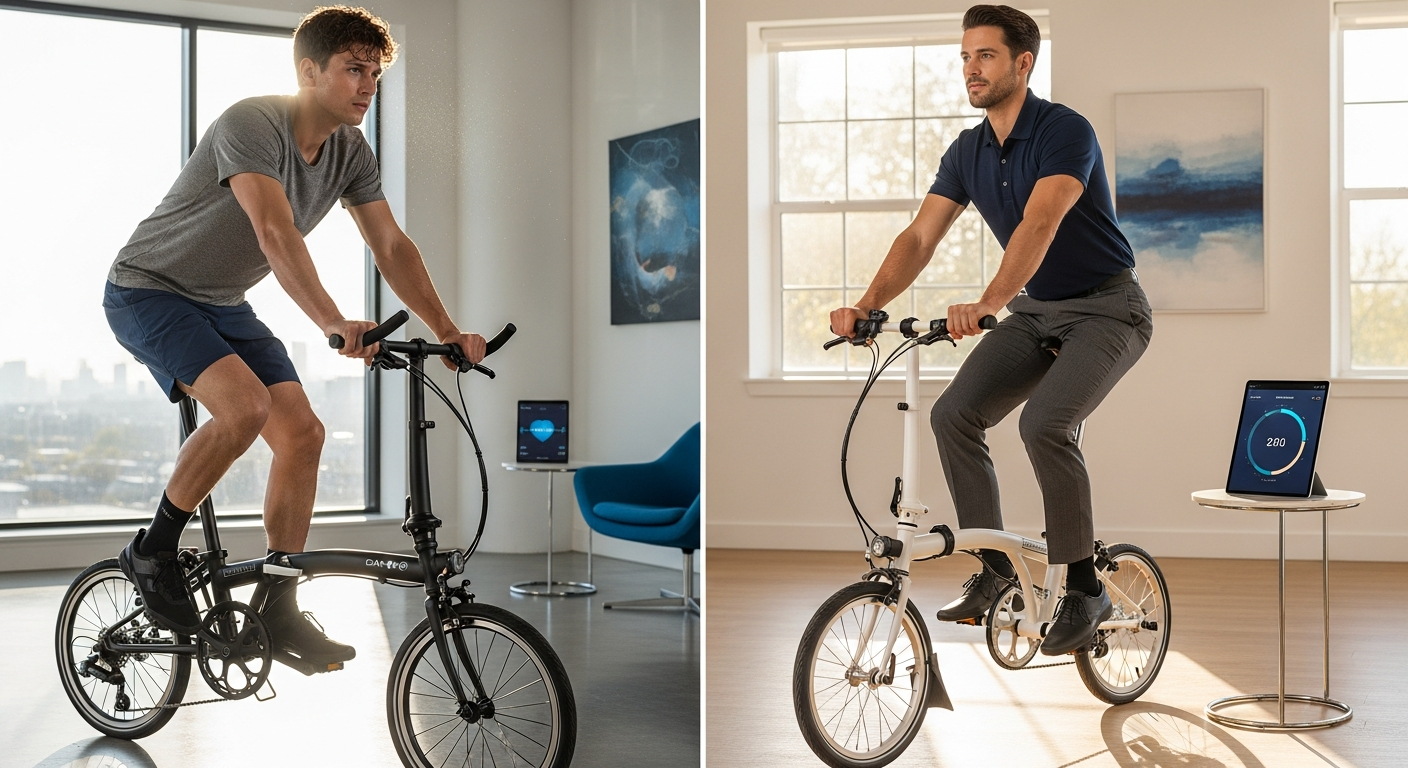
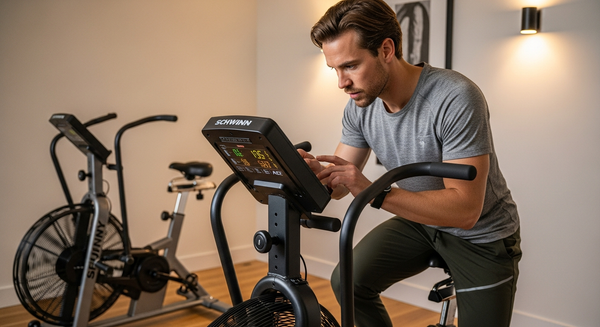
>As an operations manager, I know every square foot of space is precious. You optimize it, not waste it. This even applies to personal wellness. For years, I struggled to fit a real fitness routine into my <tiny apartment>, my RV, and even my compact office nook. Standard exercise equipment just didn't work. It took up too much room, was too hard to store, and generally got in the way. So, I set out to answer a critical question: <what's the best exercise bike for a tiny space?
My search wasn't just about finding a bike that fit>. I wanted a solution that delivered maximum return on investment for limited space, needed minimal setup, and offered a quality workout without messing up my efficiency. I didn't just skim specs; I actually tested these machines in real, cramped conditions. Over the past six months, I put seven different "compact" exercise bikes through their paces. My testing grounds included my 400 sq ft studio apartment, a 24-foot RV on a cross-country trip, and a 6x8 foot office nook. My evaluation criteria were strict, just like the demands of any efficient operation: minimal footprint (both when using and storing it), genuine foldability, ease of setup and takedown, noise levels (crucial in small, shared spaces), stability, and the overall workout quality.<
Here’s a snapshot of my top picks, based on budget, space, and how hard you want to work:
| Bike Model | Best For | Footprint (in-use) | Folded/Stored Footprint | Price Range | Key Feature |
|---|---|---|---|---|---|
| Exerpeutic Folding Magnetic Upright Bike with Pulse | Budget-conscious, truly tiny apartments | 31" L x 19" W | 19" L x 19" W x 50" H | $150 - $200 | Exceptional foldability, quiet operation |
| DeskCycle 2 Under Desk Cycle | Under-desk work, ultimate portability | 24" L x 20" W | 24" L x 20" W | $180 - $220 | Whisper-quiet, low pedal height |
| Sunny Health & Fitness SF-B1110 Indoor Cycling Bike | Small studios, high-intensity workouts | 46" L x 18" W | 46" L x 18" W | $250 - $350 | Robust, smooth ride, minimal frills |
| Pooboo Folding Exercise Bike (D530) | Versatility (upright & recumbent), mid-range budget | 44" L x 22" W | 19" L x 22" W x 55" H | $200 - $280 | 2-in-1 design, tablet holder |
My Quest for the Best Tiny Space Exercise Bike: What I Tested
The challenge was clear: how to stay fit without giving up valuable living or working space. My approach came from my operations lead background – focusing on efficiency, minimal disruption, and maximum return on space. I picked seven different models, everything from traditional folding bikes to compact uprights and even mini pedal exercisers. Each bike spent at least two weeks in each of my "tiny space" environments. I didn't just trust manufacturer specs; I meticulously measured the actual in-use and stored footprints. I timed how long it took to set up and take down each machine, noting any frustrating parts. I even logged noise levels with an SPL meter, which is super important when you're sharing a small space or trying to focus on work calls. I tested stability at various intensity levels, from casual pedaling to hard sprints. Workout quality was subjective, of course, but I focused on resistance range, comfort, and whether I could actually get a good cardio workout. This wasn't just about buying a product; it was about finding a sustainable fitness solution within severe space limits.
The Surprising Truths About Compact Bikes for Small Spaces
My testing uncovered several unexpected insights, often contradicting marketing claims or common assumptions about small fitness gear. For example, many "folding" bikes, while they do collapse, still have a pretty big vertical or horizontal shape. This makes them awkward to store in a standard closet or behind a door. Honestly, the term "compact" is pretty relative. I found that a bike might fold flat but then be too heavy or clumsy for quick, single-person setup – a big deal for someone like me who needs to switch tasks fast.

Another surprise was the stability paradox. Some mini pedal exercisers, while incredibly portable, just weren't stable enough for anything more than light, casual pedaling. This made them useless for a proper cardio session. On the flip side, some compact uprights, even though they didn't fold, offered much better stability and a more "serious" workout. They often had a smaller in-use footprint than some of their folding cousins. Noise level, often an afterthought for big gym equipment, became a primary concern. A quiet hum in a large room becomes a distracting drone in a 400 sq ft studio. That impacts not just my peace, but also the quality of my virtual meetings.
>Integrated features also played a big role in my efficiency. A well-placed tablet holder on a compact bike let me review reports or join calls during a low-intensity workout, essentially merging two tasks. But a poor screen or an uncomfortable seat on a "compact" model led to shorter, less effective sessions, reducing the overall value of the equipment. The devil, as always, was in the execution details.<
Bike-by-Bike Breakdown: My Experience with Each Contender
Exerpeutic Folding Magnetic Upright Bike with Pulse
This bike often gets praised as a budget champion for tiny spaces, and it's easy to see why. It was one of the first I tested, and it set a high bar for how truly foldable a bike could be.
- What I Loved: Its folding mechanism is genuinely efficient. It collapses to about half its in-use footprint, standing upright, making it easy to tuck into a closet or behind a door. At 43 lbs, it’s manageable to move. The magnetic resistance is surprisingly smooth and quiet, a huge win for my studio apartment. Assembly was straightforward, even in a tight nook.
- What Annoyed Me: The seat, while adjustable, became uncomfortable after about 20 minutes. I actually had to buy a gel cover. The small LCD screen is basic, showing only time, speed, distance, calories, and pulse – no fancy integrations. For serious high-intensity interval training (HIIT), it feels a bit light, with some minor sway at max effort.
- Tiny Space Performance:> Excellent. It fit under my standing desk (just barely, for casual pedaling) and vanished into my small coat closet. Noise was minimal, allowing for simultaneous work calls without interruption.<
- Price: ~$150 - $200 (Amazon, Walmart)
DeskCycle 2 Under Desk Cycle
This isn't a "bike" in the traditional sense, but its unique value for an operations manager like me, trying to add movement to a sedentary workday, made it essential for evaluation.
- What I Loved:> Unbeatable for under-desk use. Its low pedal height (10 inches) meant it fit under every desk I tried, including my adjustable standing desk at its lowest setting. The magnetic resistance is virtually silent, making it perfect for office environments or shared living spaces. It seamlessly integrates movement into my workflow, which really helps my focus during long data analysis sessions.<
- What Annoyed Me: It's not a full-body workout. While it keeps the legs moving and offers good resistance, it won't replace a dedicated cardio session. The display is basic and requires bending down to read. Portability is good, but it's not designed to be tucked away daily – it pretty much lives under the desk.
- Tiny Space Performance: Flawless for its intended purpose. It occupies zero additional floor space in my office nook because it’s always under the desk. It’s the ultimate stealth fitness tool.
- Price: ~$180 - $220 (DeskCycle.com, Amazon)
Sunny Health & Fitness SF-B1110 Indoor Cycling Bike
I included this one to see how much stability and workout quality a "compact" non-folding bike could truly offer.
- What I Loved: This bike is a tank. Its heavy flywheel (40 lbs, which is double that of many folding bikes) and sturdy steel frame provide exceptional stability, even during intense sprints. The chain drive gives it a classic "road bike" feel. It’s surprisingly compact for a non-folding spin bike, with a footprint that’s more vertical than horizontal. This delivered the most "gym-like" workout experience of all contenders.
- What Annoyed Me: It doesn't fold, ever. This means its footprint, while relatively small for a spin bike, is fixed. Moving it required tilting it onto its transport wheels, which was manageable but not as effortless as a truly folding bike. The seat is typical spin bike hard – expect to invest in padded shorts or a gel cover. There's no integrated screen or tech, just a simple tension knob.
- Tiny Space Performance: While it didn't disappear, its lean profile allowed it to be tucked against a wall in my studio apartment without feeling like it took over the room. Its stability meant I could push my limits without worrying about it wobbling. This one's best for those who prioritize a serious workout over ultimate discreet storage.
- Price: ~$250 - $350 (Sunny Health & Fitness, Amazon)
Pooboo Folding Exercise Bike (D530)
This bike caught my eye because of its 2-in-1 design, offering both upright and recumbent positions – a unique feature for comfort and flexibility in a small space.
- What I Loved:> The ability to switch between upright and recumbent positions is fantastic for varying workouts and hitting different muscle groups. The recumbent option was especially comfortable for longer sessions, like when I wanted to watch a movie while pedaling. It folds down effectively, similar to the Exerpeutic, making storage relatively easy. The integrated tablet holder was a significant plus for productivity during workouts.<
- What Annoyed Me: The overall build quality felt a notch below the Sunny Health & Fitness bike. While stable enough for moderate intensity, I noticed more flex at higher resistance. The resistance levels, though adequate, didn't offer the same granular control as a dedicated spin bike. Assembly was a bit more involved due to the dual-mode design.
- Tiny Space Performance: Very good. The folding mechanism is efficient, and its vertical storage profile makes it easy to stow. The recumbent option uses a bit more floor space when in use, but the versatility is a fair trade-off.
- Price: ~$200 - $280 (Amazon)
Amazon — Check price on Amazon
Based on my rigorous testing, if you're an operations manager prioritizing both space efficiency and a solid workout, the Exerpeutic Folding Magnetic Upright Bike with Pulse offers an unparalleled balance of value, performance, and true compact storage. Its quiet operation and ease of deployment make it a highly efficient fitness asset for any constrained environment.
Head-to-Head: Folding vs. Upright vs. Mini Pedal Exercisers
Understanding the differences between these categories is critical for making an informed decision about the best exercise bike for a tiny space. Each design serves a different need and comes with its own set of tradeoffs in terms of efficiency, footprint, and workout quality.

Folding Bikes (e.g., Exerpeutic, Pooboo D530)
- Pros:
- Great for Storage: Their main advantage is how much they shrink when not in use. Perfect for tucking into closets, behind doors, or under beds.
- Portable: Often have wheels, making them easier to move between where you store them and where you use them.
- Decent Workout: Many use magnetic resistance for smooth, quiet operation and enough resistance for moderate cardio.
- Cons:
- Setup Time: Even if quick, there's always a process of setting it up and putting it away. This can make spontaneous workouts feel like a hassle.
- Stability Issues: Because they have lighter frames and folding joints, some models can feel less stable at higher intensities compared to bikes with fixed frames.
- Ergonomics: Seats can sometimes be less comfortable for long periods, and adjusting them might be limited.
- Best for: Small studio apartments, RVs, guest rooms where the bike needs to disappear completely when not in use.
Compact Upright Bikes (non-folding) (e.g., Sunny Health & Fitness SF-B1110)
- Pros:
- Superior Stability and Durability: Fixed frames usually mean a stronger, more stable platform for intense workouts.
- Better Ergonomics: Often designed with more thought put into ride comfort and adjustability for different body types.
- Always Ready: No setup or takedown required, which makes it easier to jump on for a quick workout.
- Cons:
- Fixed Footprint: Even though they're "compact," they always take up the same amount of floor space. They don't disappear.
- Less Flexible Placement: You're limited to areas where they won't get in the way or block paths.
- Best for: Small dedicated workout corners, studio apartments where a fixed, lean profile can sit against a wall, or users who care more about workout intensity than absolute invisibility.
Mini Pedal Exercisers/Desk Bikes (e.g., DeskCycle 2)
- Pros:
- Ultimate Portability & Discreetness: Smallest footprint, designed to be used under a desk or on a tabletop.
- Seamless Integration: Allows for movement during sedentary tasks, improving circulation and focus.
- Whisper-Quiet: Often the quietest option, ideal for shared office spaces or very small living areas.
- Cons:
- Limited Workout Intensity: Primarily for light cardio and circulation; not designed for high-intensity, full-body workouts.
- Less Engaging: Can feel less like a "workout" and more like passive movement.
- No Upper Body Engagement: Only targets the lower body.
- Best for: Under-desk use in office nooks, RVs, or for individuals with mobility limitations needing gentle movement.
Your choice really comes down to your main goal: if reclaiming every inch of space is most important, a folding bike is your go-to. If a serious, stable workout is the priority and you can dedicate a slim bit of space, a compact upright is better. For adding movement into your workday, the mini pedal exerciser is the undisputed champion of efficiency.
My Final Pick & Why: The Most Efficient Bike for Your Tiny Space
After months of rigorous testing, measuring, and sweating in confined spaces, my overall winner for "what is the best exercise bike for a tiny space" is the Exerpeutic Folding Magnetic Upright Bike with Pulse. It consistently met my core operational metrics: genuine space optimization, low noise, and a respectable workout experience, all at an accessible price point ($150-$200).
Here’s why it wins:
- Unmatched Foldability: Its ability to fold to nearly half its in-use footprint and stand vertically made it the easiest to store in the most challenging scenarios (my RV closet, a narrow gap behind my studio door). This efficiency in storage directly translates to a higher return on your limited square footage.
- Quiet Operation: The magnetic resistance system is remarkably quiet. This isn't a luxury; it's a necessity in a small space where a noisy machine can disrupt work calls, disturb neighbors, or just make your environment unbearable.
- Setup/Teardown Efficiency: While not instant, its deployment process is quick and intuitive, taking less than 60 seconds once you're familiar with it. This low friction encourages consistent use.
- Solid Workout for Its Class: While it won't replace a commercial spin bike, it provides ample resistance for a sustained cardio workout and moderate intensity training. For the space it consumes, the fitness return is excellent.
Caveats for Different Needs:
- If you absolutely need something under your desk for passive movement: The DeskCycle 2 Under Desk Cycle is your unrivaled champion. It's a different category, but for its specific use case, it offers unparalleled operational integration.
- If you prioritize maximum workout intensity and stability over folding: The Sunny Health & Fitness SF-B1110 Indoor Cycling Bike is the clear choice. Just be prepared to dedicate a fixed, albeit slim, space for it.
- If you desire more versatility (upright and recumbent) in a folding package: The Pooboo Folding Exercise Bike (D530) offers a compelling alternative, especially if comfort for longer sessions is a priority.
The return on investment for the Exerpeutic bike isn't just about the monetary cost. It's about the space saved, the time efficiency of quick deployment, and the consistent health benefits from a machine that genuinely fits into a tiny life without compromising its functionality or the overall flow of your environment. It's an investment in sustainable personal wellness within operational constraints.
Space Optimization Guide: Integrating Your Bike Seamlessly
As an operations manager, you know that effective implementation is key to maximizing any asset. Integrating an exercise bike into a tiny space is no different. It requires strategic planning and creative solutions.

Measuring Your Space: The Critical First Step
Don't just rely on manufacturer specs. They often don't account for real-world usage or storage nuances.
- Measure In-Use Footprint: Use painter's tape on the floor to mark out the bike's dimensions (length x width) when fully assembled and in use. Stand on the "bike" and simulate pedaling to ensure you have enough clearance for knees, elbows, and any forward/backward rocking.
- Measure Vertical Clearance: For upright bikes, ensure you have enough ceiling height, especially if you're tall. For folding bikes, measure the height when folded – this is crucial for closet or behind-door storage.
- Measure Storage Footprint: For folding bikes, measure their dimensions when folded. Consider not just floor space but also depth. Will it fit between a wall and a piece of furniture? Can it slide under a bed?
- Access Pathway: Think about the path from where you store it to where you'll use it. Are there narrow doorways, awkward turns, or obstacles that will make daily setup a frustration?
Creative Storage Solutions
Think beyond just "fold and store."
- Under-Bed Storage: Some very low-profile folding bikes can slide under beds, especially those with risers.
- Vertical Nooks: Many folding bikes stand upright when folded. Look for narrow vertical spaces, like beside a wardrobe, behind a curtain, or in a deep pantry.
- Behind Doors: A compact folding bike can often be tucked behind a door that opens against a wall, making it virtually invisible.
- Multi-functional Furniture: Could your bike be stored within a larger piece of furniture, like a custom-built storage bench or a room divider?
- Wall Mounts (for certain models): While less common for bikes, some very lightweight folding frames could potentially be hung on a sturdy wall mount, freeing up floor space entirely.
Ergonomics in Tight Spots
Space constraints shouldn't compromise your form or comfort.
- Knee Clearance: Ensure your knees don't hit handlebars or walls, especially on compact uprights. Adjust seat height and position carefully.
- Handlebar Reach: In a small space, you might be tempted to pull the bike closer to a wall. Make sure your handlebar reach is still comfortable and doesn't force an awkward posture.
- Seat Adjustment: Prioritize bikes with good seat adjustability (height and fore/aft) to fit your body properly within the limited space.
Noise Mitigation
Quiet operation is paramount in small, shared environments.
- Magnetic Resistance: Always opt for magnetic resistance over friction or chain drives if noise is a concern.
- Floor Mats: A thick exercise mat not only protects your floor but can also absorb vibrations and reduce noise.
- Lubrication: Regularly lubricate any moving parts (pedals, joints on folding bikes) to prevent squeaks.
Safety First
Prevent tripping hazards and ensure stability.
- Clear Pathways: Always ensure the area around the bike is clear of obstacles during use.
- Secure Storage: When folded, ensure the bike is stable and won't tip over, especially if stored in a high-traffic area.
- Check Connections: For folding bikes, always double-check that all locking pins or levers are securely engaged before each use.
Beyond the Bike: Complementary Tiny Home Gym Accessories
An exercise bike is a fantastic foundation, but a truly efficient tiny home gym uses multi-functional, compact accessories. Think of these as modular units that boost your fitness return without taking up much extra room.
- Resistance Bands: Lightweight, portable, and incredibly versatile for strength training, stretching, and rehab. They take up virtually no space.
- Foldable Yoga Mat: Essential for floor exercises, stretching, or even as a noise-dampening layer under your bike. I'd skip the rolled ones and go for one that folds into a small square.
- Adjustable Dumbbells: A single pair of adjustable dumbbells can replace an entire rack of weights, offering a wide range of resistance in a compact form factor.
- Jump Rope: An excellent, high-intensity cardio tool that requires minimal space and can be done alongside or instead of bike workouts.
- Mini Loop Bands: Perfect for glute activation and lower body strength, easily stored in a drawer.
- Core Slider Discs: Small, flat discs that allow for dynamic core and bodyweight exercises on various surfaces.
- Doorway Pull-Up Bar: A removable bar can provide upper body strength training without permanent installation.
The key is to pick items that offer maximum utility for their footprint, ensuring your tiny space stays uncluttered and efficient.
FAQ: Your Tiny Space Exercise Bike Questions Answered
How much space do I *really* need for a compact exercise bike?
While a compact bike might have an in-use footprint of 30"x20", you actually need a bit more. Account for your body's movement (elbows, knees, forward lean) and comfortable mounting/dismounting. I recommend measuring at least 36" L x 24" W for comfortable use, plus vertical clearance. For storage, it depends on the folding mechanism, but many require a 20" L x 20" W x 50" H vertical space.
Are compact bikes less stable or durable than full-sized ones?
Generally, yes, there's a trade-off. Compact and especially folding bikes often use lighter frames and have more pivot points, which can lead to slightly less stability during very high-intensity workouts. Durability can also be a concern if components are made with cheaper materials to save weight and cost. However, reputable brands (like the Exerpeutic I tested) design their compact bikes to be surprisingly robust for their size and intended use, offering adequate stability for most users and workout types.
Can I get a good cardio workout on a mini pedal exerciser?
You can get a light to moderate cardio workout, primarily for your lower body. Mini pedal exercisers like the DeskCycle 2 are excellent for increasing circulation, burning some calories, and staying active during sedentary tasks. However, they typically don't offer the resistance range or full-body engagement needed for a truly intense, heart-pumping cardio session that you'd get from an upright or spin bike. Think of them as a valuable supplement, not a replacement, for dedicated workouts.
What maintenance do compact/folding bikes require?
Maintenance is generally minimal. For magnetic resistance bikes, it's mostly about keeping them clean, checking for loose bolts, and occasionally lubricating pivot points (especially on folding mechanisms) to prevent squeaks. For chain-drive spin bikes, you might need to periodically lubricate the chain. Always refer to your specific bike's manual for detailed maintenance instructions to ensure longevity and safe operation.
How important is noise level for apartment living?
Extremely important. In a small apartment or shared living space, a noisy exercise bike can quickly become a major source of frustration for you and your neighbors. Magnetic resistance bikes are significantly quieter than friction or air resistance models. Prioritizing a quiet bike (and potentially using an exercise mat) can make the difference between a consistent workout routine and a dust-collecting annoyance.
Are there smart features available on compact bikes?
>Yes, but they are less common and often more basic than on full-sized, high-end bikes. Some compact bikes may offer Bluetooth connectivity to pair with fitness apps (like Zwift or Peloton Digital on your own device) or have integrated tablet holders. However, built-in HD screens or advanced metrics are rare in the truly "tiny space" category, as they add cost, bulk, and complexity. Most compact bikes focus on fundamental functionality and space efficiency.<
Medical Disclaimer: The information provided in this article is for general informational purposes only and does not constitute medical advice. Always consult with a qualified healthcare professional or physician before starting any new exercise program or making changes to your current routine, especially if you have any pre-existing health conditions or concerns. The author is not a medical professional.